
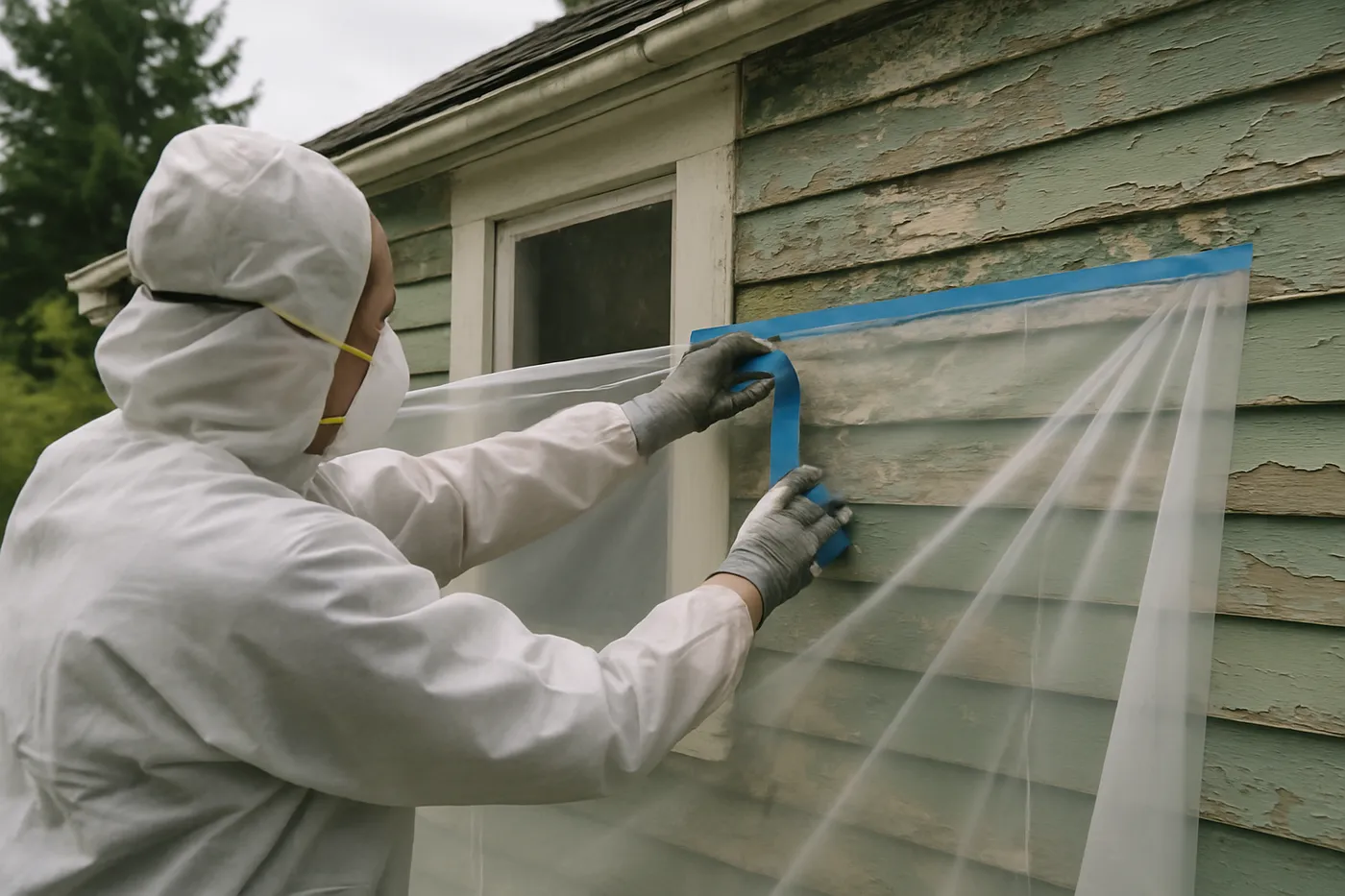
The short answer to “can you paint over lead paint” is yes. The real question is how. Lead paint is dangerous when it is disturbed and dust is released, not when it is sealed and left intact. So the safe way to repaint a pre-1978 home is to avoid creating dust in the first place: stabilize the surface, seal it properly, and let trained, certified hands do any part of the work that disturbs the old paint. Done right, you get a fresh, durable finish and the lead stays locked where it is.
What encapsulation means
Encapsulation is sealing stable lead paint under new coatings so it cannot shed dust or chips, rather than sanding or scraping it off. It is the preferred approach whenever the existing paint is sound, because removal is what creates the hazard, and encapsulation sidesteps that hazard entirely.
The key word is stable. Encapsulation works when the old paint is firmly bonded to the surface, not actively peeling, flaking, or failing. On a sound surface, the process is clean the surface, do light lead-safe prep, and apply the proper sealing system so the lead is contained under a durable new finish. Where the paint is already coming off, encapsulation alone is not enough, and the surface needs controlled removal instead, which we cover further down.
The EPA RRP rules
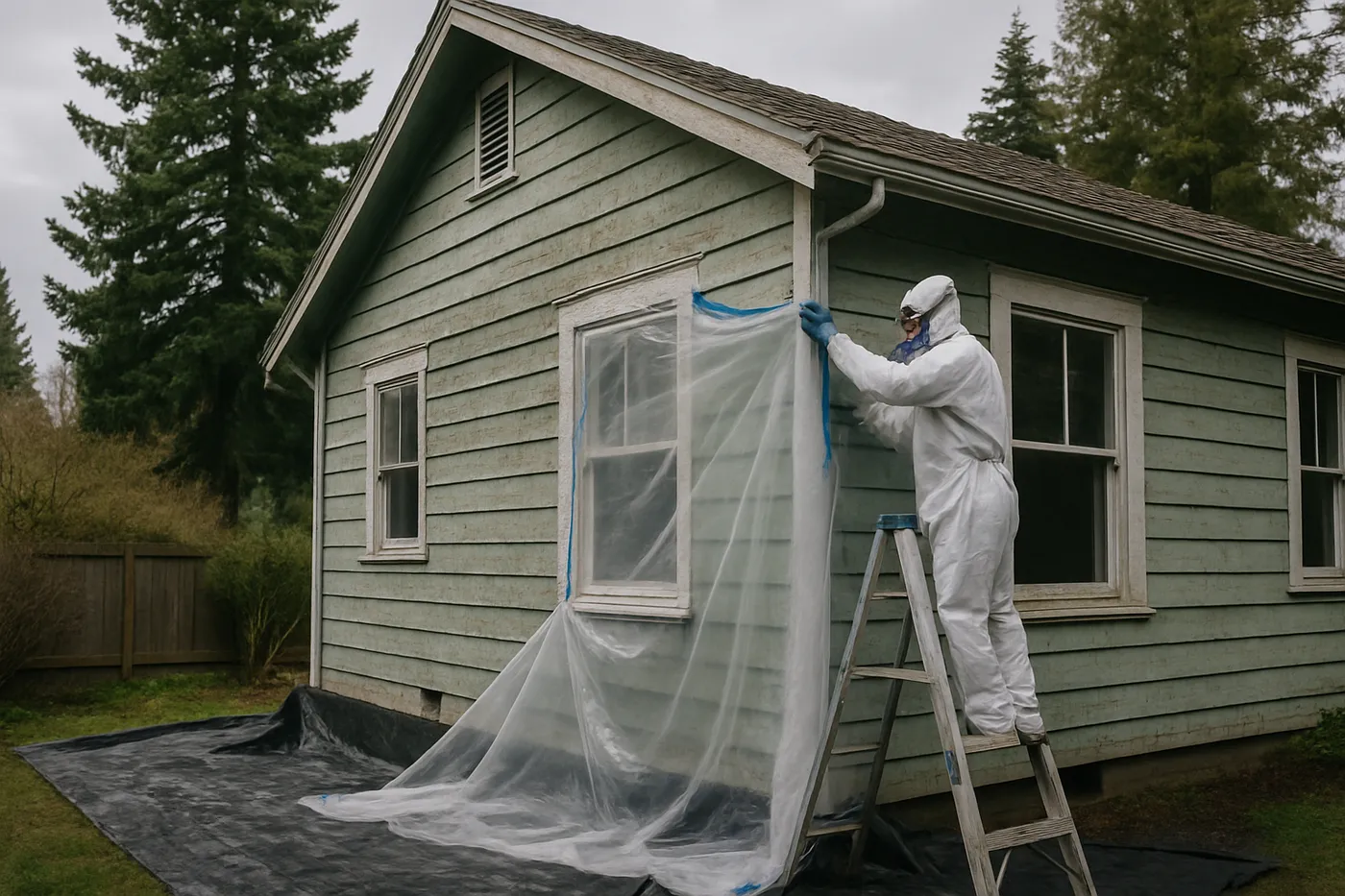
For pre-1978 homes, this is not just best practice, it is federal law. The EPA’s Renovation, Repair, and Painting (RRP) rule governs work that disturbs lead-based paint in older homes, and the central requirement is that the work be performed by an EPA Lead-Safe certified firm using lead-safe work practices.
In broad terms, those practices mean containing the work area so dust and debris do not spread, controlling dust during the work, and cleaning up thoroughly to a verified standard when the job is done. The point of the rule is straightforward: keep lead dust out of the home and yard, and out of reach of the people who live there. A certified firm is trained and registered to follow these practices. A handyman with a sander is not, and on a pre-1978 home that distinction is the law.
Safe vs unsafe practices
| Do | Do not |
|---|---|
| Stabilize stable, sound paint before sealing | Dry-sand lead paint, which throws dust into the air |
| Use wet methods to keep dust down | Use open-flame or high-heat methods that vaporize lead |
| Use HEPA filtration and containment | Power-wash lead paint off, which spreads chips and debris |
| Encapsulate sound surfaces with proper coatings | Scrape or DIY-remove lead paint without containment |
| Clean up to a verified lead-safe standard | Leave dust and chips behind for the household to contact |
Repainting an older home? We are EPA Lead-Safe Certified and follow containment, HEPA, and safe-disposal practices on every pre-1978 job. Get a free written estimate.
When removal is needed instead
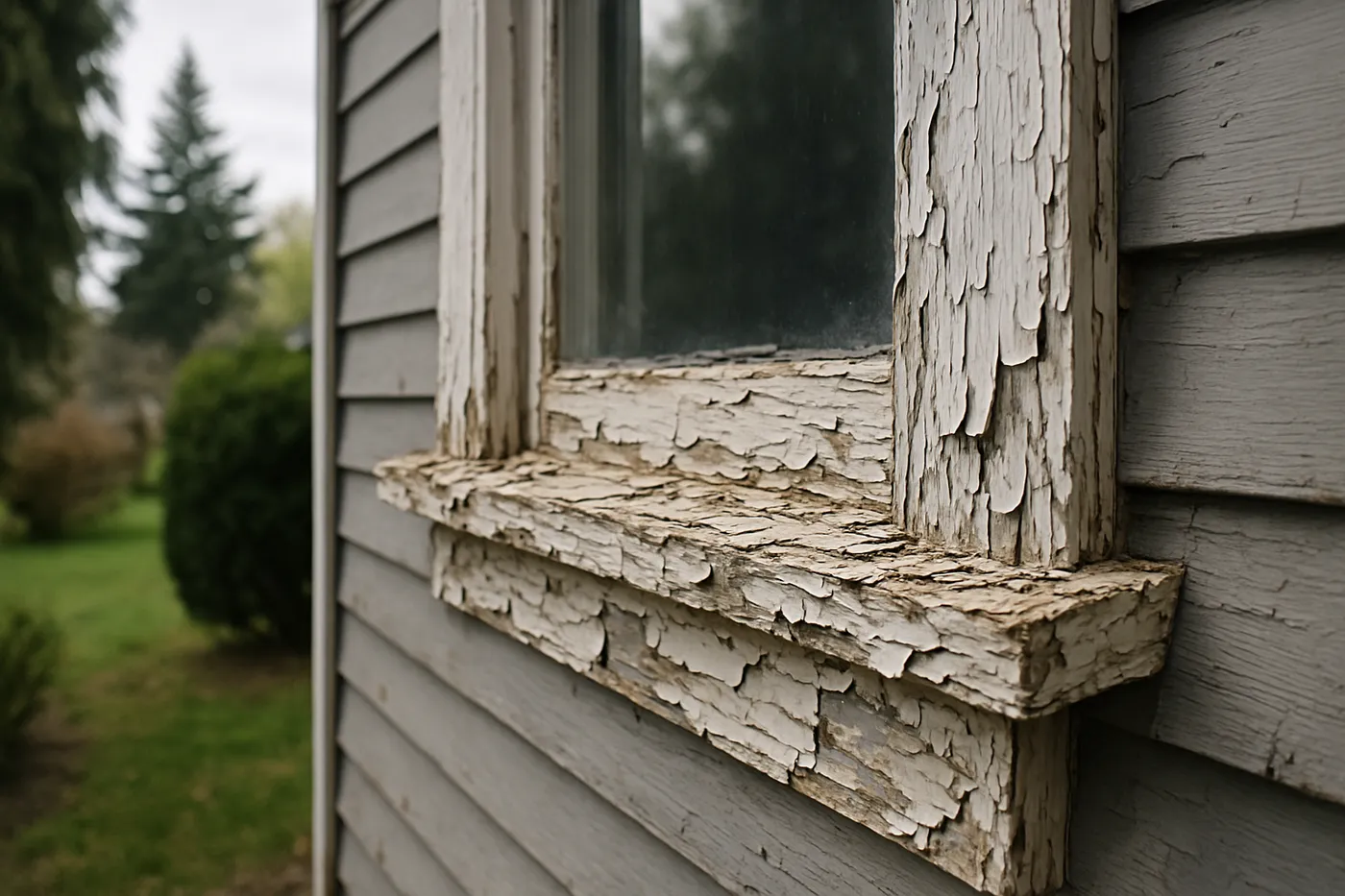
Encapsulation is the goal, but it is not always the answer. If the existing lead paint is failing, peeling, flaking, or no longer well bonded, sealing over it just traps a problem that will push the new coat off and break the seal. You cannot encapsulate a surface that will not hold the coating.
Friction surfaces are the other case. Windows and doors that rub and move generate dust on their own, so paint there is hard to keep stable long term. In both situations the right move is controlled, certified removal: the old paint comes off under containment, with dust control and proper disposal of the lead waste, and the sound surface underneath is then repainted. Which path a given surface needs, encapsulation or removal, comes down to its condition, and that is an on-site assessment.
Repainting lead-paint homes in the Seattle area
Greater Seattle’s large stock of pre-1978 homes, the craftsman, bungalow, and Tudor houses across Seattle, Edmonds, and Kirkland, means a great many repaints here involve lead paint somewhere on the home.
The damp PNW climate complicates the choice. Years of moisture degrade old exterior paint, so the same home can have stable surfaces that encapsulate well and failing surfaces that need removal, sometimes on the same elevation. That is why the encapsulate-or-remove decision is not a blanket policy, it is a surface-by-surface call that a Lead-Safe certified estimator makes on-site after looking at the actual condition of the paint.
How Hedlund does it
We are a licensed, bonded, and insured contractor of more than a decade, and an EPA Lead-Safe Certified firm with RRP-trained crews. On pre-1978 homes we follow containment, HEPA filtration, and safe-disposal practices, we encapsulate where the surface allows, and we remove safely where it does not. The finished repaint is backed by our 10-year workmanship warranty. Our certification number is available on request.
This is the credential that separates a safe repaint from a hazardous one. Painting over lead paint is entirely possible to do well, and entirely possible to do dangerously, and the difference is the practices and the certification behind the crew on your home.
“We bought an old house between Christmas and New Years. It needed interior paint badly. The paint had been last painted probably in the 1980’s.” David N., 5 stars (Google)
“The house had not been painted for 20 years and Hedlund painting did an amazing job repairing the siding, trim and painting the house.” Jason U., 5 stars (Google)
For full details, see our EPA Lead-Safe Certified page. Related reading: Lead Paint Testing: How to Know If Your Older Home Has It and How to Tell If You Have Lead Paint (and What to Do). We also handle exterior painting, interior painting, and carpentry and wood repair.