
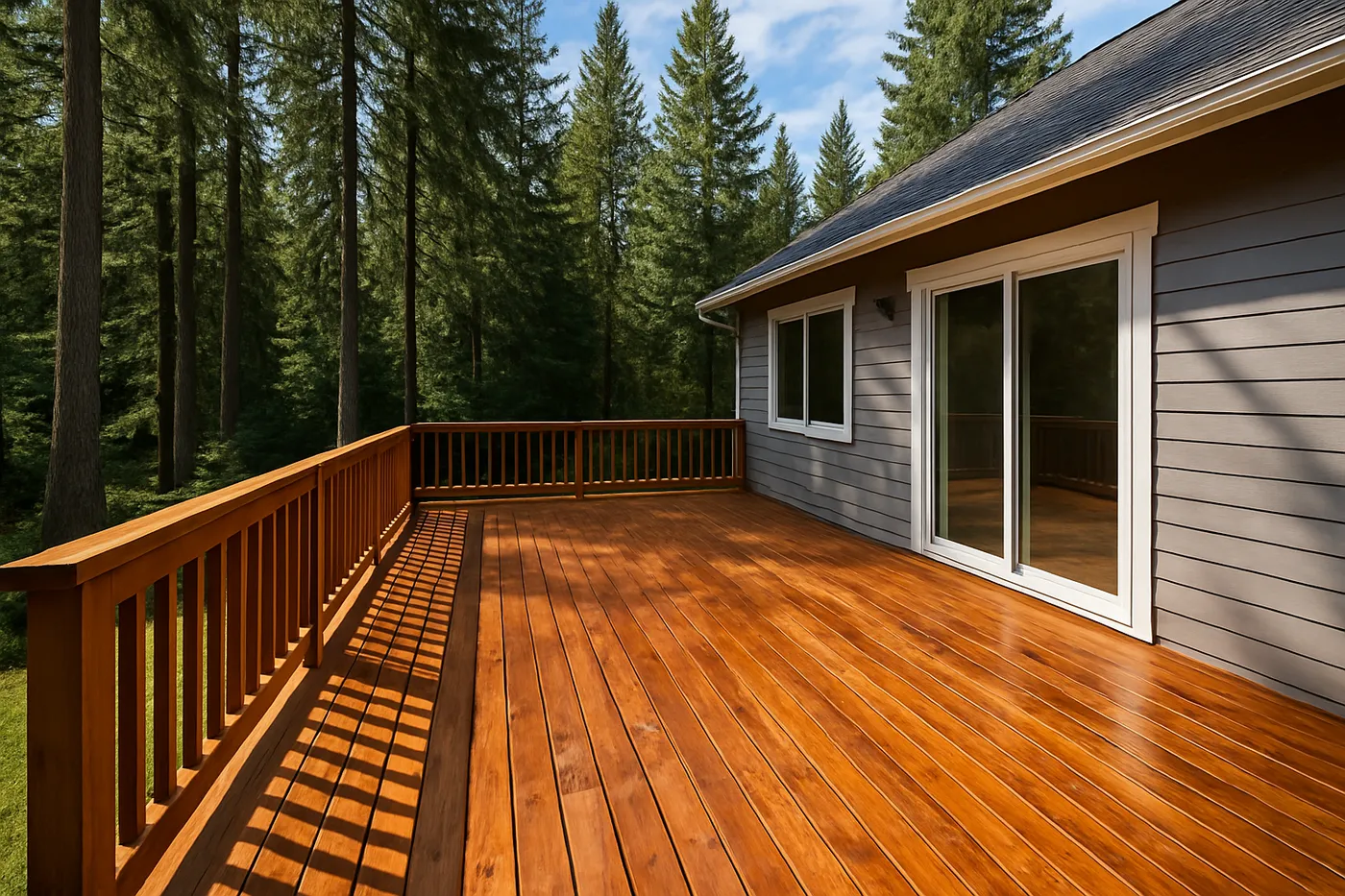
Most deck-stain advice is written for a sunny climate, and it gives Pacific Northwest homeowners the wrong answer. Here, the enemy is not relentless sun, it is nine months of rain, shade, moss, and mildew. That flips the usual guidance: the stains that survive our climate are the ones that breathe and shed moisture, not the thick film finishes that trap it and peel. After twelve years staining decks across the Seattle area, here is what actually holds up.
Stain types compared
Deck stains range from nearly invisible to fully opaque, and they fall into penetrating and film-forming categories. The difference matters enormously in a wet climate.
| Stain type | Coverage | How it behaves in the PNW |
|---|---|---|
| Clear / transparent | Shows full grain, lightest protection | Wears fastest, best only on newer wood in good shape |
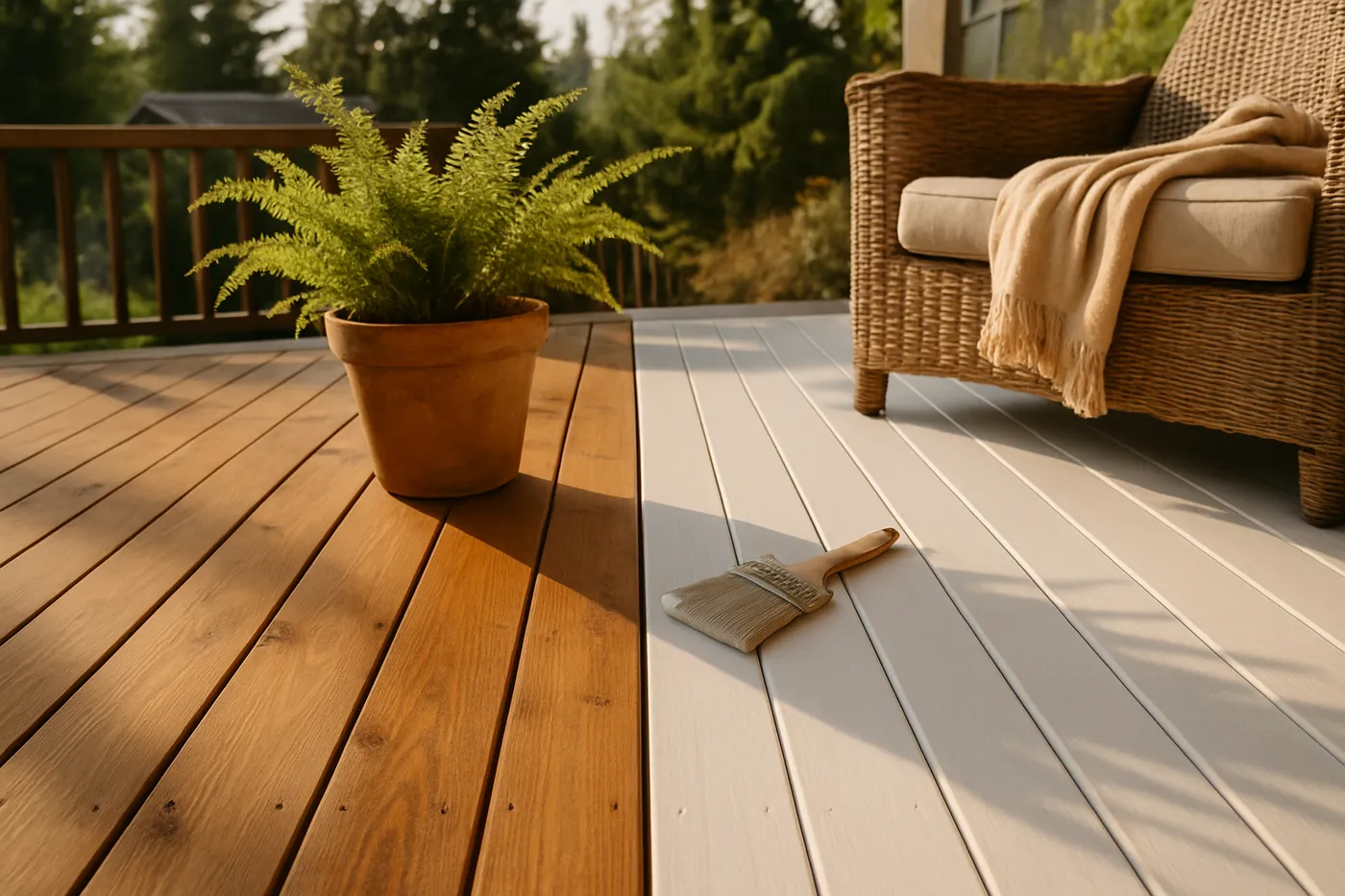
| Semi-transparent | Adds color and UV protection, grain shows | The PNW sweet spot: penetrates, breathes, sheds moisture |
| Semi-solid | More color, hides some grain | Good UV protection, still breathable |
| Solid | Opaque, hides grain | Strong UV and color, but more film, needs careful prep |
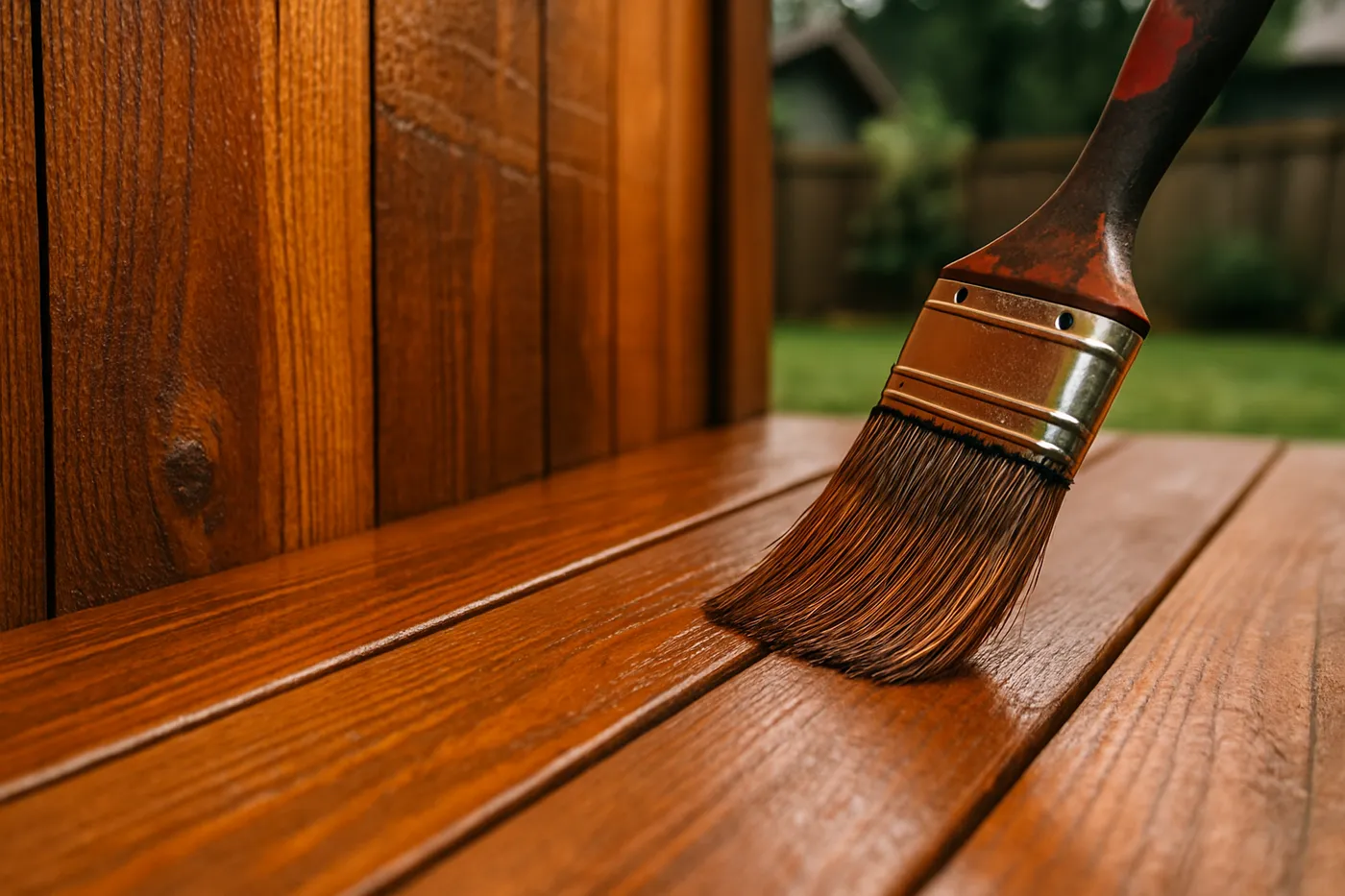
| Penetrating oil / hybrid | Soaks into the wood | Breathes and sheds rain, easy to recoat |
| Film-forming finish | Sits on top of the wood | Traps moisture from below and peels here |
The headline: penetrating and breathable beats film-forming in our climate, and semi-transparent is the popular middle ground that balances protection with the natural look most homeowners want.
Why penetrating and breathable wins in the PNW
A deck in Greater Seattle is wet from below and above for much of the year. Rain soaks the boards, and ground moisture wicks up through them. A film-forming finish seals the top of the wood, but it cannot stop moisture from getting in elsewhere, and once that moisture is trapped under the film, it has nowhere to go. It lifts the finish from underneath, and within a few seasons you are looking at peeling and a full strip-and-sand.
A penetrating, breathable stain works with the climate instead of against it. It soaks into the wood, sheds rain off the surface, and lets the boards dry out when the weather breaks. And because our shaded, damp conditions are ideal for mildew, strong mildew resistance is not a nice-to-have here, it is non-negotiable.
Wondering whether to stain or paint your deck at all? See our guide on deck stain vs. paint: which lasts longer.
Brands and products we use
We work with professional-grade stains chosen for proven performance in wet climates, including Cabots, Sherwin-Williams, and PPG. Rather than crown a single product, we match the stain category to your wood, its exposure, and its current condition, because a newer cedar deck in the sun and a weathered, shaded fence call for different choices. The right product matched to your wood, applied over real prep, is what lasts, not the most expensive can on the shelf.
Prep is half the job
The best stain in the world fails on dirty or damp wood. Prep is at least half of a lasting result:
- Clean. We wash off dirt, mildew, moss, and any failing old finish, often with pressure washing, so the new stain bonds to clean wood instead of grime.
- Brighten and address gray fibers. Weathered, grayed wood and splinters get prepped so the stain takes evenly.
- Dry fully. Stain will not penetrate damp wood. The boards have to reach a low enough moisture content first, which is why timing matters so much in our climate.
Skip any of these and even a premium stain sits on the surface and lifts early.
The Pacific Northwest angle
Greater Seattle and Eastside decks battle rain, shade, moss, and mildew far more than sun. North-facing and tree-shaded decks stay damp and grow moss, which pulls finishes apart faster. Cedar and pressure-treated decks are both common here, and they prefer different prep, cedar is softer and more rot-prone, pressure-treated needs to weather and dry before it will accept stain.
Timing is the other local reality. The only reliable staining windows are the region’s dry stretches, when the wood can fully dry before and after the stain goes on. We watch the forecast and the wood, not the calendar.
How Hedlund stains decks
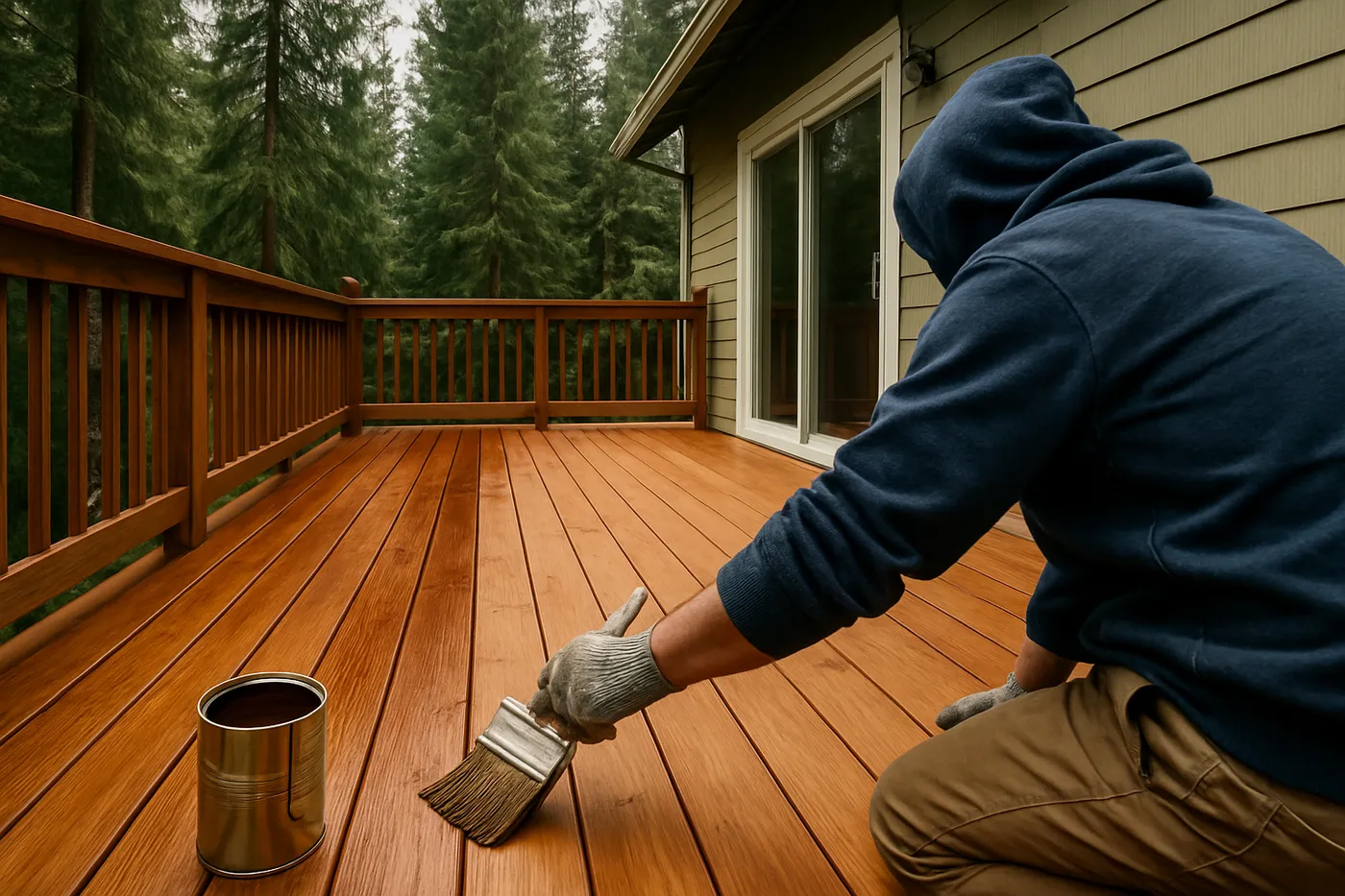
Our process is built for this climate. We wash and prep the wood, let it dry to the right moisture content, then apply the right stain and sheen for your specific boards using the method best suited to the wood. We advise on a realistic re-stain cadence so the protection stays intact, and we back every project with our 10-year workmanship warranty. Most handymen stain and walk away; we prep it properly and stand behind the work. For the full re-coat schedule, see how often you should re-stain a deck or fence in WA.
“Hedlund Painting did a great job painting the exterior of our home and staining a large deck and stairs. The crew was thorough, tidy and very professional.” Ann H., 5 stars (Google)
Learn more on our deck and fence staining service page. We stain decks across Seattle, Woodinville, and the greater Eastside.