
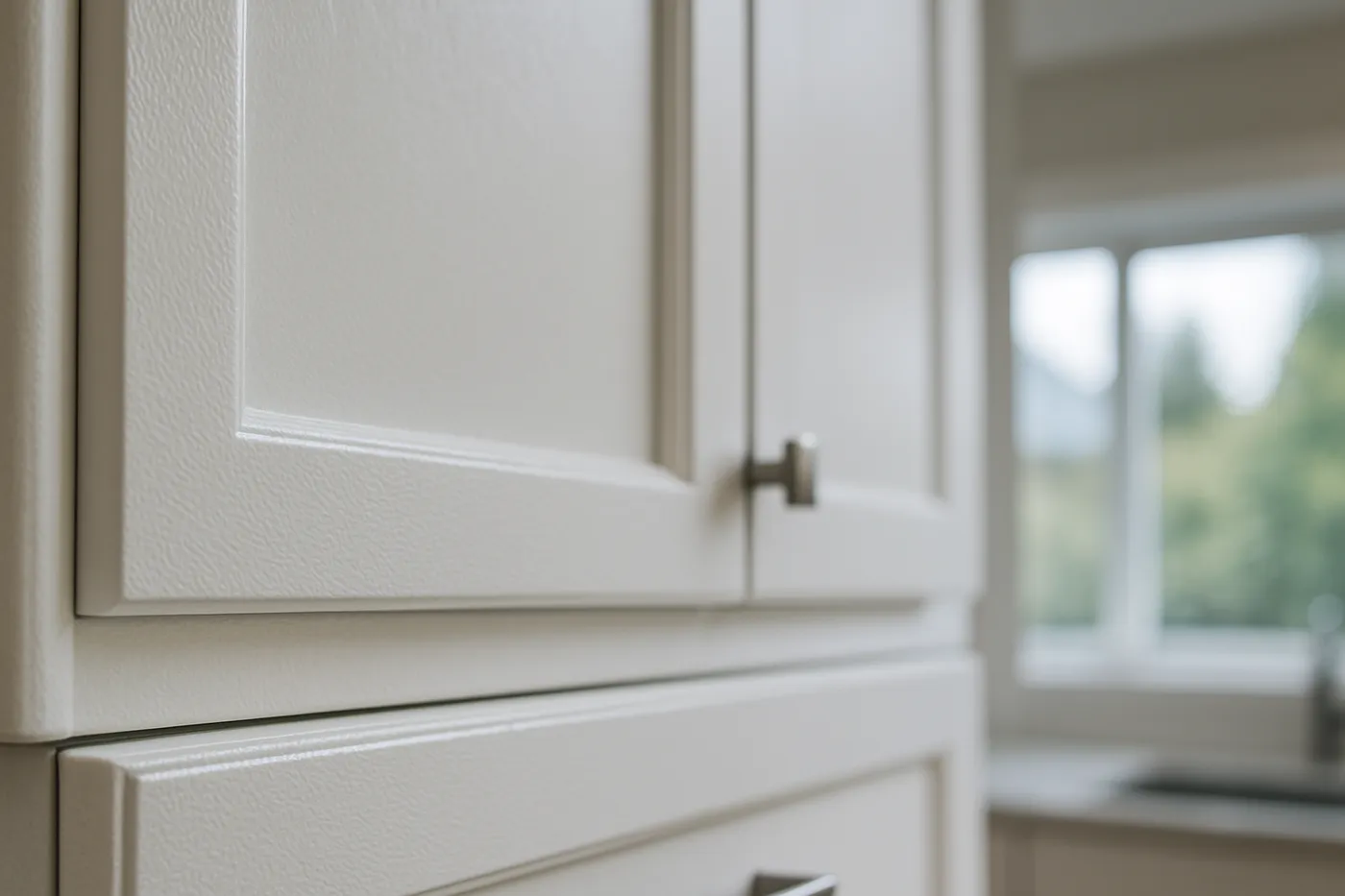
Cabinets take more abuse than almost any surface in your home. They get opened, slammed, wiped down, splashed, and touched by greasy hands dozens of times a day. The right paint stands up to all of it. The wrong paint, including standard wall paint, stays soft, picks up fingerprints, and starts chipping at the corners within a season. After twelve years of refinishing kitchens across the Seattle area, we can tell you the answer comes down to two things: the coating and the finish.
Why cabinet paint is different from wall paint
Wall paint is built to look good and dry fast on a vertical surface that nobody touches. Cabinet paint has a harder job. It has to cure into a hard, washable film that resists grease, water, knocks, and constant handling, the way a factory finish does.
The key word is cure, not dry. Most paints feel dry to the touch in an hour, but a true hard cure takes longer and is what gives a cabinet finish its durability. A coating that only dries soft will dent under a fingernail and peel where doors rub. A cabinet-grade enamel keeps hardening over the days after it goes on, until it reaches a finish that wipes clean and holds up to real kitchen life. That is the difference between cabinets that still look new in five years and cabinets that look tired by next summer.
Best paint types for cabinets
Not every “cabinet paint” on the shelf performs the same. Here is how the main categories compare.
| Coating type | How it performs | Best for |
|---|---|---|
| Waterborne alkyd / enamel | Levels out smooth, cures hard, low odor, easy cleanup | The all-around best choice for most kitchens |
| Acrylic-urethane enamel | Very durable and flexible, excellent adhesion and washability | High-use kitchens that take heavy daily wear |
| Standard latex wall paint | Stays softer, marks easily, wears fast on high-touch edges | Not recommended for cabinets |
Both cabinet-grade options are built to level out as they dry, which is what kills brush and roller texture and gives you that smooth, even surface. Standard wall paint simply was not engineered for this kind of contact, which is why we never use it on a cabinet job.
Why finish matters
Once you have the right coating, the sheen decides how the cabinets look and how easily they clean.
| Finish | Cleanability | How it looks | Notes |
|---|---|---|---|
| Flat / matte | Poor, hard to wipe | Hides surface flaws | Not suited to kitchens |
| Satin | Good, wipes clean | Soft, low-glare | Popular, slightly hides imperfections |
| Semi-gloss | Best, very wipeable | Noticeable sheen | Most durable, shows flaws so prep must be flawless |
| Gloss | Excellent | High shine | Bold look, unforgiving of any defect |
For most Seattle-area kitchens we recommend satin or semi-gloss. Both resist moisture and clean up with a damp cloth. Satin reads a touch softer and forgives minor surface variation; semi-gloss is the most wipeable and durable, with a bit more sheen. The higher the sheen, the more it rewards careful prep, because gloss shows every flaw underneath.
Brands we trust
We spray premium cabinet-grade coatings from Sherwin-Williams and Benjamin Moore, chosen specifically for the wear a kitchen takes. These are not the same lines used on walls. Within those brands, the cabinet and trim enamels are engineered to level out, cure hard, and clean easily. The brand on the can matters less than matching the right product to your cabinets and applying it over real prep, which is where most rushed jobs fall apart.
Wondering whether refinishing is worth it for your kitchen? See our guide on painting vs. replacing kitchen cabinets.
Spray vs. brush
Even the best coating looks ordinary if it is brushed on in place. Brushing and rolling leave texture, lap marks, and stray bristles. Spraying lays down a thin, even film with no brush marks, which is exactly how factory cabinets get their smooth surface.
That is why we spray. Doors and drawer fronts come off and are sprayed in a controlled area, while the boxes are masked and sprayed in place. The result is a uniform, factory-smooth finish you cannot get with a brush, no matter how steady the hand.
The Pacific Northwest angle
Greater Seattle kitchens deal with year-round humidity and damp shoulder seasons, and that affects both the paint choice and the timing. Damp air slows cure, so bargain paints that already struggle to harden take even longer to reach a durable state, if they ever do. A cabinet-grade enamel and proper cure time matter more here than in a dry climate.
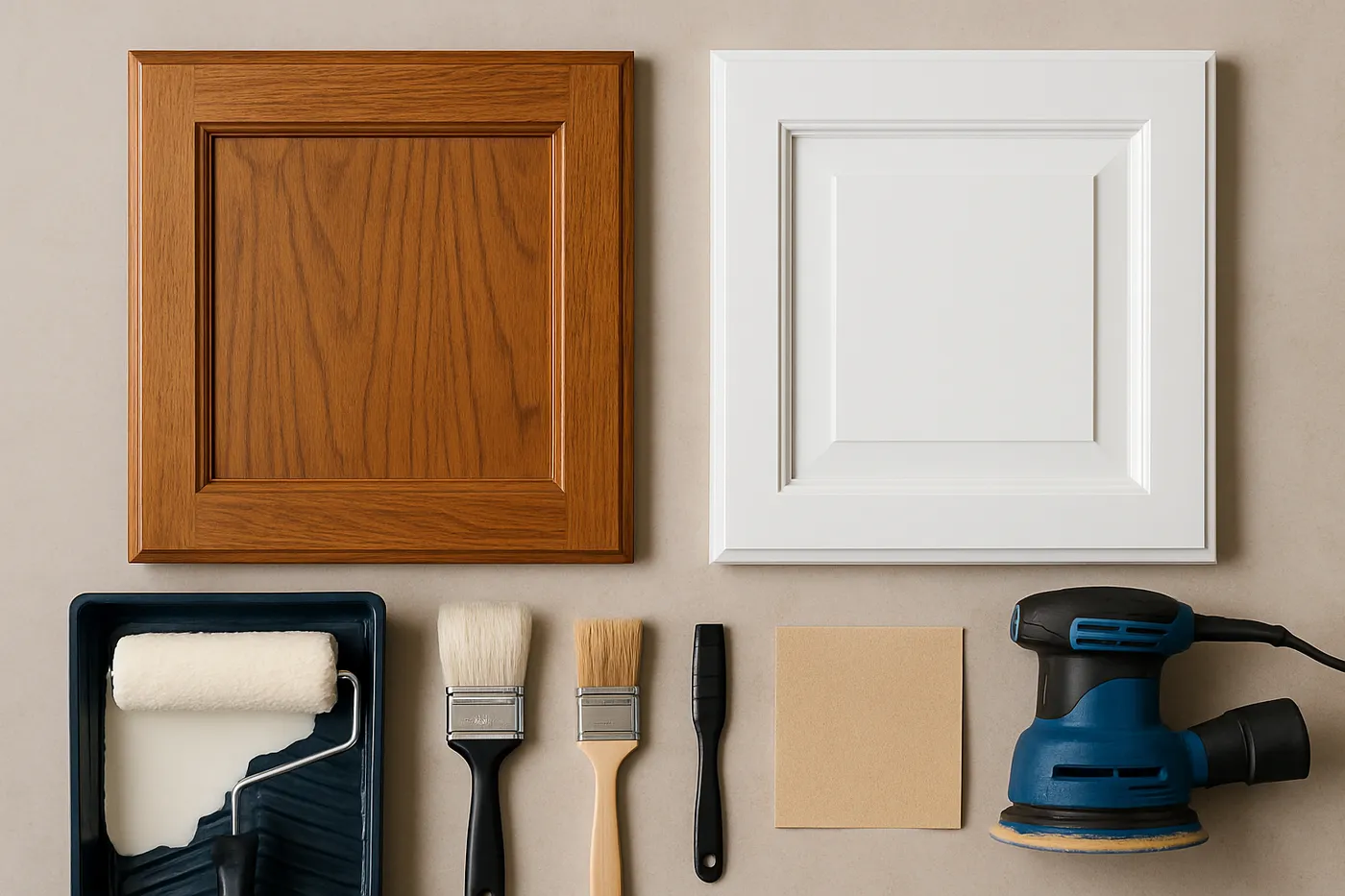
Older North Seattle and Eastside homes add another wrinkle: many have oil-painted or varnished cabinets. Those surfaces need the right cleaning, sanding, and bonding primer or new paint simply will not stick. Skip that step and the finish peels, no matter how good the topcoat is.
How Hedlund does it
A flawless cabinet finish is mostly prep and the right product. Our process is built around both:
- We clean and degrease thoroughly, because kitchen cabinets carry years of cooking grease.
- We sand to a paintable profile and fill dings and grain.
- We apply a bonding primer suited to your cabinet material, including older oil or varnished surfaces.
- We spray cabinet-grade enamel from Sherwin-Williams or Benjamin Moore for a factory-smooth, brush-mark-free finish.
- We allow proper cure time before reassembly.
Every cabinet project is backed by our 10-year workmanship warranty. Most local painters will not warranty cabinets at all. We do, because we spray a real finish over real prep.
“I recently had Hedlund Painting paint the exterior of my home and I was so happy with the results and experience with that project that a month later, I decided to hire them again to paint my kitchen.” David D., 5 stars (Google)
Learn more about our full process on the cabinet painting service page, and see finished kitchens across Seattle and Green Lake.