
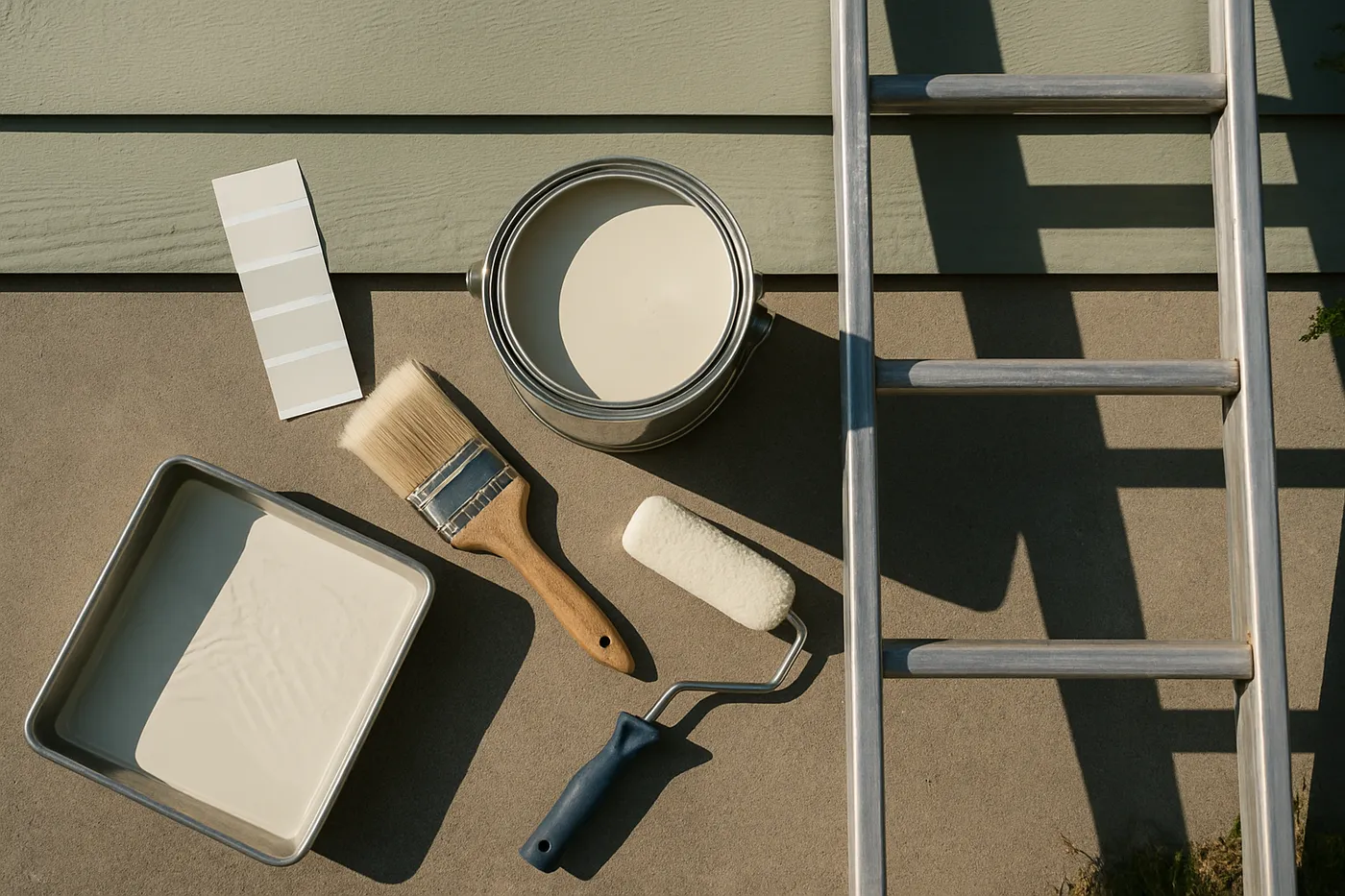
Why timing matters for exterior paint
Exterior paint is not just decoration, it is a coating that has to chemically cure and bond to the surface. That process has requirements:
- Dry surfaces. Paint applied over damp siding cannot bond properly. Moisture trapped under a coating leads to blistering and peeling.
- Minimum temperatures. Most exterior coatings need temperatures to stay above a minimum, day and night, to cure correctly. Cold slows or stops the cure.
- Cure time after application. The coating keeps curing for a while after it goes on. Rain or a cold snap mid-cure can ruin an otherwise good job.
Get any of those wrong and you see the failure within a season: adhesion problems, blistering, and early peeling. This is why a good crew watches the weather instead of forcing paint onto a surface that is not ready, and why the season you choose is part of whether the job lasts.
Season by season in Western WA
| Season | Conditions | Suitability | Notes |
|---|---|---|---|
| Spring (early) | Cool, wet, variable | Limited | Workable on dry breaks late in the season |
| Late spring | Warming, drying out | Good | The window opens, demand starts to climb |
| Summer | Warm, dry, stable | Best | Ideal cure conditions, books fill fastest |
| Early fall | Mild, still mostly dry | Good | Workable, but the window narrows toward the rains |
| Late fall / winter | Cold, wet | Limited | Only dry, warm-enough breaks with the right coatings |
The takeaway: late spring through early fall is the reliable window, with summer at the center of it. The shoulder seasons are workable with careful weather-watching, and winter is the exception, not the rule.
**** The dry-season calendar fills fast. Get a free written estimate now to lock your spot before the summer schedule is full.
Book early, the dry window is short
Here is the part most homeowners learn the hard way. Western Washington’s dry window is short and in high demand, and quality crews fill their summer schedules early. By the time the sun is reliably out, the best painters are often booked weeks or months ahead.
The strategy is to plan against the calendar. Booking in winter or early spring locks your dry-season slot before the rush. And the off-season is not wasted: it is the right time to handle interior painting, which is a controlled indoor environment year-round, so you keep your home moving forward while the exterior waits for its window.
“Hedlund Painting painted the exterior of our house. The job was easy to schedule, and their professionals arrived on time and worked efficiently to finish up with as little impact on us as possible.” Carolyn T., 5 stars (Google)
When winter exterior work is possible
Winter exterior painting is not impossible, it is just selective. It can work when the conditions and the job line up:
- Dry-break days. A stretch of dry, warm-enough days with surfaces given time to dry out.
- Temperature-rated coatings. Products formulated to cure at lower temperatures, used within their rated range.
- Smaller or protected jobs. A covered entry, a garage, or a small detail job is more feasible than a full two-story exterior in January.
We assess winter feasibility honestly rather than rush a bad window. If the conditions will not let the paint cure, the right answer is to schedule it for a window that will, not to risk a finish that fails by spring.
“Amazing exterior painting work on my single family home. The owner and his crew are friendly and respectful. I had a tight turnaround trying to squeeze in finishing the exterior painting late.” Chris P., 5 stars (Google)
How Hedlund plans around the weather
Scheduling discipline is part of how we make exteriors last. We schedule exterior work for the dry window, watch the weather as the date approaches, and lock your dates in the written proposal so you have a real plan, not a maybe. We keep interior work flowing through the wet months so quality stays high year-round, and every exterior job is backed by our 10-year workmanship warranty.