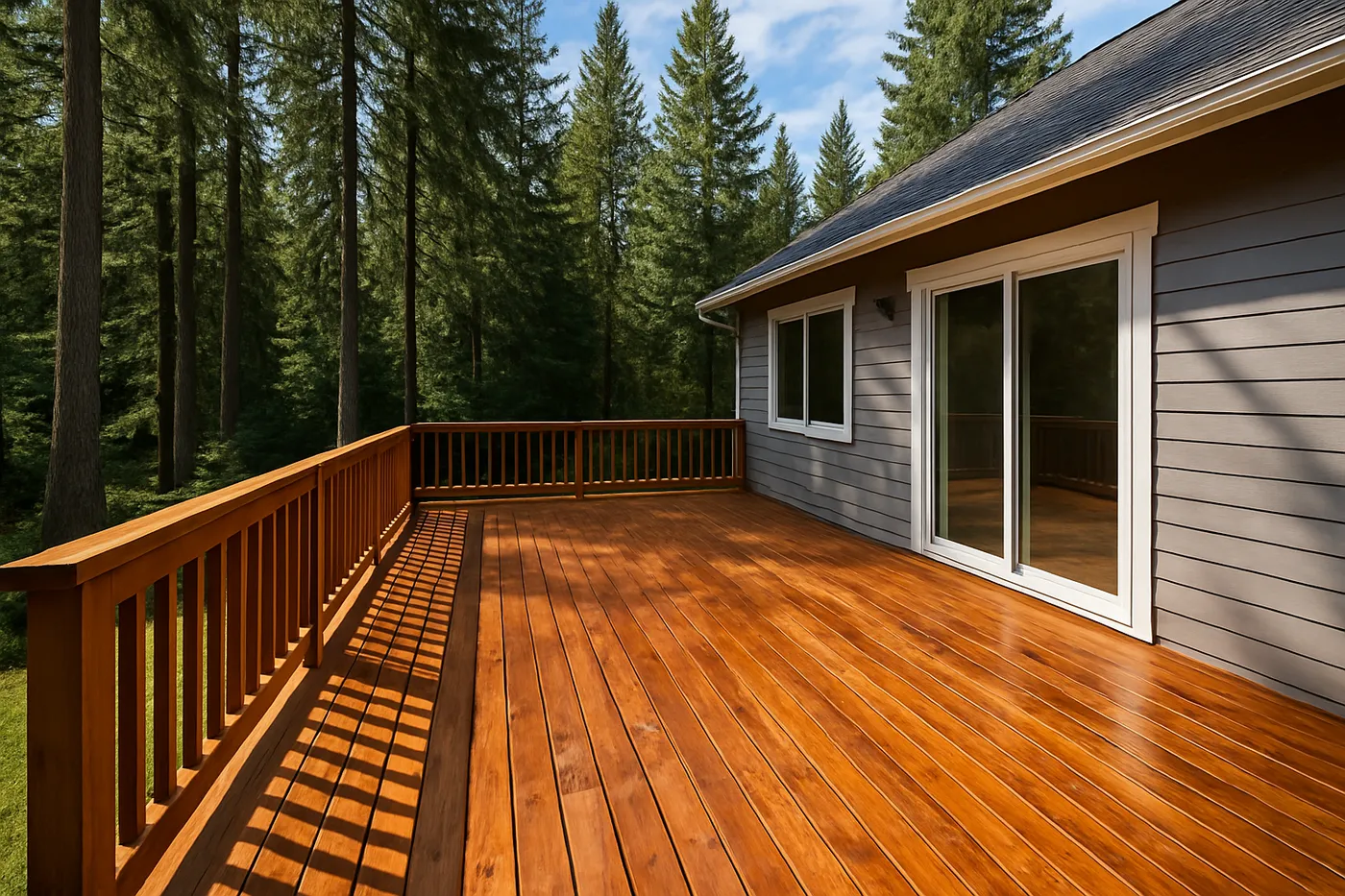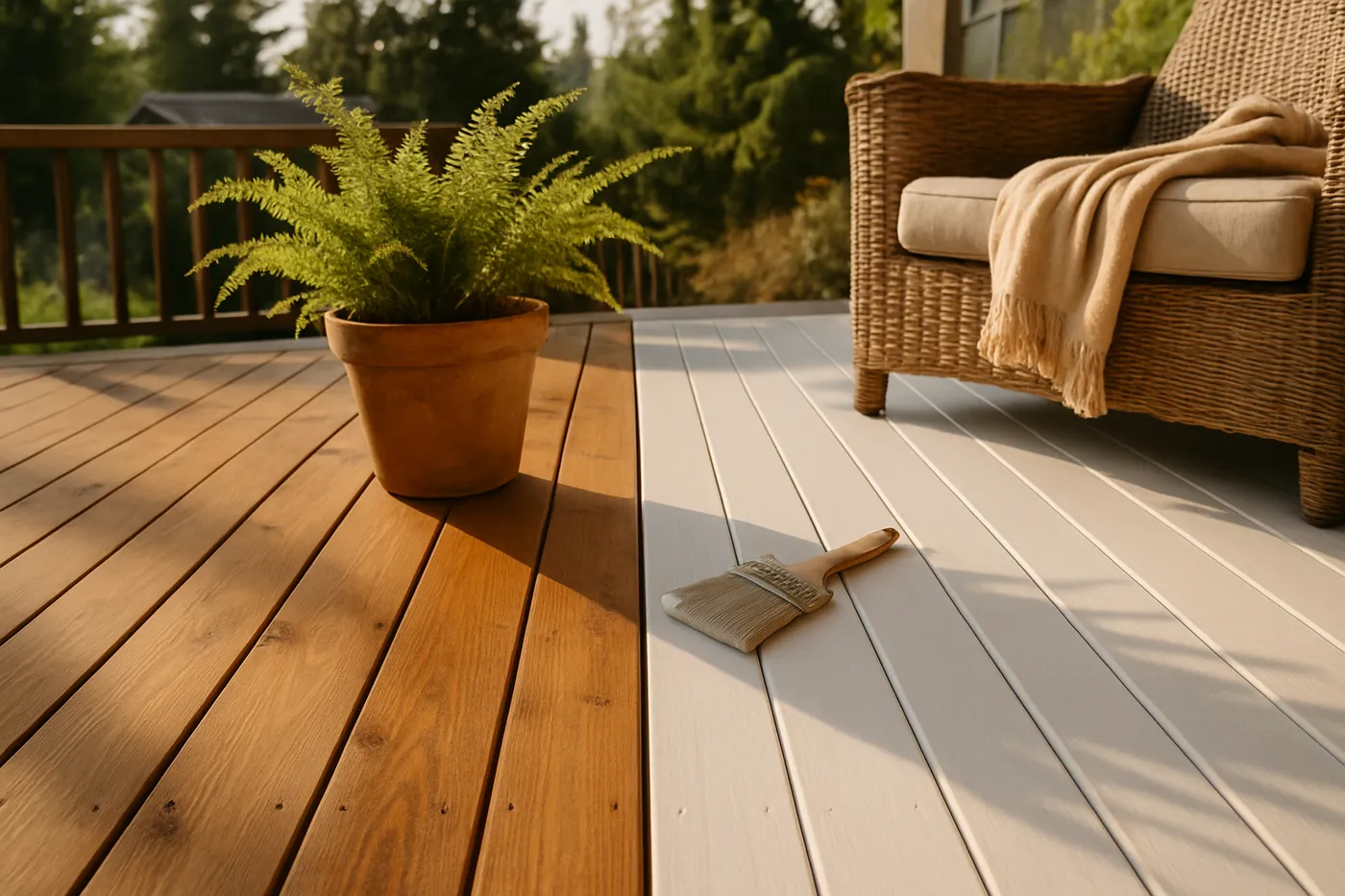

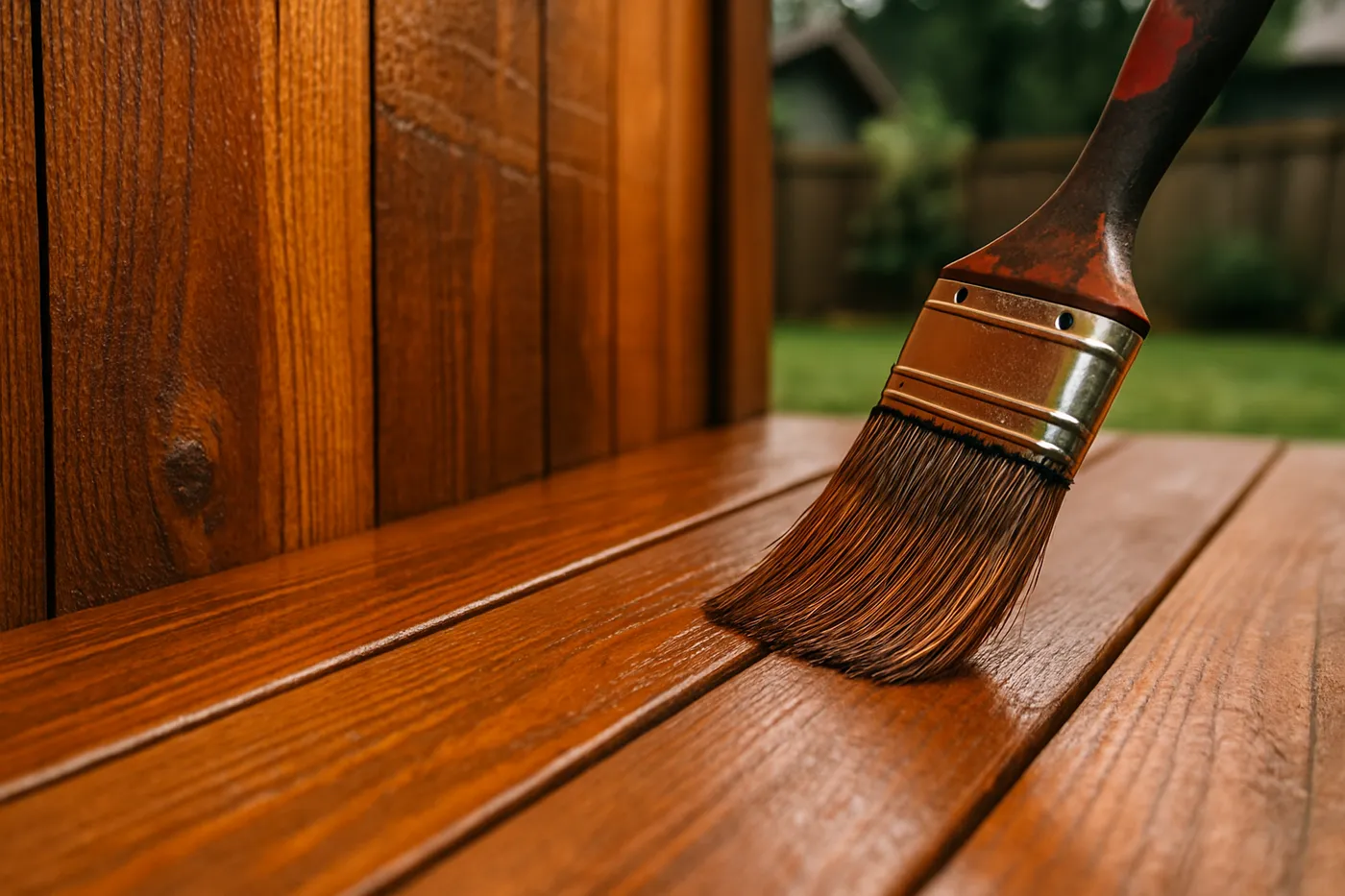
The interval printed on the back of a stain can was written for a national average, not for Washington. Our wet, shaded climate wears finishes faster than those numbers assume, which is why so many homeowners are surprised when their deck looks tired earlier than expected. The realistic answer for the Seattle area: most decks need a re-coat every 2 to 3 years and fences every 3 to 5. But the calendar is only a guide. After twelve years staining decks across the region, here is how to know for sure.
Re-stain intervals
Decks and fences do not wear at the same rate, and exposure shifts the timing within each range.
| Surface | Typical interval | What shortens it |
|---|---|---|
| Deck floors (foot traffic) | Every 2 to 3 years | Heavy use, full sun, shade and moss |
| Railings and vertical deck parts | Longer than the floor | Direct sun exposure |
| Fences | Every 3 to 5 years | South-facing sun, ground contact, neglect |
| Semi-transparent stain | Toward the shorter end | Thinner film, wears gradually |
| Solid stain | Toward the longer end | More opaque, but can show wear at traffic points |
These are standard category ranges, framed around exposure. Your specific deck could land anywhere within them depending on sun, shade, and traffic, which is why a quick test beats the calendar.
The water-bead test and warning signs
The most reliable check takes thirty seconds. Sprinkle a little water on the wood:
- Water beads up: the stain is still protecting the wood. You are fine for now.
- Water soaks in and darkens the wood: the stain has worn through and it is time to re-coat.
Beyond the bead test, watch for these warning signs:
- Fading or graying of the color.
- Rough or raised grain where the surface has weathered.
- Blotchy, uneven color as the stain wears unevenly.
- Mildew or moss taking hold, common in shaded PNW spots.
- Visible bare wood at high-traffic paths like stair treads and the route to the door.
Any of these means the protection is breaking down, even if the calendar says you have time left.
Not sure where your deck stands? A free written estimate for deck and fence staining gives you a straight read. Call (206) 250-9193.
What shortens the interval in WA
Several local realities pull re-stain timing toward the short end:
- Rain. Months of moisture work the finish constantly.
- Shade and moss. North-facing and tree-shaded decks stay damp and grow moss that breaks finishes down.
- Foot traffic. Walking paths wear through first.
- Horizontal boards holding water. Flat deck surfaces let water sit, unlike vertical fences that shed it.
- A cheap prior stain or poor prep. A bargain finish applied over dirty or damp wood fails early no matter the interval.
This is why a shaded, well-used Seattle deck can need attention before a south-facing fence that has barely weathered.
Maintenance between re-stains
You can stretch the interval with simple upkeep:
- Rinse the deck periodically to keep dirt and grime from grinding into the finish.
- Sweep off leaves and debris, especially in fall, so wet organic matter does not sit and feed mildew.
- Keep moss off shaded sections before it takes hold.
- Address standing water, clearing drainage so the boards are not sitting wet.
None of this replaces re-staining, but it slows the wear between coats.
The Pacific Northwest angle
Washington’s wet, shaded conditions wear deck finishes faster than the back-of-can intervals assume. North-facing and tree-shaded Seattle and Eastside decks grow moss and stay damp, which pulls re-stain timing toward the short end of every range. The reliable approach is not a fixed calendar date, it is to watch for the water-bead failure and re-coat during a dry stretch when the wood can fully dry. For the stains that hold up longest here, see our guide to the best deck stain for Pacific Northwest weather, and if you are still deciding on a finish, our deck stain vs. paint comparison.
How Hedlund keeps it on schedule
When we re-stain, we clean the wood, often with pressure washing, let it dry to the right moisture content, and re-coat with the correct product for your boards. We advise on a realistic cadence based on your deck’s exposure, not a generic number, and we back every project with our 10-year workmanship warranty.
“We had such a great experience we hired Hedlund back for a second project. First they refinished the big wood panels on our modern home (tricky as semi-transparent, looks awesome), then we hired.” Sarah B., 5 stars (Google)
Learn more on our deck and fence staining service page. We serve Woodinville, Bothell, and the greater Eastside.