
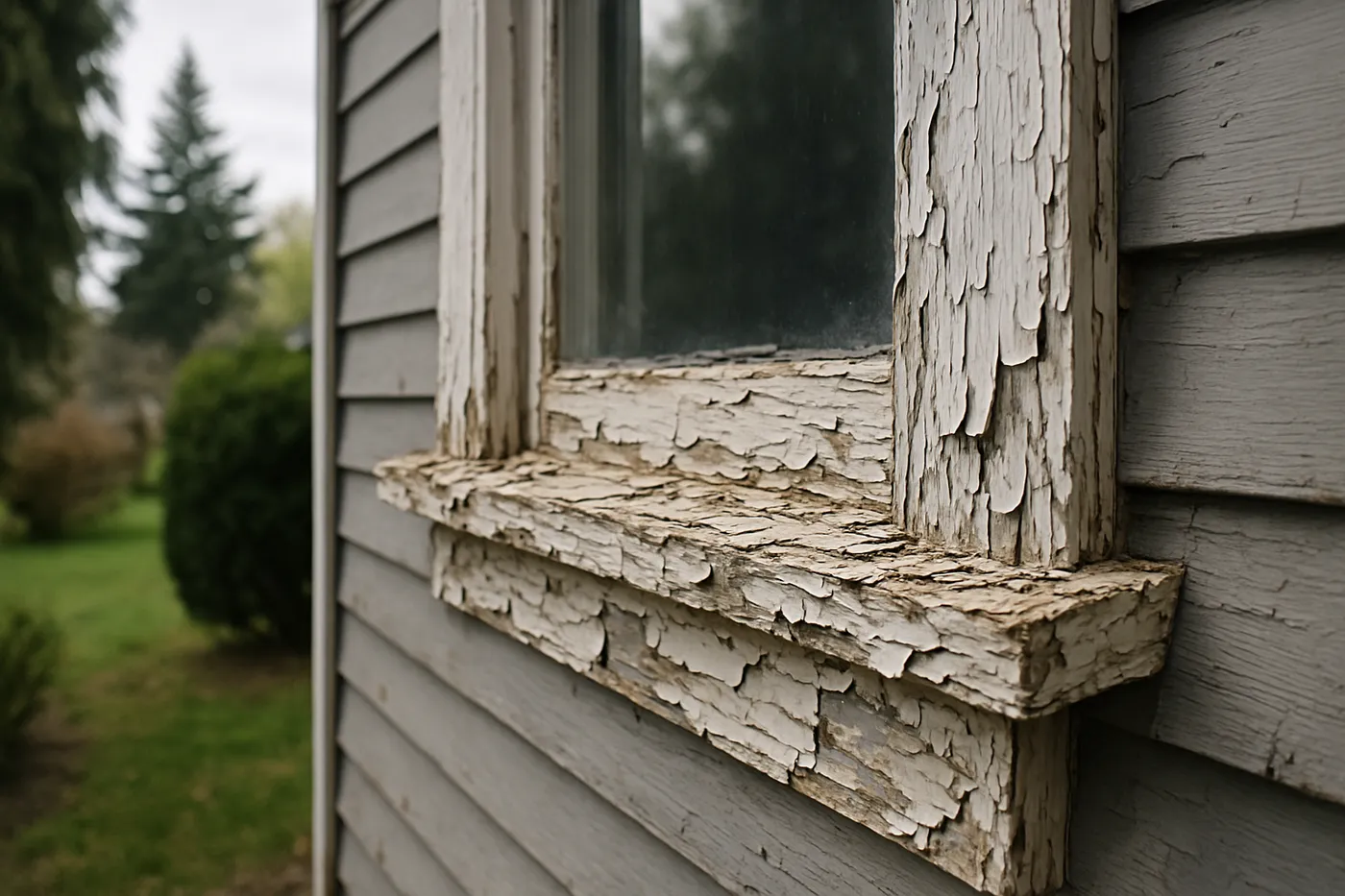
Lead paint does not announce itself. You cannot tell by color, and you usually cannot tell by looking at a single coat. What you can do is read the clues, the age of the home first, then the way old paint behaves as it fails, and use those clues to decide when to test. The signs tell you to be careful. A test tells you for certain. The order matters, because the dangerous moment is when someone disturbs lead paint, not when it is sitting intact on a wall.
Warning signs to look for
The single biggest indicator is the build date. If your home went up before 1978, the year lead-based paint was banned for residential use, treat the original paint as a candidate for lead until a test says otherwise.
Beyond age, watch how the old paint is failing:
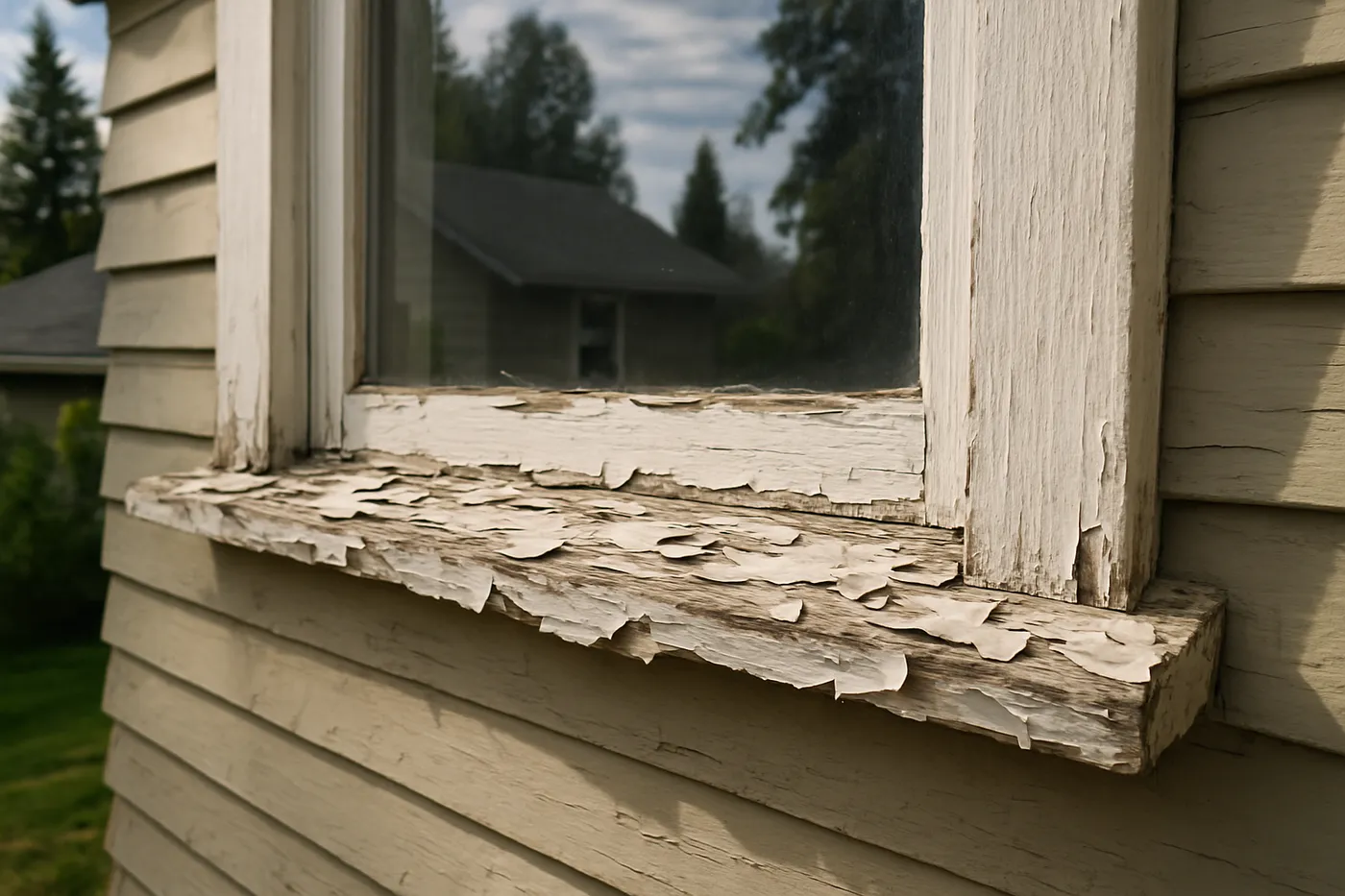
- Alligatoring. Lead paint often cracks into a dry, scaly, alligator-skin pattern as it ages. It is one of the more recognizable visual clues.
- Chalking. A powdery residue on the surface as the old paint breaks down.
- Peeling and flaking, especially on windows, doors, and trim that get handled and bumped.
- Many old layers. A surface with coat after coat of old paint, particularly on original woodwork, is a flag in an older home.
None of these confirm lead on their own. They are reasons to test, not test results. But on a pre-1978 home, seeing them should stop anyone from scraping or sanding until a test is done.
Where lead paint hides
Lead paint tends to show up on the same surfaces in older homes, and they are often the ones most likely to be disturbed during a project:
- Friction surfaces, especially windows (sashes, sills, jambs) and doors, where movement creates dust on its own.
- Trim and baseboards, the original interior woodwork.
- Railings and banisters, indoors and out.
- Porches and exterior siding, which take decades of weather.
Because these are exactly the surfaces a repaint or a carpentry repair touches, they are where the risk concentrates. Knowing where to look is half of knowing when to test.
Quick lead-paint risk checklist
Run through these. The more you can answer yes, the stronger the case for testing before any work begins.
- Was the home built before 1978?
- Is there original paint or woodwork that has never been fully stripped?
- Is paint cracking into a scaly, alligator-skin pattern?
- Is the surface chalky, peeling, or flaking?
- Are you planning to sand, scrape, cut, or otherwise disturb old painted surfaces?
- Are there windows, doors, trim, or railings with many old layers of paint?
Several yeses on an older home? Confirm before anyone disturbs the paint. We are EPA Lead-Safe Certified and handle older homes daily. Get a free written estimate.
How to confirm and what to do
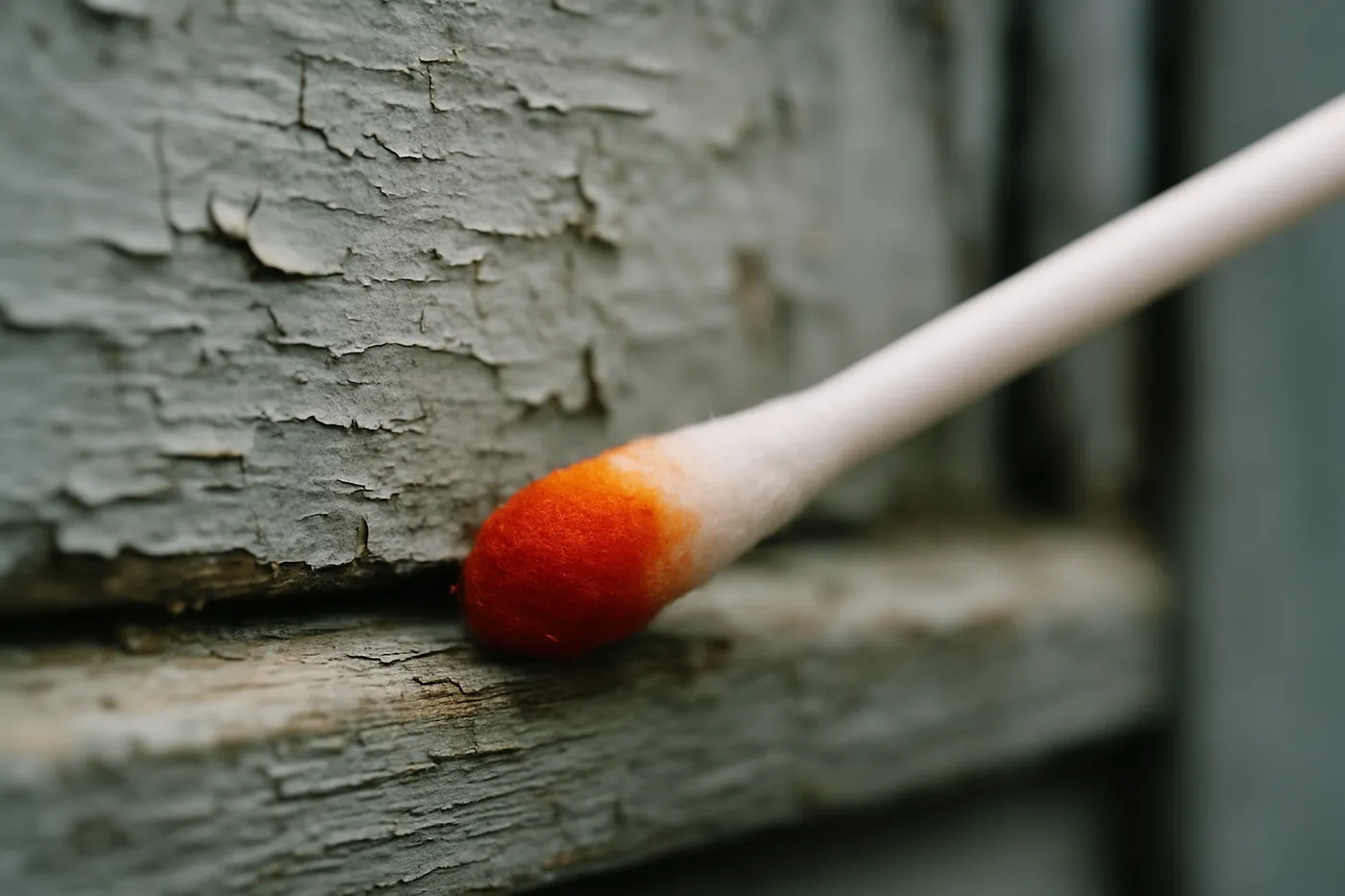
Visual signs justify a test, and there are two routes. A DIY swab kit gives a quick, low-cost screen of a specific surface, though it can miss lead buried under newer coats. A certified inspection, using an XRF analyzer or lab-tested paint chips, reads through layers and gives a reliable, whole-home answer. For the full breakdown, see Lead Paint Testing: How to Know If Your Older Home Has It.
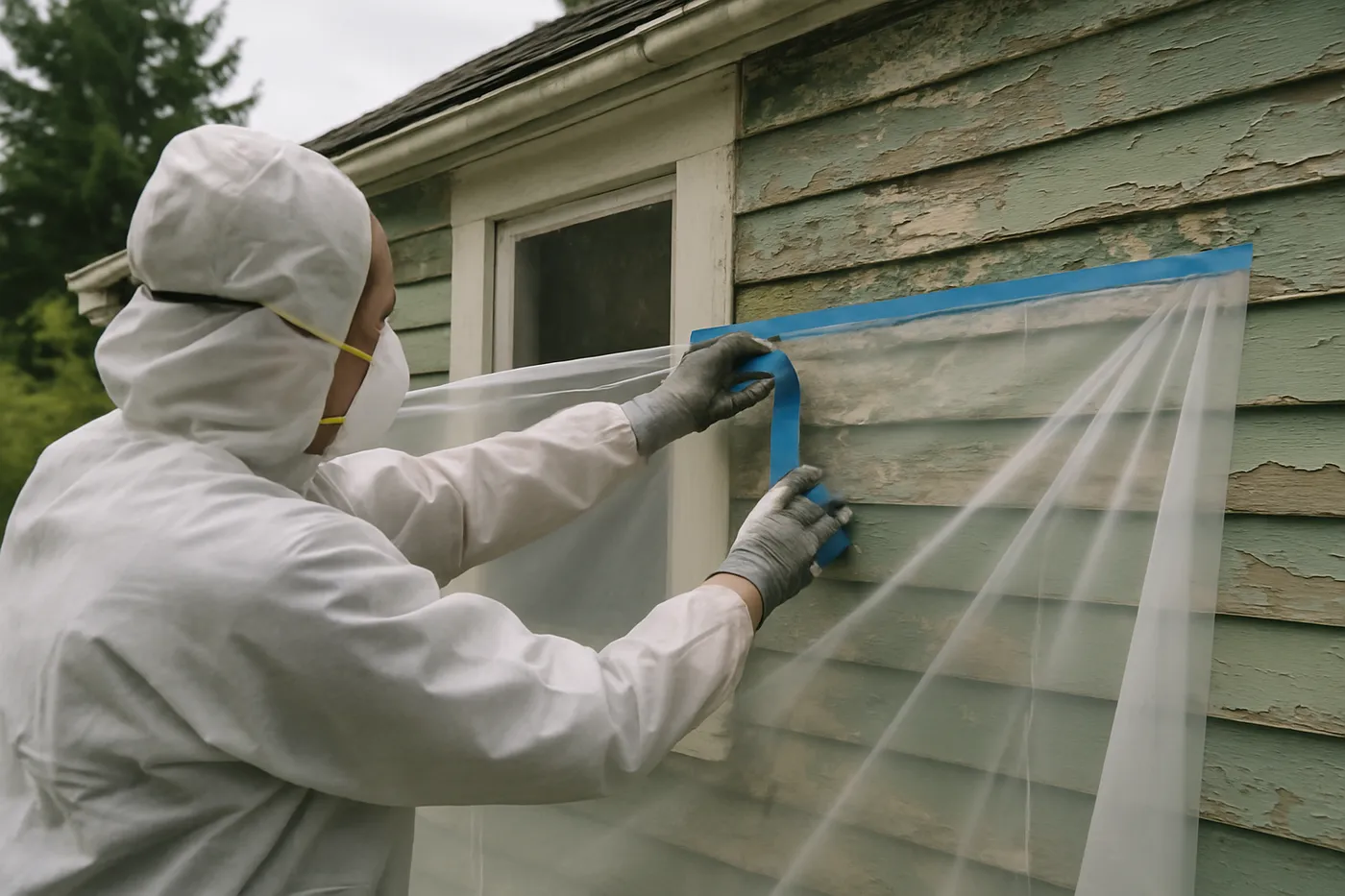
If a test is positive, the rule is the same as the rule for suspected lead: do not disturb it yourself. Do not sand, scrape, or dry-remove it. For pre-1978 homes, EPA rules require a Lead-Safe certified firm to handle work that disturbs lead paint. Hire one, and they will either seal the stable paint or remove it safely, which we cover in Painting Over Lead Paint: Safe Practices for Pre-1978 Homes.
Spotting lead paint in the Seattle area
Decades of damp Pacific Northwest weather are hard on old exterior paint, and that shows up clearly on Seattle-area homes. Old coats alligator, chalk, and peel faster here, which makes the warning signs easy to spot on pre-1978 houses across Ballard, Edmonds, and Green Lake.
The same weathering is a reason for urgency, not just observation. As old lead paint deteriorates outdoors, the chips spread into soil, garden beds, and gutters around the home. So on an older Seattle-area house, visible alligatoring or peeling is both an easy clue and a prompt to test and address the surface before the deterioration spreads further.
How Hedlund does it
We are a licensed, bonded, and insured contractor of more than a decade, and an EPA Lead-Safe Certified firm with RRP-trained crews. On older homes, our estimators flag likely lead during the walkthrough, before any work is scoped, and our crews are trained to contain and remove it safely when it is present.
We feature the Lead-Safe credential on purpose. Spotting the signs is step one, but handling lead correctly is what actually protects the household, and that is the part that requires certification, not just good intentions. Our certification number is available on request.
“Hedlund Painting was a great team to work with. The assessor really helped walk through consideration of interest given the age of the house involved.” James H., 5 stars (Google)
“Chris came out to bid the job and was very professional and friendly.” Adrian H., 5 stars (Google)
For full details, see our EPA Lead-Safe Certified page. Related reading: Lead Paint Testing: How to Know If Your Older Home Has It and Painting Over Lead Paint: Safe Practices for Pre-1978 Homes. We also handle exterior painting and carpentry and wood repair.