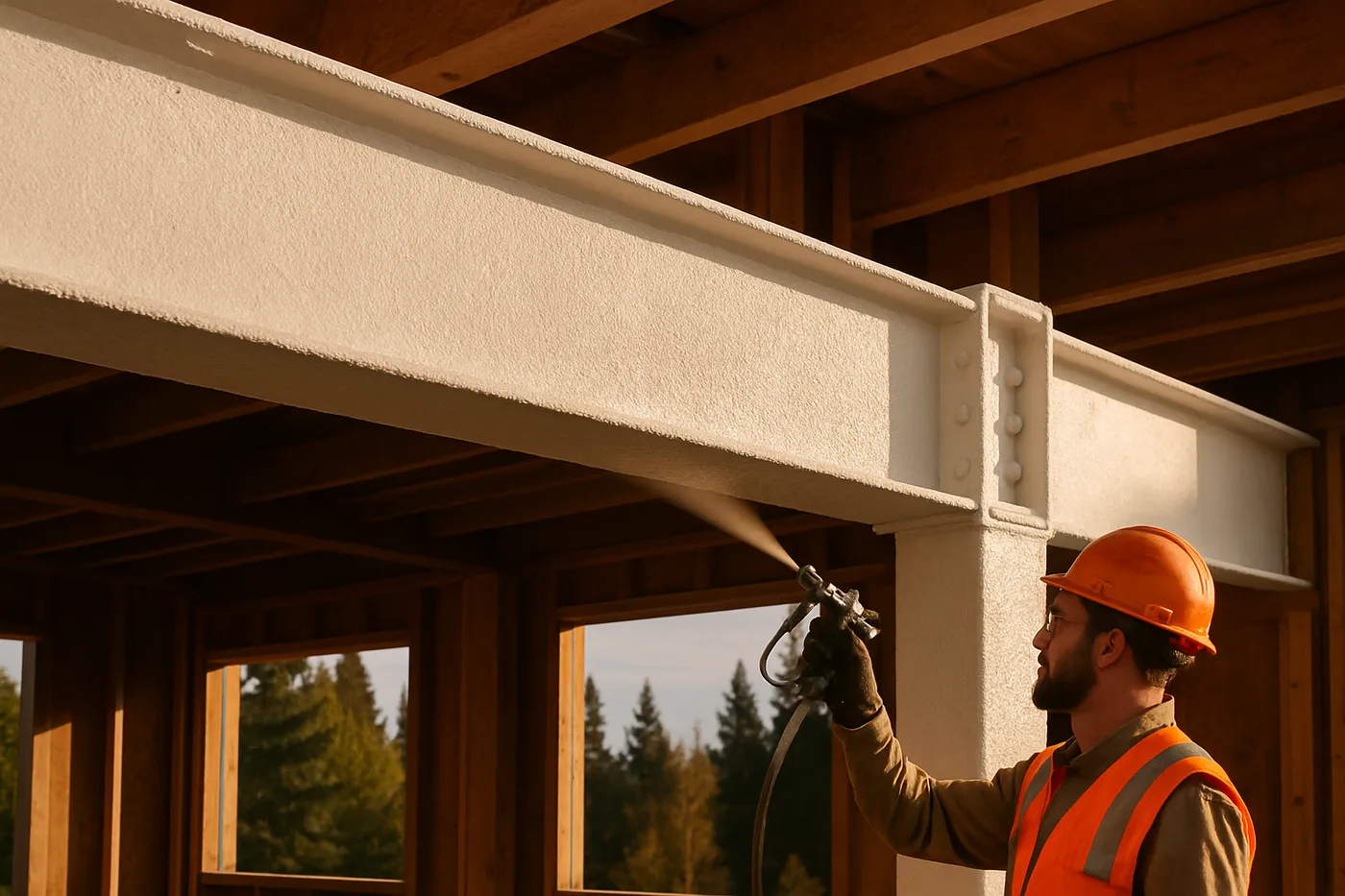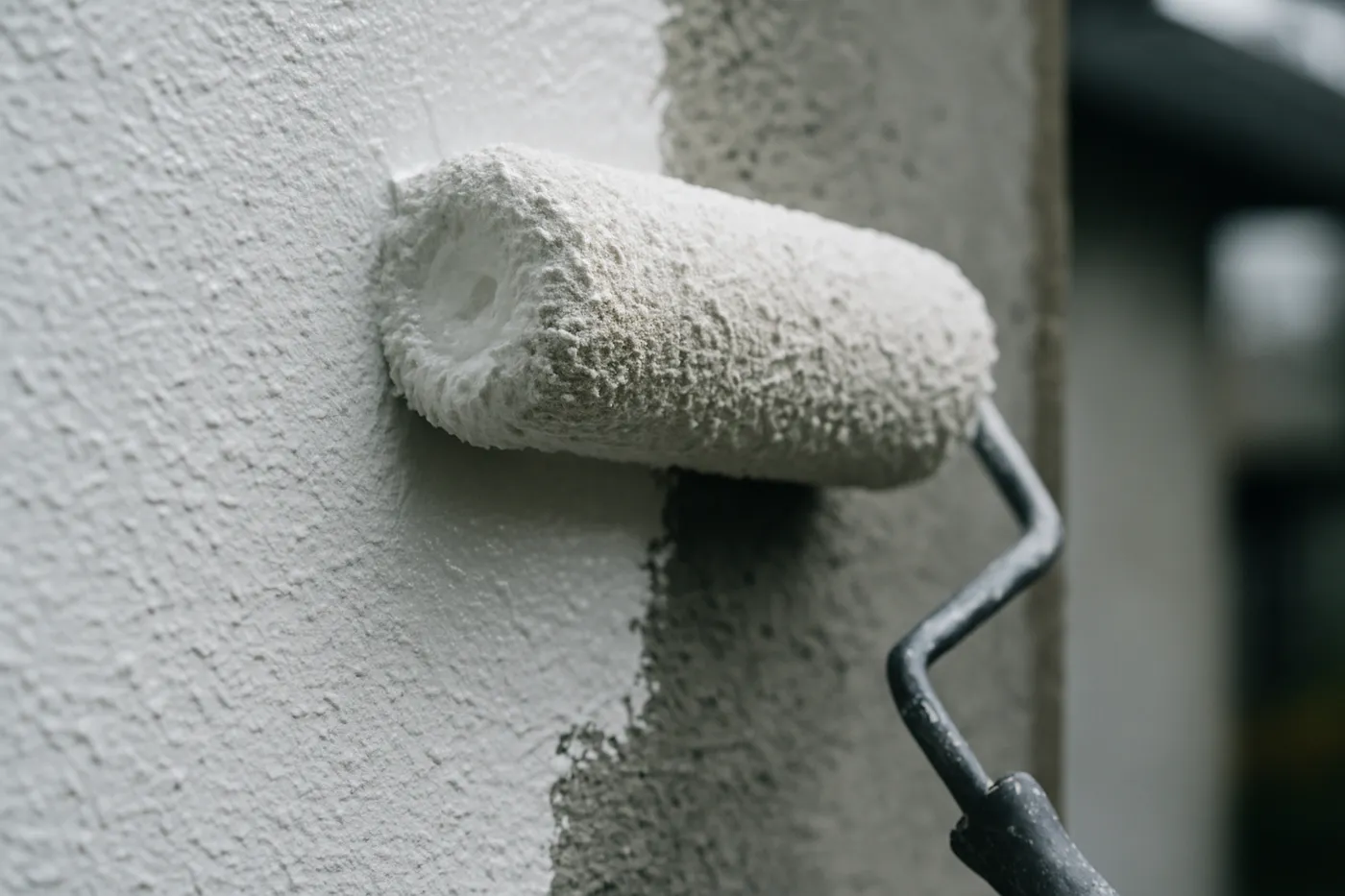

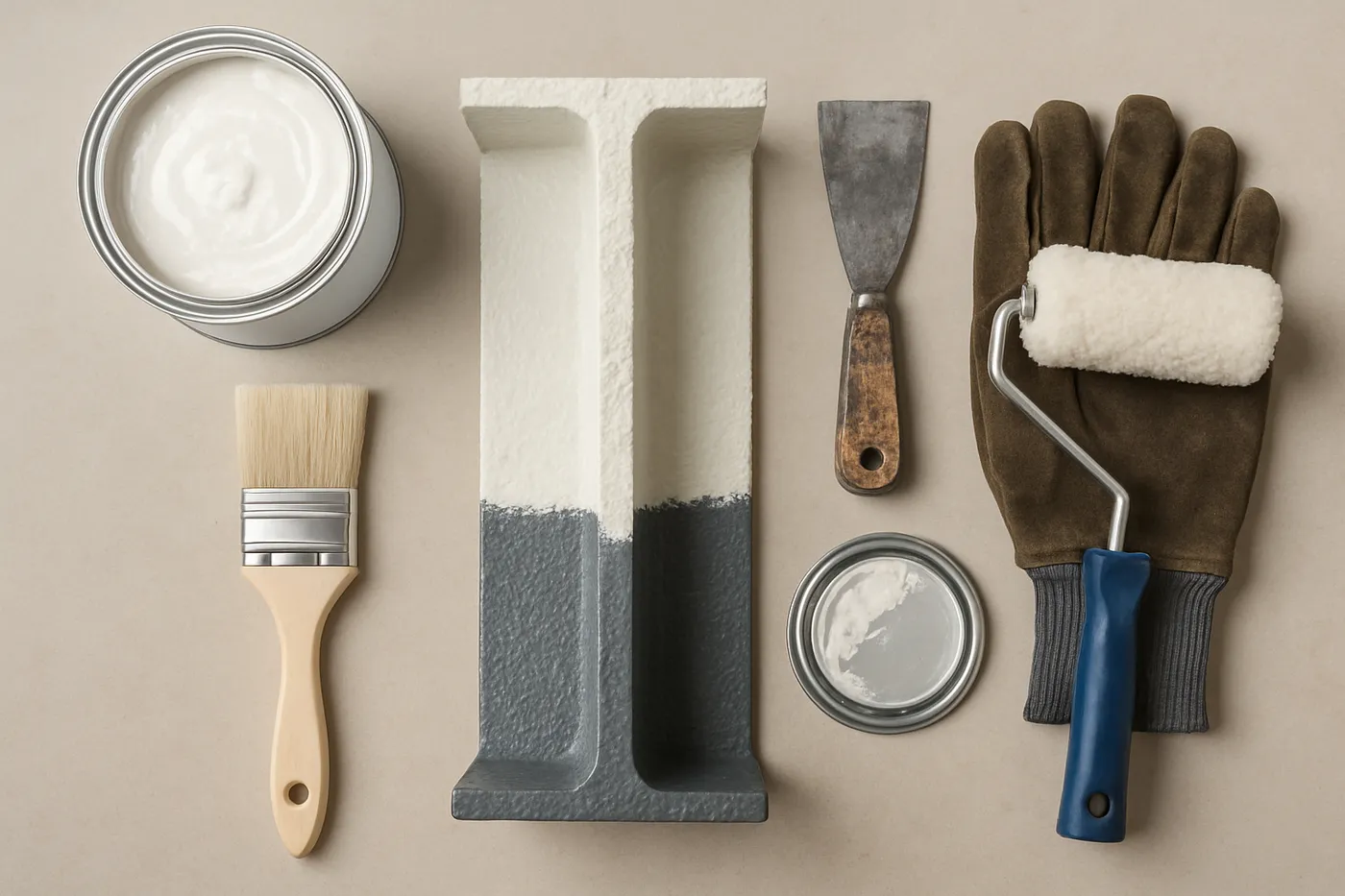
Most coatings are about color or weather. This one is about time. Intumescent coatings are a form of passive fire protection, which means they do their job without anyone activating them. They sit on structural steel looking like ordinary paint, and if a fire ever reaches them, they react to the heat and buy the building critical minutes. For a building owner, that is the whole value: protected structure and rated assemblies, with the steel still on display.
How intumescent coatings work
The name comes from “intumesce,” meaning to swell. When the coating is exposed to high heat, a chemical reaction kicks off and the film expands many times its applied thickness into a foamy, insulating layer called char.
That char is the protection. Structural steel does not burn, but it loses strength as it heats up, and unprotected steel can soften and fail well before a building is fully evacuated. The char layer insulates the steel from the heat of the fire, slowing how fast the steel warms and extending the time before it loses its load-bearing capacity. That extra time is what helps a building meet its required fire-rating period, the rated window an assembly is engineered to withstand. The specific rating for any project is set by the code and the engineer, not by the coating alone.
In practice, the building owner gets passive protection that is always on, requires nothing of the occupants, and is designed to perform exactly once, when it is needed most.
Intumescent vs other fire protection
| Factor | Intumescent coating | Cementitious / sprayed fireproofing |
|---|---|---|
| Appearance | Thin, paint-like; steel stays visible | Thick, textured; conceals the surface |
| Application | Sprayed or rolled like a coating system | Sprayed on as a heavy material |
| Best fit | Exposed architectural steel, feature framing | Concealed steel above ceilings, in shafts |
| Aesthetics | Preserves the look of the structure | Not intended to be seen |
| Coordination | Specified to rating, applied by trained crews | Specified to rating, applied by trained crews |
The short version: when the design wants the steel to show, intumescent coating delivers the rating without hiding it. When the steel is concealed anyway, cementitious fireproofing is often the more economical path. Both are specified to a required rating, and both belong in the hands of crews trained to apply them to spec.
Coordinating a fire-rated build? We apply inspection-ready coatings and work directly with your GC and inspector. Get a free written estimate.
Where they are used and required
Intumescent coatings live on structural elements that have to be both protected and, often, seen: exposed steel columns, beams, and exposed framing in commercial, mixed-use, and multifamily buildings. Think lobbies, atriums, and modern interiors where the structure is part of the architecture.
Whether a given element needs fire protection, and to what rating, is code-driven. The requirement comes from the applicable building code, the project engineer, and the inspector, and it is tied to the assembly and the building’s occupancy and height. That means this is coordinated work. The coating system, the required rating, the substrate, and the inspection schedule all have to line up, which is why intumescent application is planned alongside the general contractor and the inspecting authority rather than treated as a finish painted on at the end.
What it costs
Intumescent coating is priced by the surface area to be coated, the required fire rating (a higher rating means more coating build), the substrate, and access to the steel. A few exposed columns in a finished lobby and a full structural frame in active construction are very different jobs, and the rating drives the film thickness, which drives the cost.
Because every element of that pricing ties back to the project’s specific code requirements, we do not estimate this work generically. We review the spec, the rating, and the access, then provide a free written estimate built to the actual scope.
Fire and intumescent coatings in the Seattle area
Seattle and Eastside commercial, mixed-use, and multifamily construction increasingly leaves structural steel exposed on purpose, because exposed structure is part of the contemporary look. That steel still has to meet its fire-rating requirements, and intumescent coatings are how a project delivers the rating without burying the design under sprayed fireproofing.
As a Master Builders Association member that works with general contractors across the region, we coordinate application so it passes inspection on schedule rather than holding up a building’s certificate of occupancy. On a commercial timeline, a coating that fails inspection is not a finish problem, it is a schedule problem, and that is the part we plan around.
How Hedlund does it
We are a licensed, bonded, and insured contractor of more than a decade with industrial and commercial coating experience, Master Builders Association membership, and a Grip Safety program for jobsite work. For fire-protective coatings, we apply inspection-ready systems using manufacturer products such as Tnemec, specified to the project’s required rating, and we coordinate directly with the GC and the inspector.
This is specialized, code-driven work. It is exactly the kind of scope a low bidder is not equipped for, because getting it wrong is not a cosmetic miss. It is a failed inspection and an unprotected structure.
“As a general contractor, I only hire Hedlund Painting!” James D., 5 stars (Google)
For the full specialty range, see our Specialty & Protective Coatings page and the fire coatings detail. We also handle commercial painting and HOA and multifamily painting. Related reading: Elastomeric Coatings: Waterproofing for PNW Buildings and Faux Finishes: What’s Possible and Where They Work.