
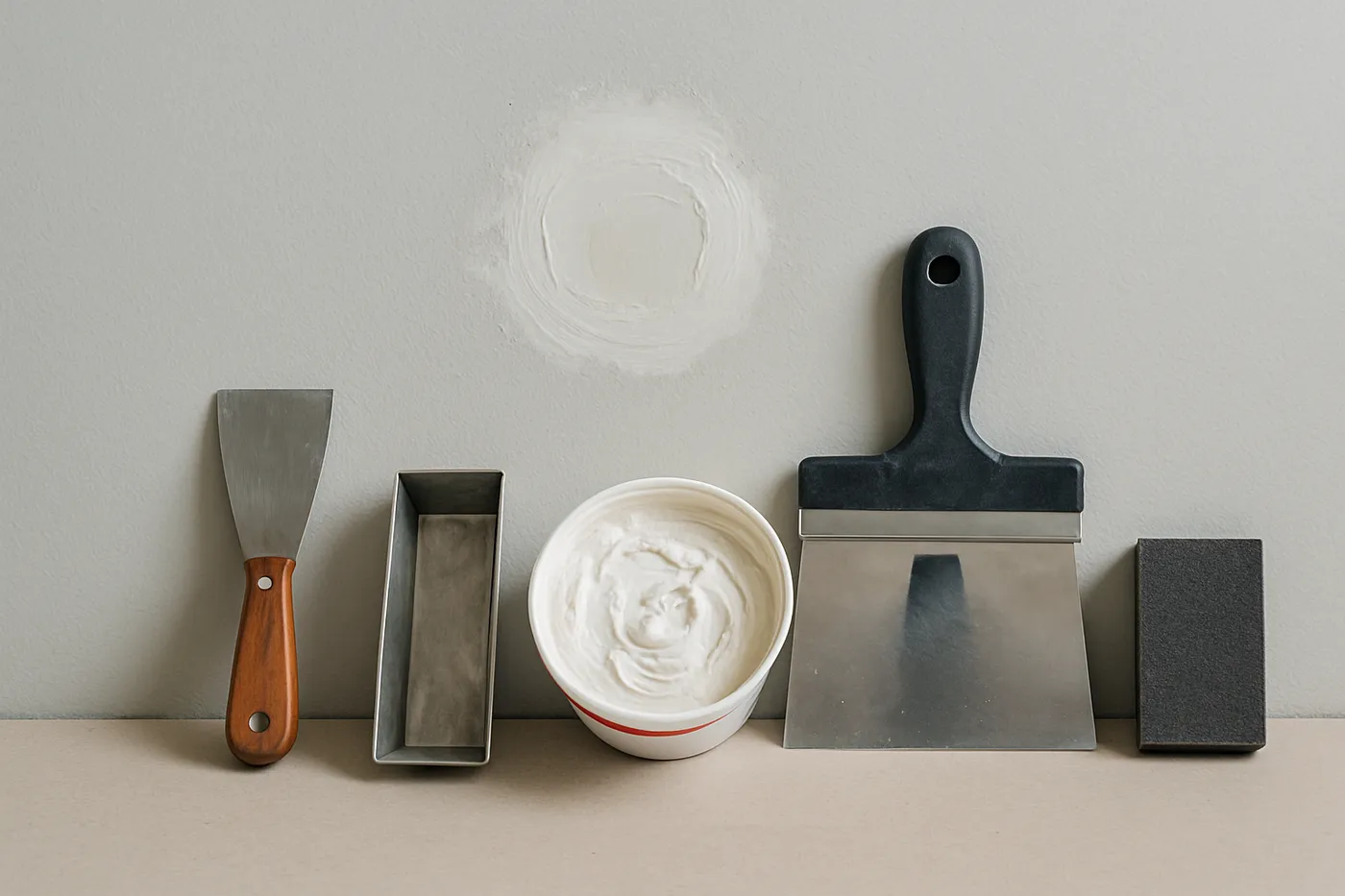
If you are pricing a drywall repair before you call a contractor, the honest answer is that it ranges. A single nail pop and a water-stained ceiling are not the same job, and they should not carry the same number. Below we break down what actually drives the cost, the relative price ranges by repair type, and why the common “per square foot” question misses the point.
What drives the cost
Drywall pricing comes down to a handful of variables. The more of these your project touches, the higher the number climbs.
- Hole size and count. A few small holes are quick. Large openings need backing, new drywall, taping, and multiple coats of compound, which is more material and far more labor.
- Wall vs. ceiling. Ceiling work is slower and harder. Working overhead, controlling sag, and matching ceiling texture all add time.
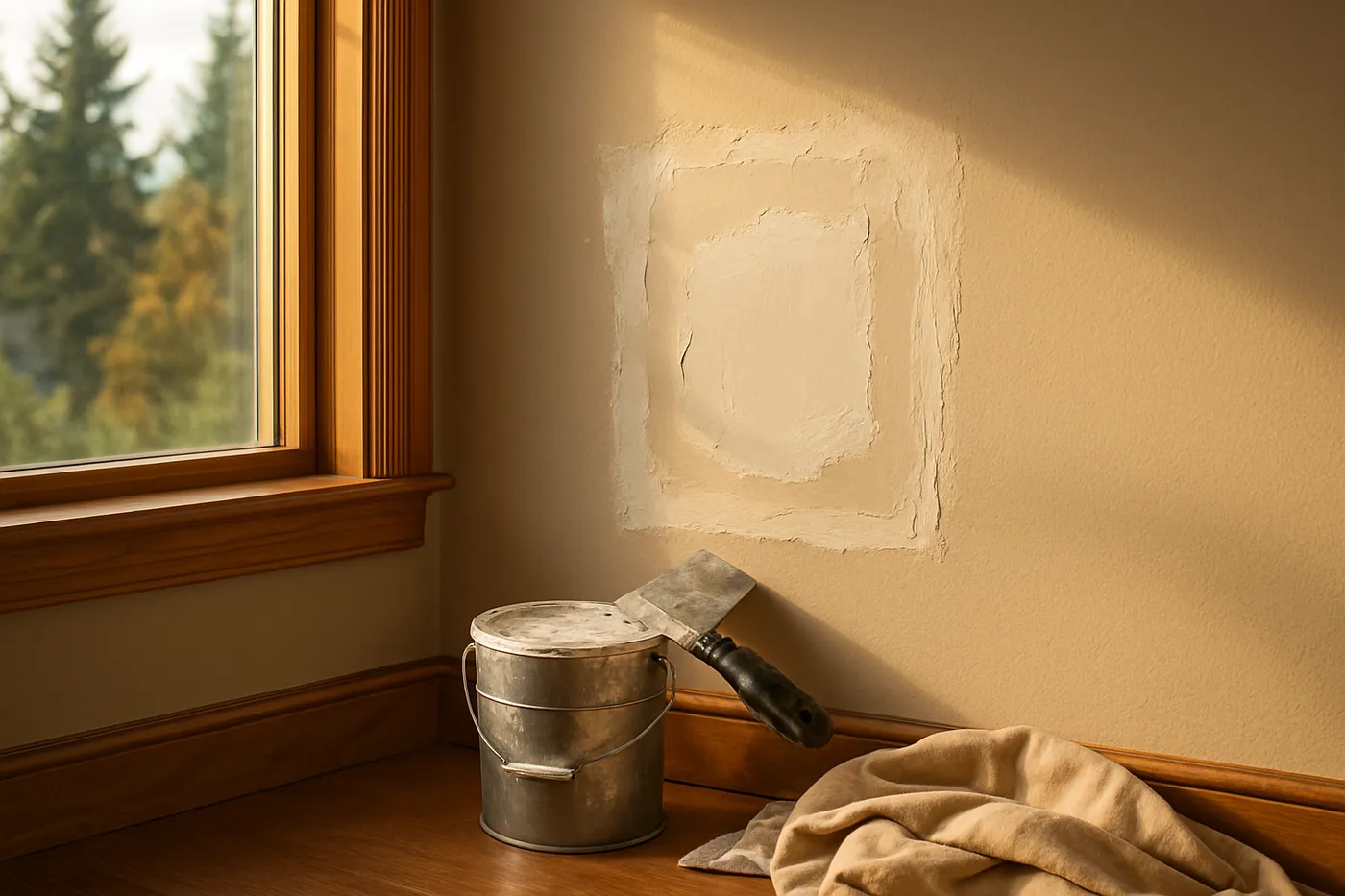
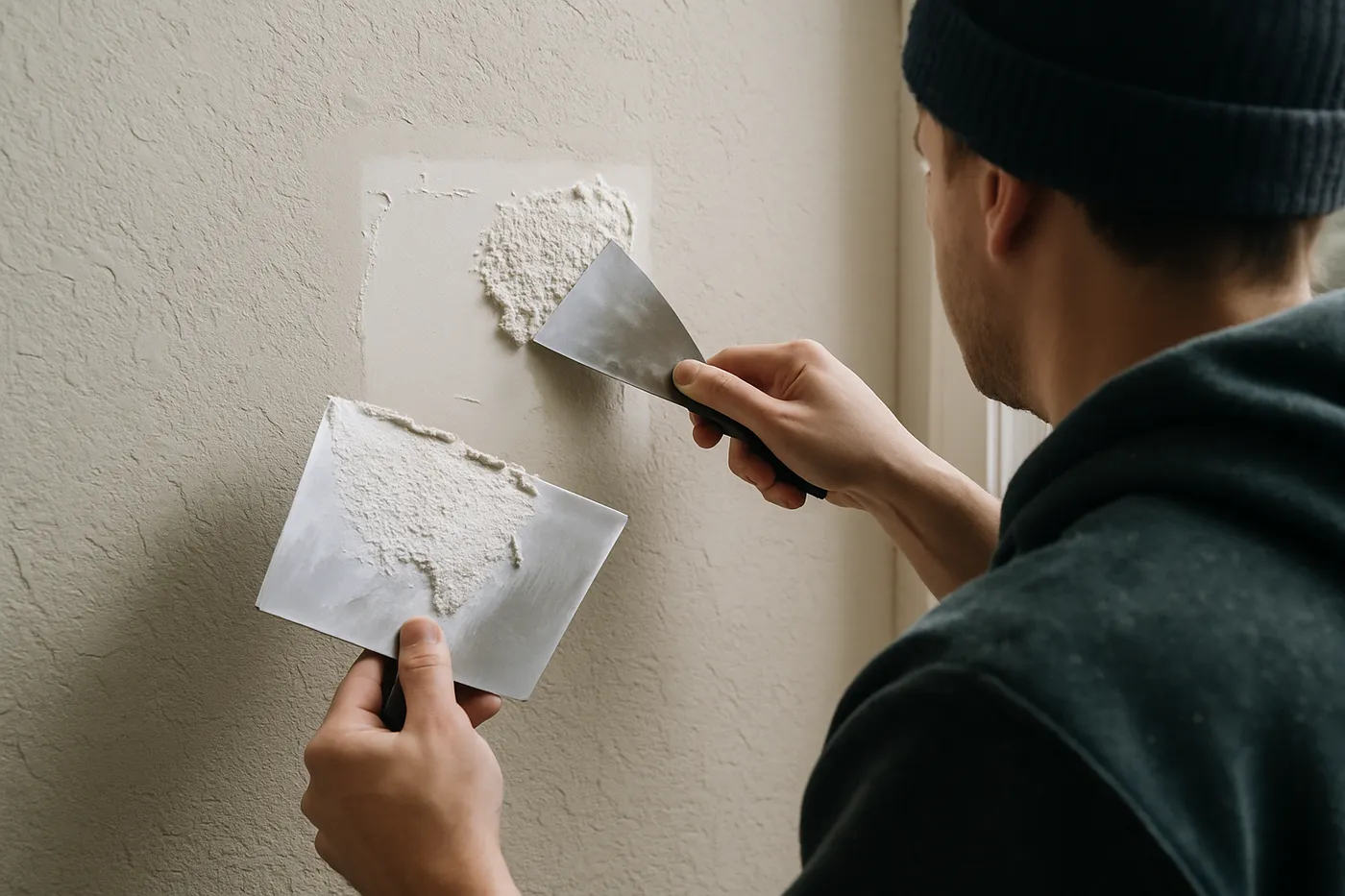
- Texture matching. Matching orange peel, knockdown, or popcorn so the patch disappears is skilled work. A flat patch on a textured wall flashes, so this step is where the finish is won or lost.
- Access and height. Stairwells, vaulted ceilings, and tight spots that need ladders or scaffolding slow the work and raise the cost.
- Water-damage source. If the damage came from a leak, the source has to be fixed first. Repairing over an active leak just repeats the damage.
- Paint to match. A seamless repair usually includes priming and repainting the wall or ceiling so the patch blends. Bundling repair and paint with one crew is part of the price, and the part that makes the result invisible.
Cost by repair type
These are relative ranges to help you set expectations, lowest to highest effort. They are not a quote. Every job is priced after a free on-site estimate.
| Repair type | Relative cost | What it involves |
|---|---|---|
| Small nail holes and dents | Lowest | Fill, sand, spot-prime, touch-up paint |
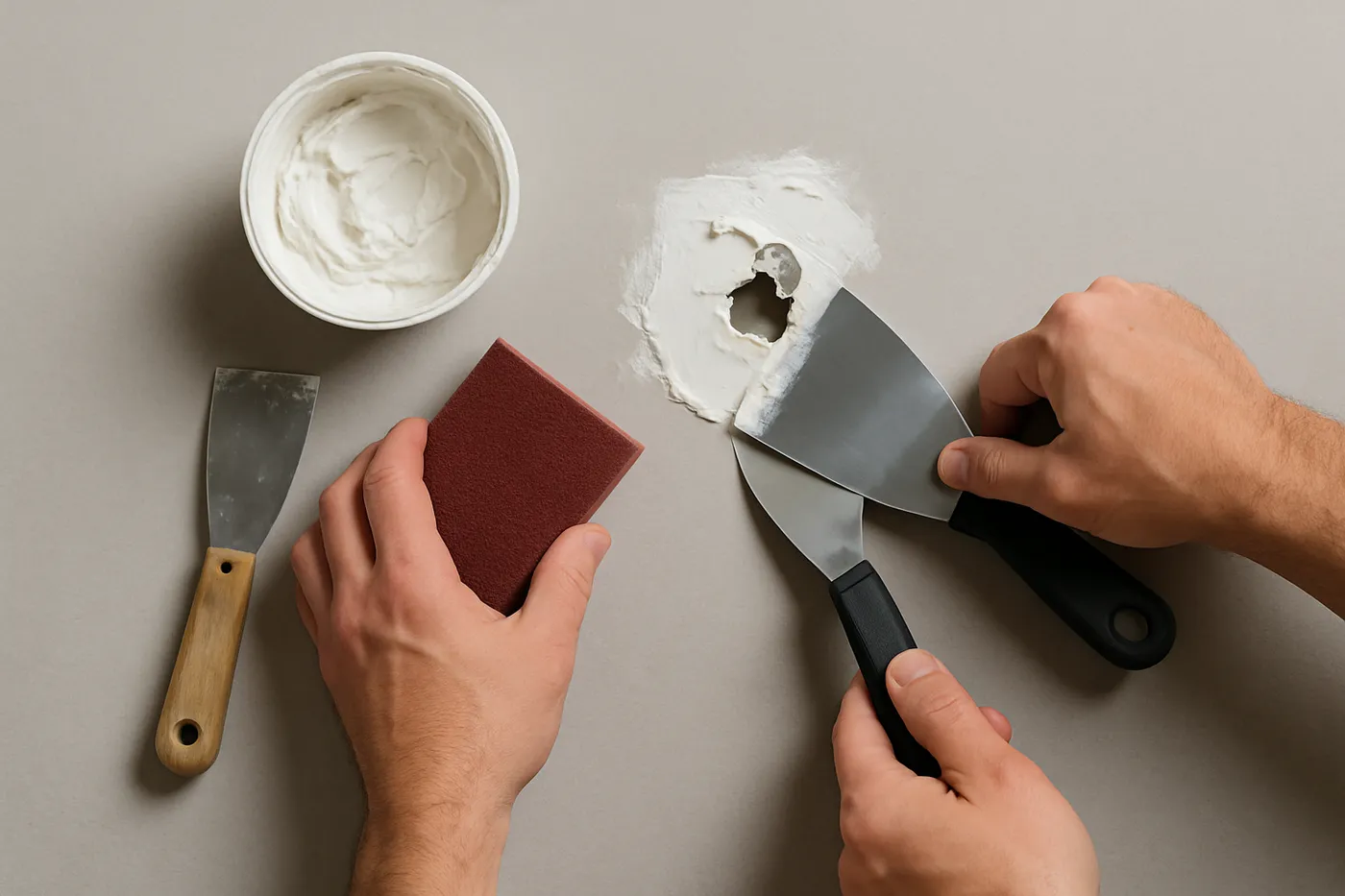
| Single small-to-medium patch | Low | Cut clean, patch, tape, mud, sand, texture, prime |
| Large hole | Moderate | Backing, new drywall, multi-coat mud, feathering, texture |
| Settling crack or seam repair | Low to moderate | Cut out, retape, mud, sand, repaint to a break |
| Water-damaged section | Moderate to high | Remove damaged board, rebuild, texture, prime, paint (source fixed first) |
| Full sheet replacement | Higher | Remove, hang, tape, multi-coat finish, texture, paint |
| Popcorn or textured ceiling repair | Higher | Overhead work plus specialty texture matching |
| Free written estimate | No cost | On-site assessment and a firm price in writing |
Not sure which bucket your wall falls into? A free written estimate costs nothing and tells you exactly what the repair takes. Call (206) 250-9193 or request a free estimate.
Why “per square foot” is misleading
Homeowners often ask for a per-square-foot drywall price, but drywall does not really price that way. The cost is driven by the patch itself plus prep, finish, texture matching, and paint, not by the raw area of wall.
A two-inch hole and a four-foot hole occupy very different square footage, but both require cutting, backing, taping, mudding in coats, sanding, texture matching, priming, and paint. The fixed setup and finish work is most of the labor. That is also why minimums apply on small jobs. The square footage barely moved, but the craft to make it disappear did not.
The number that matters is the scope of the repair and the finish quality you want, not a square-foot rate.
The Pacific Northwest angle
Drywall problems in the Seattle area have a local flavor.
- Water-stained ceilings are the most common call. Constant rain, roof issues, and plumbing leaks make moisture damage the leading reason a “simple” patch turns into a real repair. The leak source comes first; the drywall second.
- Mid-century Eastside homes often have popcorn or textured ceilings. Matching that texture is specialty work, and a DIY patch exposes the difference instantly.
- Soil movement causes recurring cracks. PNW settling drives corner and seam cracks that keep coming back if they are only skimmed over instead of properly retaped.
- Pre-1978 homes may need lead-safe handling. Older textured ceilings and walls can contain lead. Disturbing them calls for EPA Lead-Safe Certified practices.
How Hedlund handles drywall repair
We treat a drywall repair as a finish job, not a smear of compound. As a licensed Seattle-area contractor (lic. HEDLUPI814DE), here is our process:
- Assess the type, size, and cause of the damage, and confirm the existing texture.
- Cut and patch, backing larger holes and fitting new drywall cleanly.
- Tape and mud the seams in coats, building the surface back flat.
- Sand smooth between and after coats, with no ridges or shadows.
- Match the texture, orange peel, knockdown, or smooth, so the patch reads as one wall.
- Prime the repair so it takes paint evenly and does not flash.
- Paint to blend, finishing the wall or ceiling so the repair vanishes.
One crew handles the repair and the paint, which is the difference between a patch that disappears and one you still see in raking light. Every repair is backed by our 10-year workmanship warranty.
What our clients say
“We had a pipe burst and hired Hedlund to repair the damaged drywall and paint. The finished room was beautiful and back to its original shape.” Angie H., 5 stars (Google)