
The two methods get used interchangeably in conversation, but they are not the same tool, and using the wrong one causes real damage. The simplest way to think about it: soft wash is gentle cleaning with chemistry doing the work, and pressure washing is force doing the work. Match the method to the surface and you get a clean home that stays undamaged. Get it backwards and you can strip paint, gouge cedar, or tear up a roof.
What soft washing is
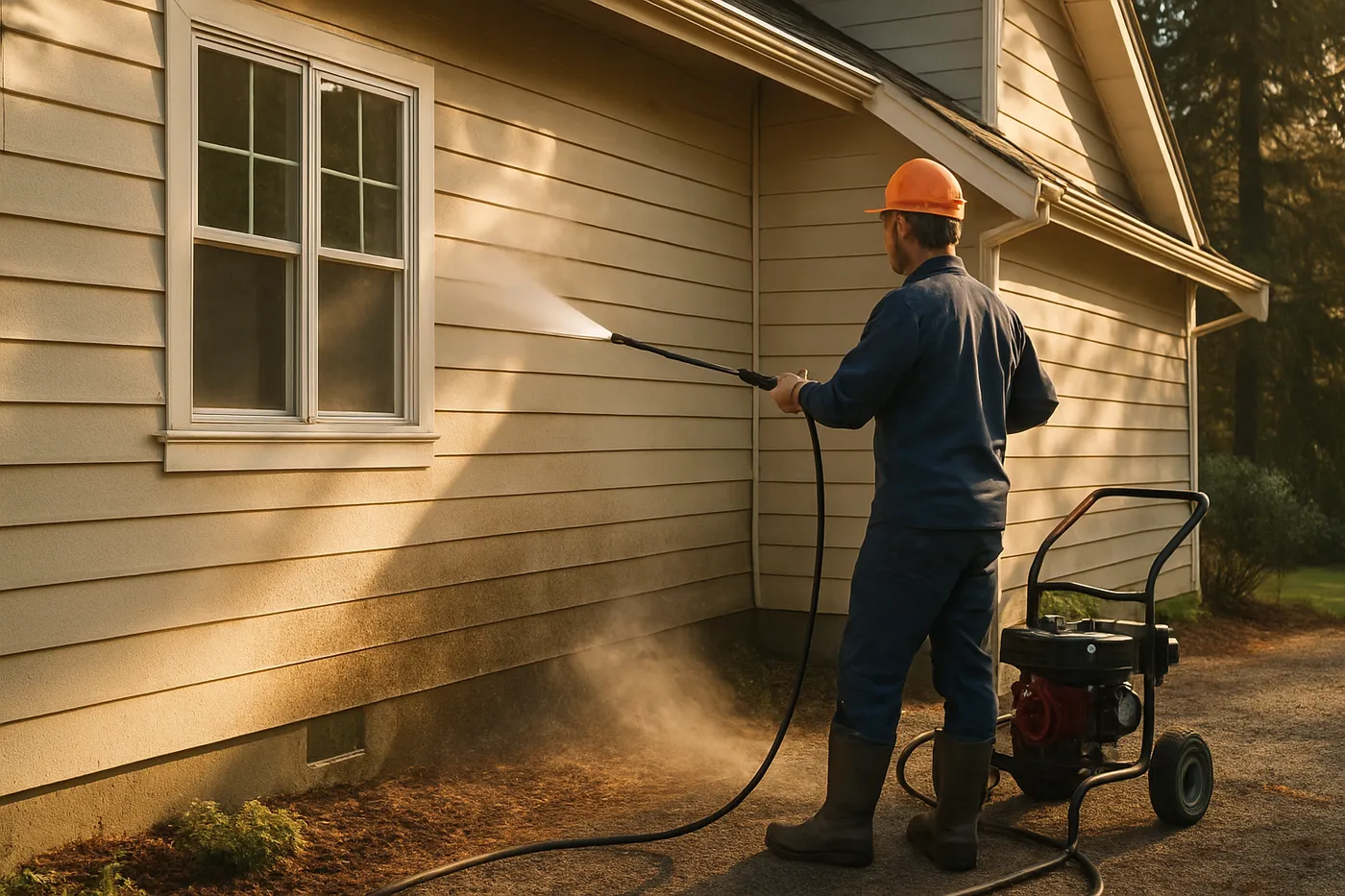
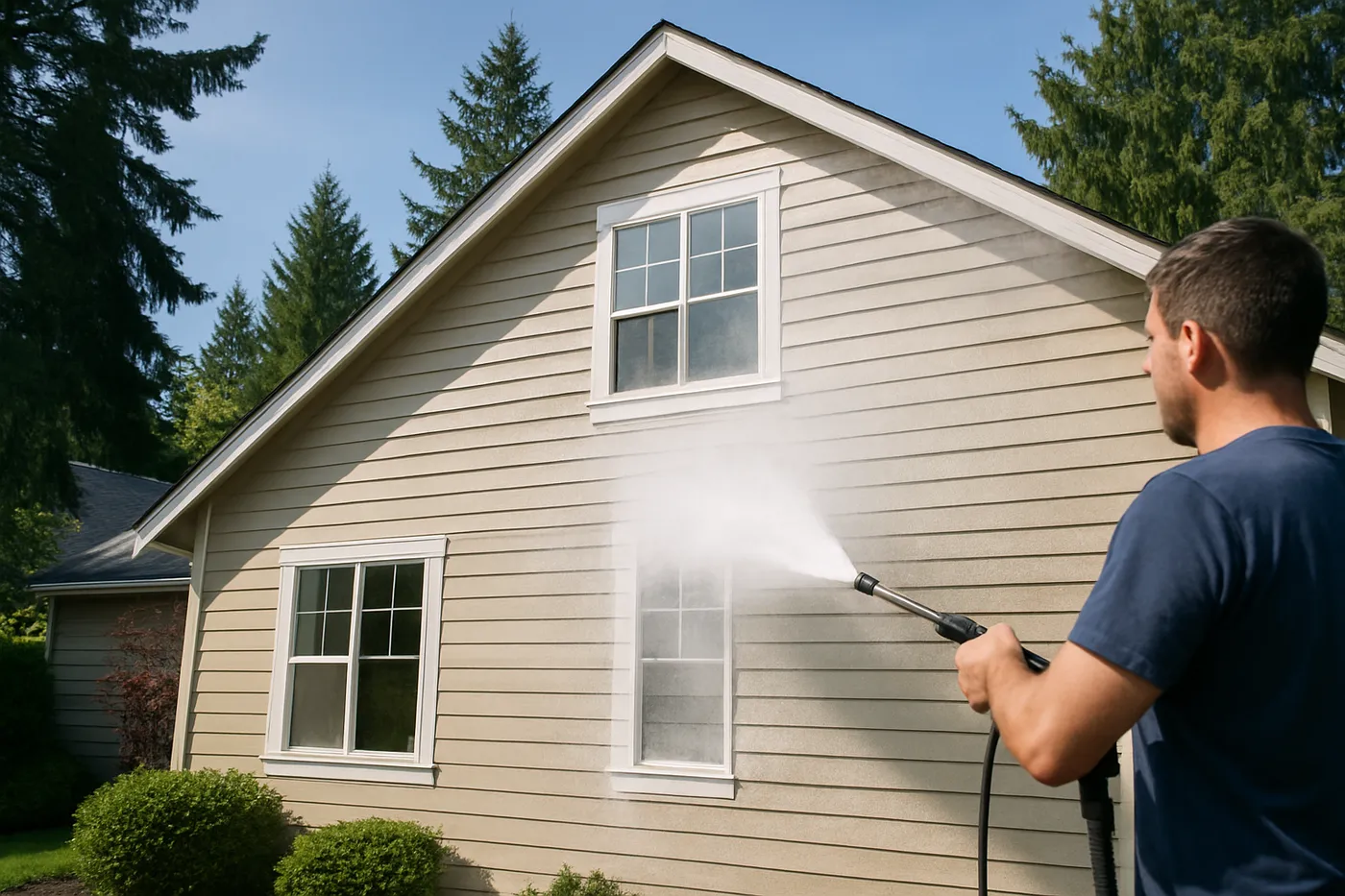
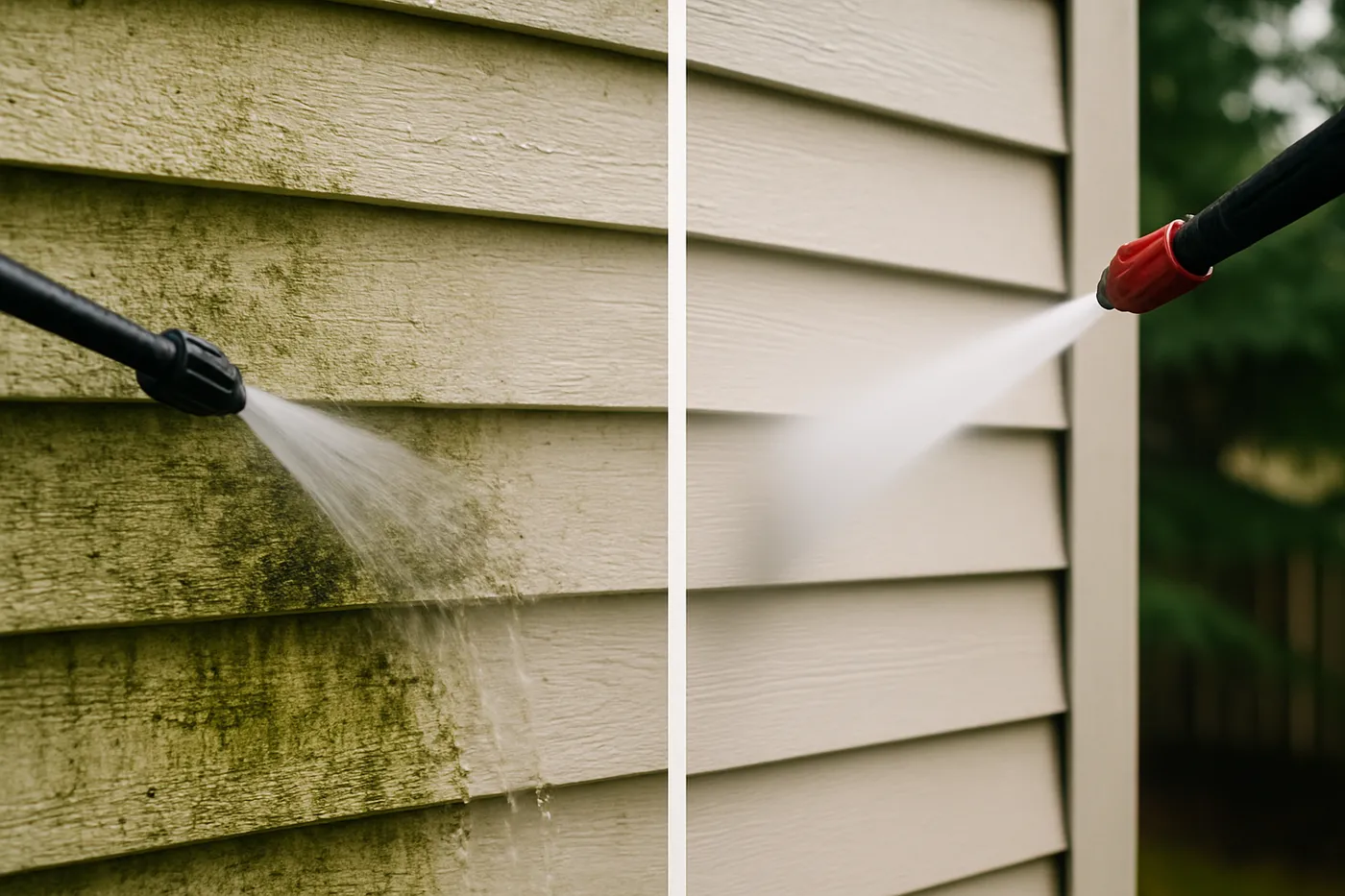
Soft washing combines low pressure with cleaning solutions designed to break down organic growth. Instead of relying on force, it lets the solution do the work, killing mold, algae, and mildew at the root and then rinsing them away gently.
That root-level cleaning is the real advantage. Blasting algae off with high pressure removes what you can see but leaves the organism behind to come back fast. Soft washing treats the growth itself, so results tend to last longer on organic stains. And because the pressure is low, it is safe on surfaces that high pressure would damage, which is most of the surfaces on the upper half of a house.
What pressure washing is
Pressure washing uses high-pressure water to blast away grime, and on the right surface it is fast and effective. Concrete, brick, and other hard, durable surfaces can take the force, and pressure cuts through built-up dirt, oil, and stains quickly.
The catch is that the same force that cleans concrete will gouge soft wood, etch the surface of concrete if overdone, strip aging paint, and destroy roofing. Pressure washing is the right answer for hard, flat, durable surfaces and the wrong answer for almost everything delicate. Power is an asset only where the surface can absorb it.
Side-by-side comparison
| Factor | Soft washing | Pressure washing |
|---|---|---|
| Pressure level | Low, gentle | High, forceful |
| How it cleans | Cleaning solution kills growth at the root | Force blasts grime away |
| Best surfaces | Siding, roofs, painted wood, cedar | Concrete, brick, driveways, patios |
| What to avoid | Not needed for hardy flat surfaces | Roofs, soft wood, aging paint, siding |
| How long results last | Often longer on organic stains | Effective, but growth can return faster |
Not sure which your home needs? We assess each surface and pick the safe method, then put a free written estimate in writing. Get a free written estimate.
Which does your home need?
Most homes need both, and the dividing line usually runs vertically: soft wash the upper, delicate surfaces and pressure wash the lower, hard ones.
- Siding: soft wash. It is the safe choice for nearly all siding and painted surfaces.
- Roof: soft wash, always. Never pressure wash a roof. High pressure damages shingles and voids many warranties.
- Cedar and composite: soft wash or very careful technique. These are easy to gouge and splinter.
- Driveways, patios, sidewalks: pressure wash. Hard, flat concrete can take the force.
- Brick: pressure wash, with appropriate care for mortar joints.
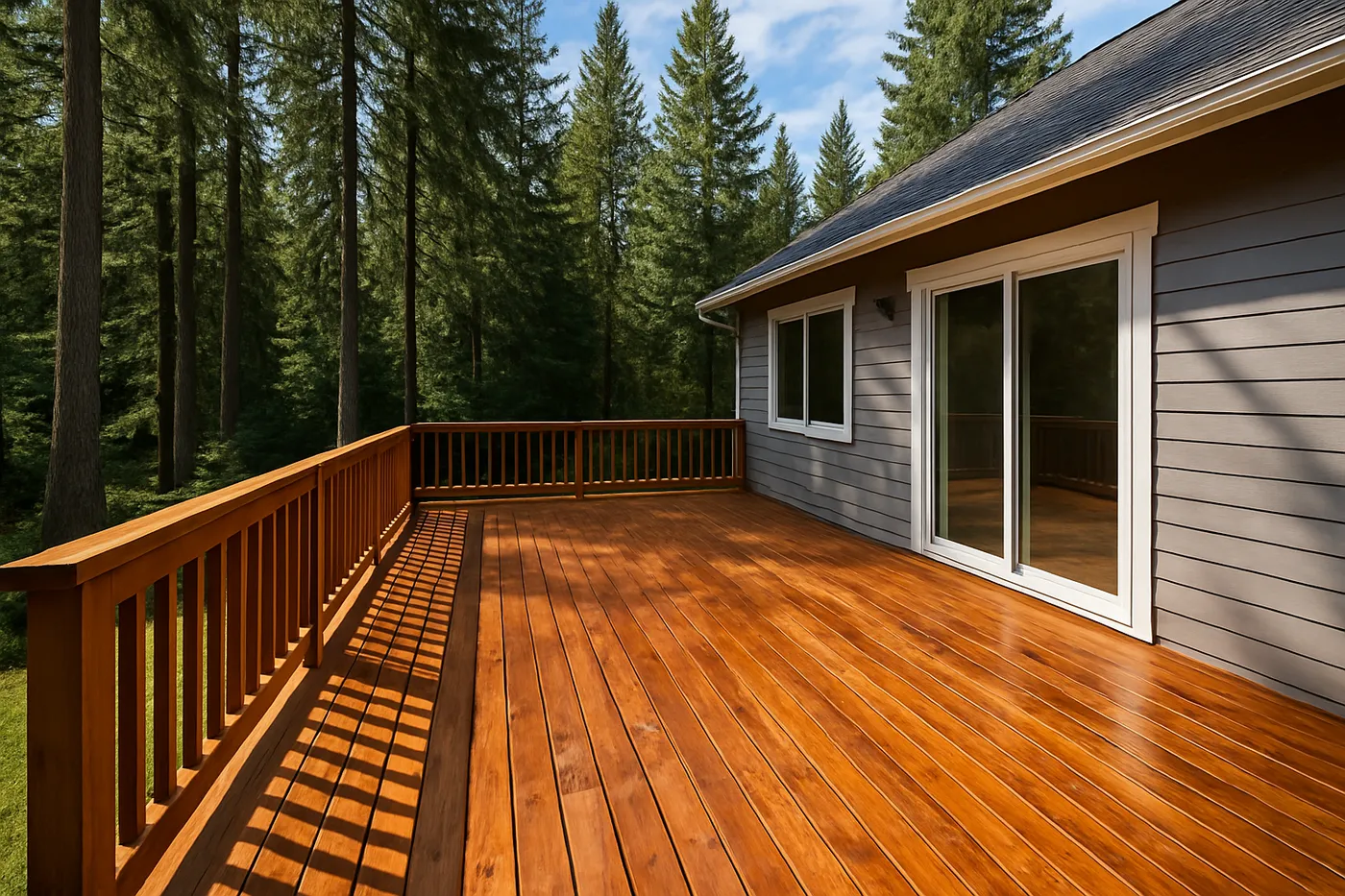
- Deck: depends on the wood and condition; often a gentler approach, especially before staining.
The honest summary for most Seattle-area homes is “both,” applied surface by surface rather than blasting everything at the same setting.
Soft wash vs pressure washing in the Pacific Northwest
The Pacific Northwest’s wet, shaded climate makes moss and algae close to unavoidable on roofs and north-facing siding. Those are exactly the surfaces that high pressure damages most, which is why soft washing is the safe default for so many homes here.
The region’s common materials reinforce that. Cedar siding, composition roofs, and aging exterior paint are everywhere in Seattle-area neighborhoods, and all three are easily harmed by high pressure. Around here, pressure washing earns its place on concrete, brick, and driveways, while soft washing handles the surfaces that matter most for a home’s appearance and protection.
How Hedlund does it
We are a licensed, bonded, and insured contractor of more than a decade, and we choose the method per surface rather than reaching for maximum pressure on everything. Soft wash where pressure would cause damage, pressure where the surface can take it, and care taken to protect landscaping and existing paint throughout. When a wash is the first step before a repaint, we frequently handle it as part of the exterior project. The point is the right method, not the most pressure.
“They were always on time, professional and clean.” Chris L., 5 stars (Google)
“Hedlund Painting did a great job painting the exterior of our home and staining a large deck and stairs. The crew was thorough, tidy and very professional.” Ann H., 5 stars (Google)
For the full service, see our Pressure Washing page. Related reading: How Much Does Pressure Washing Cost? and Why Pressure Washing Before Painting Matters. We also handle exterior painting and deck and fence staining. Serving Seattle, Woodinville, and the surrounding area.