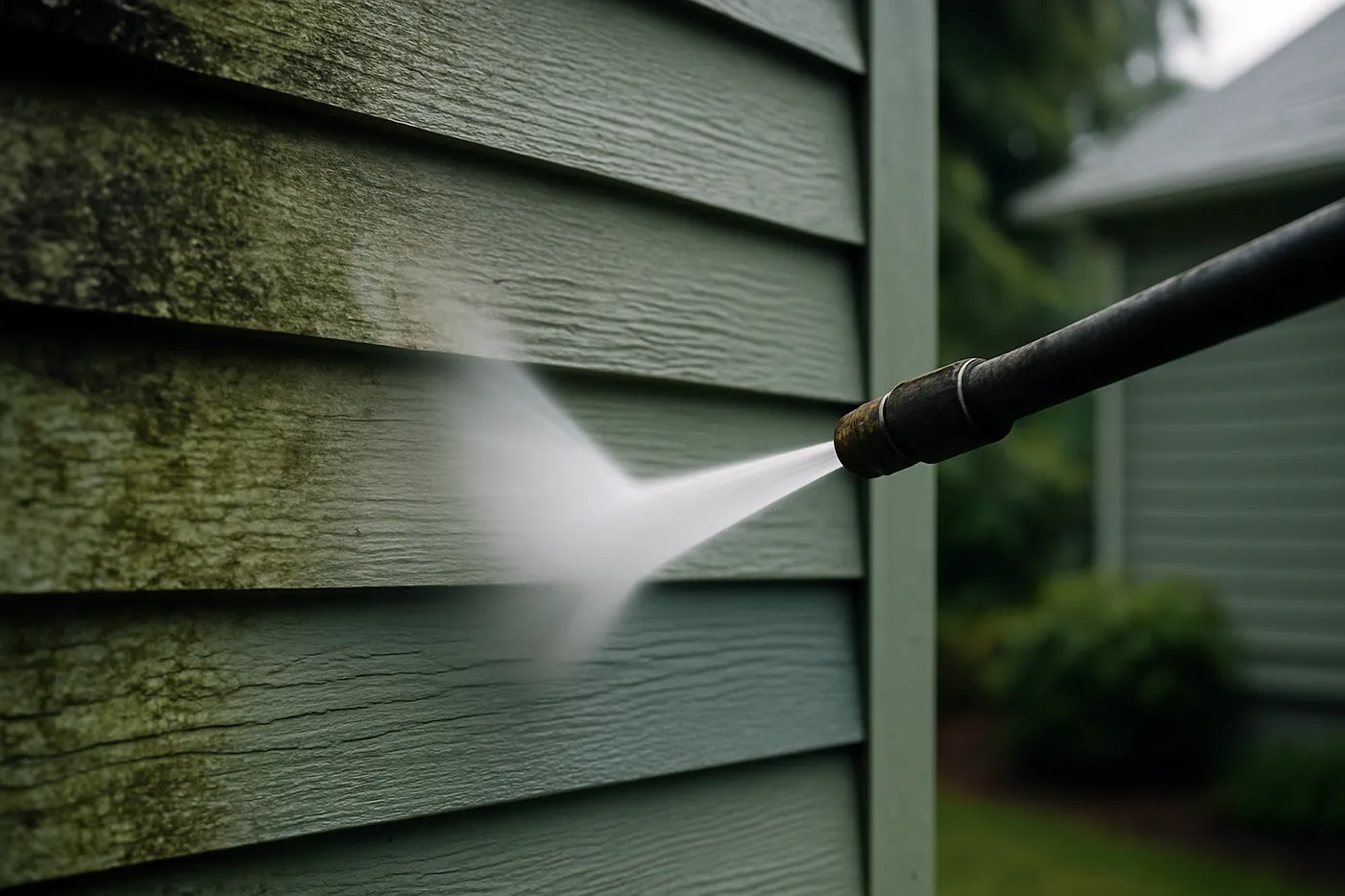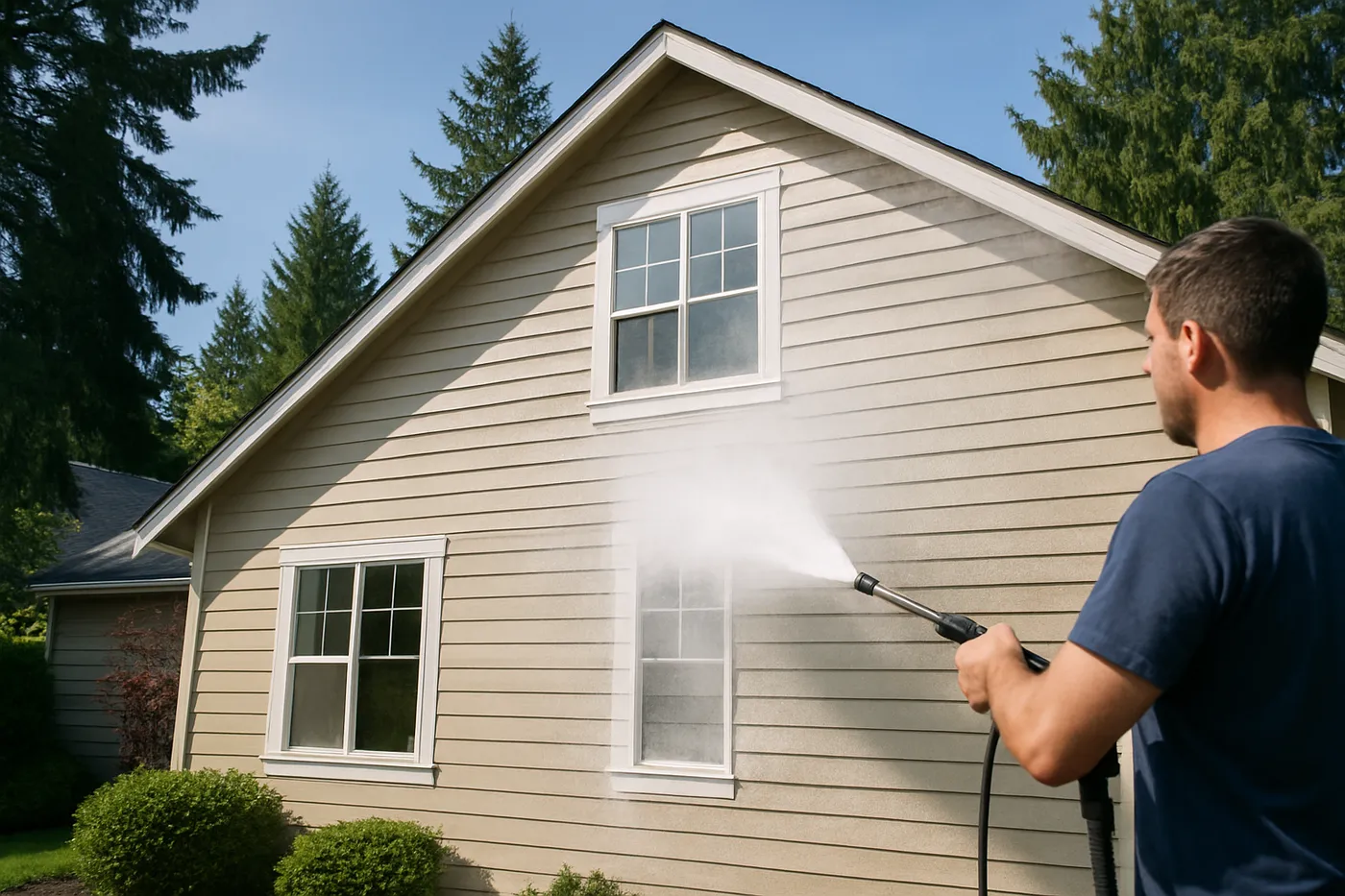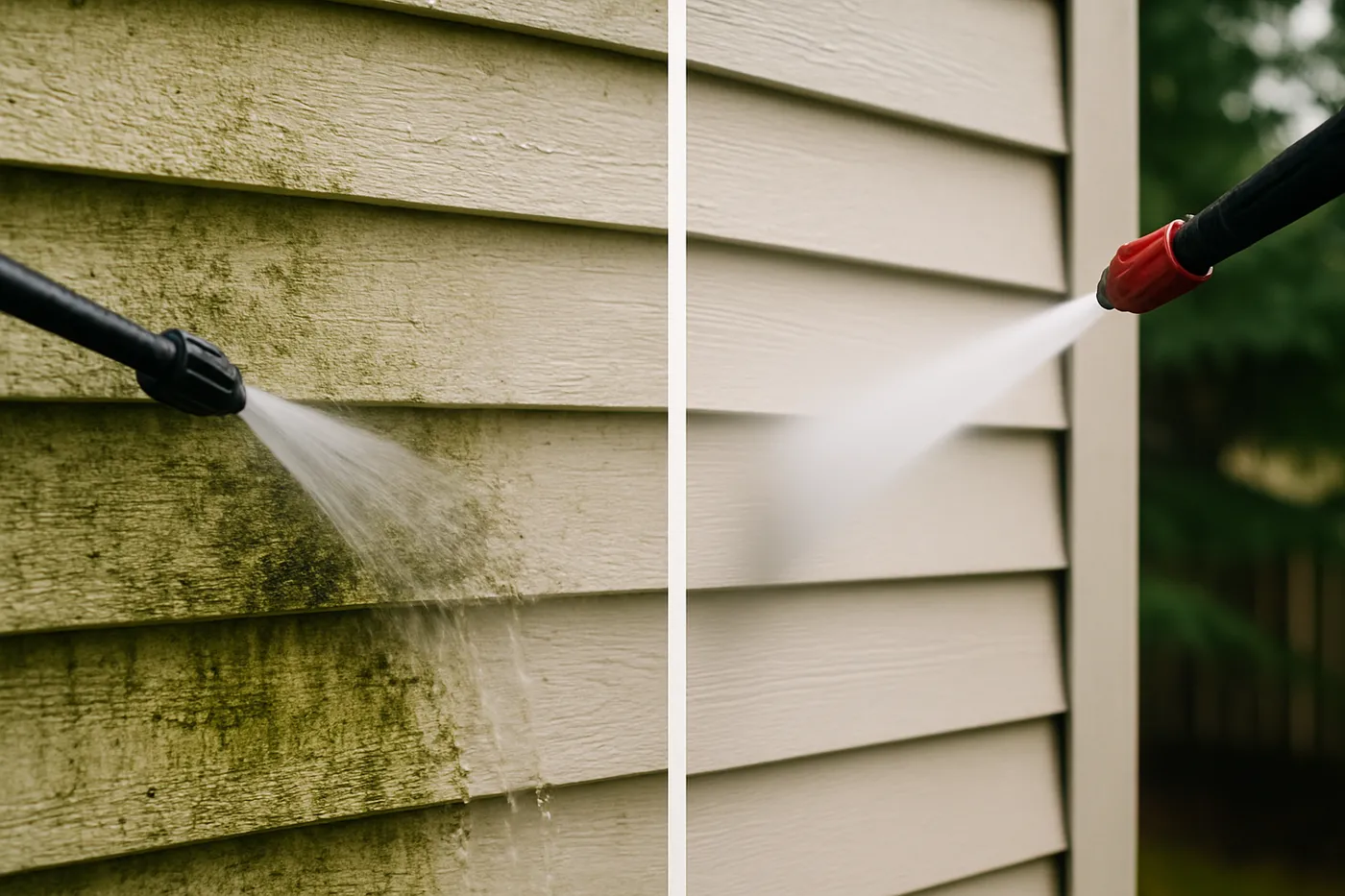

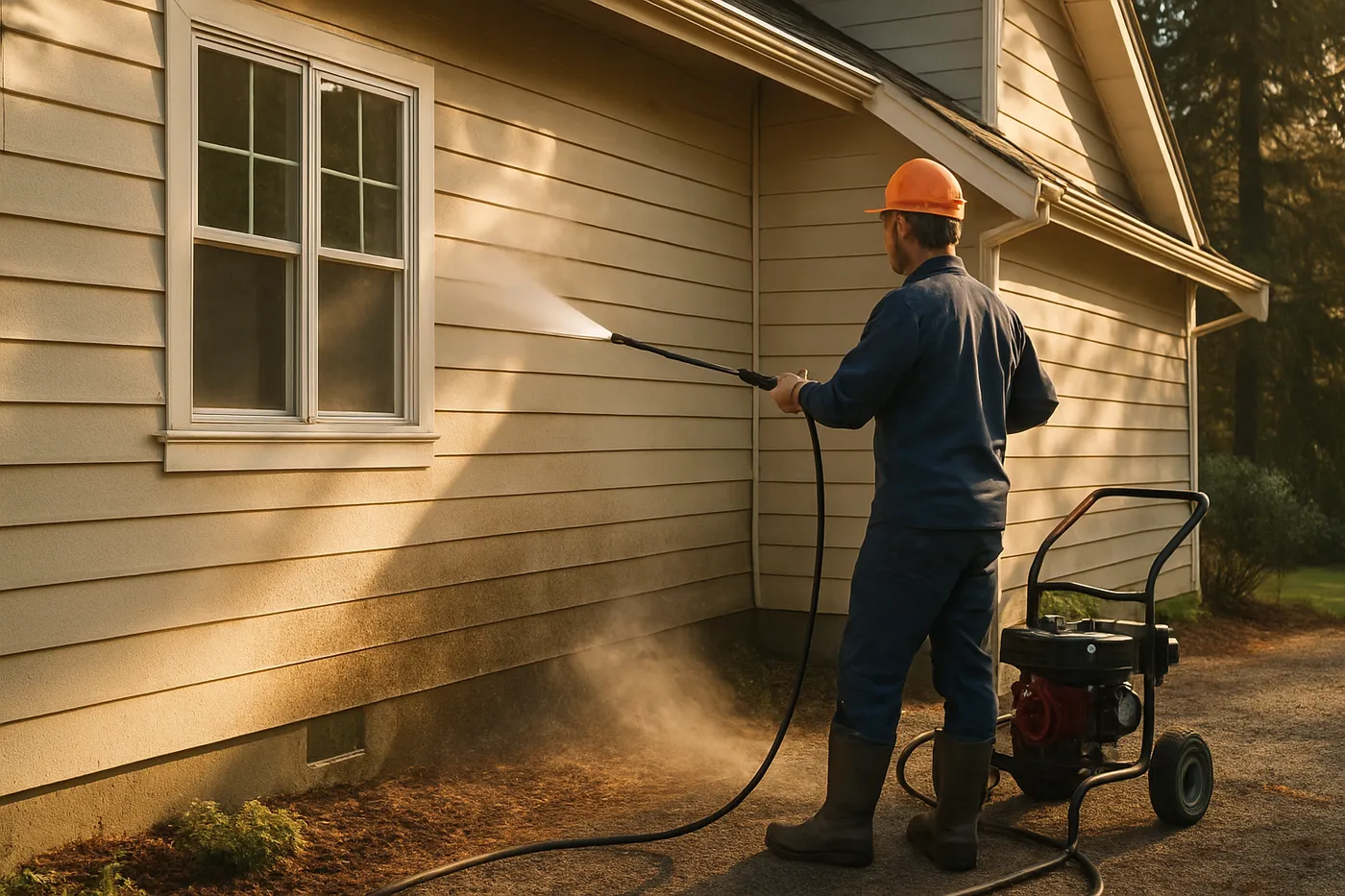
A paint job is only as good as the surface under it. You can buy the best paint made and apply it perfectly, and it will still fail in a season or two if it went on over dirt, chalk, or mildew. Washing first is not a finishing touch. It is the foundation the whole job stands on, and skipping it is the single most common reason an exterior repaint fails early.
What washing removes
A wall that looks clean enough to the eye is usually carrying several things that will stop paint from bonding:
- Dirt and grime. A film of dust and road grime sits between the surface and the new paint, so the paint sticks to the dirt instead of the wall.
- Chalking. As old paint weathers, it breaks down into a powdery residue. Paint applied over chalk has nothing solid to grab, and it lifts.
- Mildew and algae spores. These do not die under a coat of paint. Sealed in, they keep growing and push the new paint off from underneath.
- Pollen and organic debris. Seasonal buildup, common here, leaves a layer that compromises adhesion.
- Loose and failing paint. Anything already letting go has to come off, or the new coat fails wherever the old one does.
Each of these kills adhesion in its own way, and adhesion is the entire game. Paint that cannot bond cannot last.
What happens if you skip it
Painting over an unwashed surface does not save time, it borrows against the job’s lifespan, and the bill comes due fast.
The new coat peels and blisters because it never bonded to anything solid. Mildew and algae that were sealed in keep growing and break the paint film from underneath, often showing up as dark staining and bubbling within a season. And on most quality work, skipping proper prep voids the warranty, because no reputable contractor warrants paint applied over a surface that was not cleaned. The “savings” of skipping the wash turns into a repaint years ahead of schedule.
Planning an exterior repaint? Washing is built into our standard prep, not bolted on to inflate the bid. Get a free written estimate.
Wash, dry, then paint
Washing is step one, but it is not the whole prep. The surface has to be fully dry before any paint goes on, because trapped moisture causes the same blistering and peeling that dirt does. Paint over a damp wall and you have sealed water into the wall.
How long drying takes depends entirely on the weather. In warm, dry conditions a surface can be ready in a day. In the cool, damp, shaded conditions common across the Seattle area, it often takes longer, and a north-facing wall under trees takes longer still. There is no fixed number of hours, only a fully dry surface, and a careful contractor plans the schedule around real drying rather than rushing paint onto a wall that is not ready.
Pressure vs soft wash for prep
Not every surface should be hit with high pressure. The method has to match the surface, or the prep itself causes damage.
- Soft washing, low pressure with cleaning solution, is the right choice for delicate siding, painted wood, and roofs, where high pressure would gouge, splinter, or strip.
- Pressure washing fits hard surfaces like concrete and brick, where the surface can take the force.
Getting this wrong is its own failure: too much pressure on aging paint or soft cedar damages the very surface you are about to paint. For a deeper breakdown, see Soft Wash vs. Pressure Washing: Which Does Your Home Need?.
Why this matters more in the Pacific Northwest
In the Pacific Northwest, exteriors collect mildew, green algae, and chalking faster than in dry climates because of constant moisture and shade. Paint over that growth and you seal it in, and the new coat fails within a season or two. Here, washing first is not optional, it is non-negotiable.
The damp climate also makes drying time a real planning problem. Surfaces have to be fully dry before paint goes on, which means the wash and the paint both have to be scheduled around the region’s dry windows. That weather-aware sequencing is part of why a local crew that knows the climate produces a longer-lasting job.
How Hedlund does it
We are a licensed, bonded, and insured contractor of more than a decade, and washing is built into our standard prep, not added on to pad a bid. It is one stage of our multi-step exterior process, and we sequence it so surfaces are fully dry before paint goes on.
Because our 10-year workmanship warranty depends on proper surface prep, we will not paint over a surface that has not been cleaned and dried. That is exactly the corner low bidders cut, and it is exactly why their work fails early. We match the method to the surface, soft wash where pressure would damage, and we treat the wash as the foundation of a job built to last.
“Hedlund put exceptional care into painting the exterior of my house. The crew made sure every detail was taken care of and not a single drop of paint is out of place.” Brian G., 5 stars (Google)
For the full service, see our Pressure Washing page. Related reading: How Much Does Pressure Washing Cost? and Soft Wash vs. Pressure Washing: Which Does Your Home Need?. We also handle exterior painting and residential repaints. Serving Seattle, Bothell, and the surrounding area.