
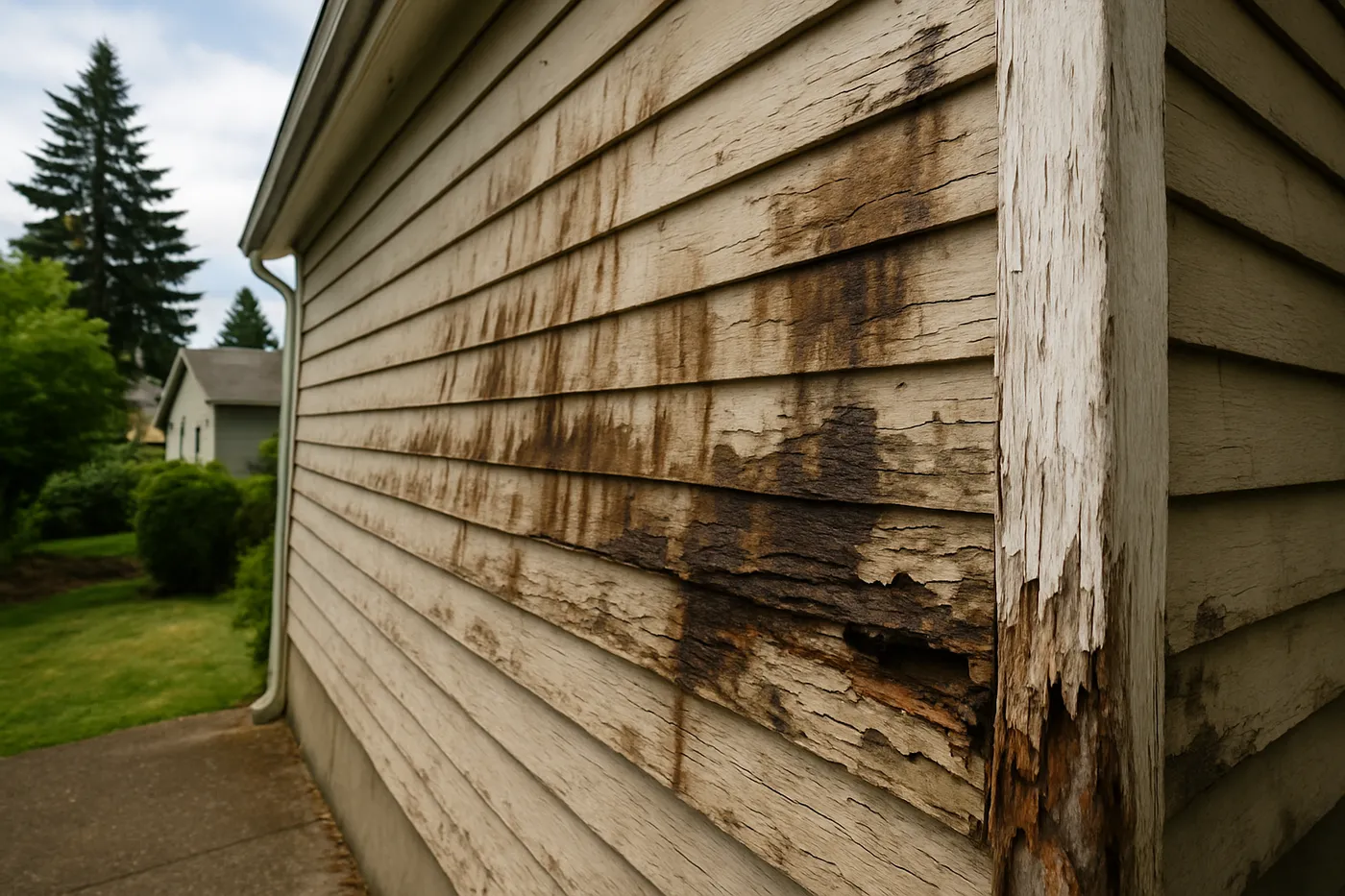
Dry rot is quiet. It works behind paint and siding for months or years before it shows itself, and by the time the damage is obvious, the repair is often structural. The homeowners who catch it early are the ones who know what to look for. After twelve years repairing wood rot across the Seattle area, we want you to be able to spot the warning signs yourself, while a repair is still small and cheap. Here is how to read your home.
Visual and physical signs
Rot and water damage leave a consistent set of clues. Watch for:
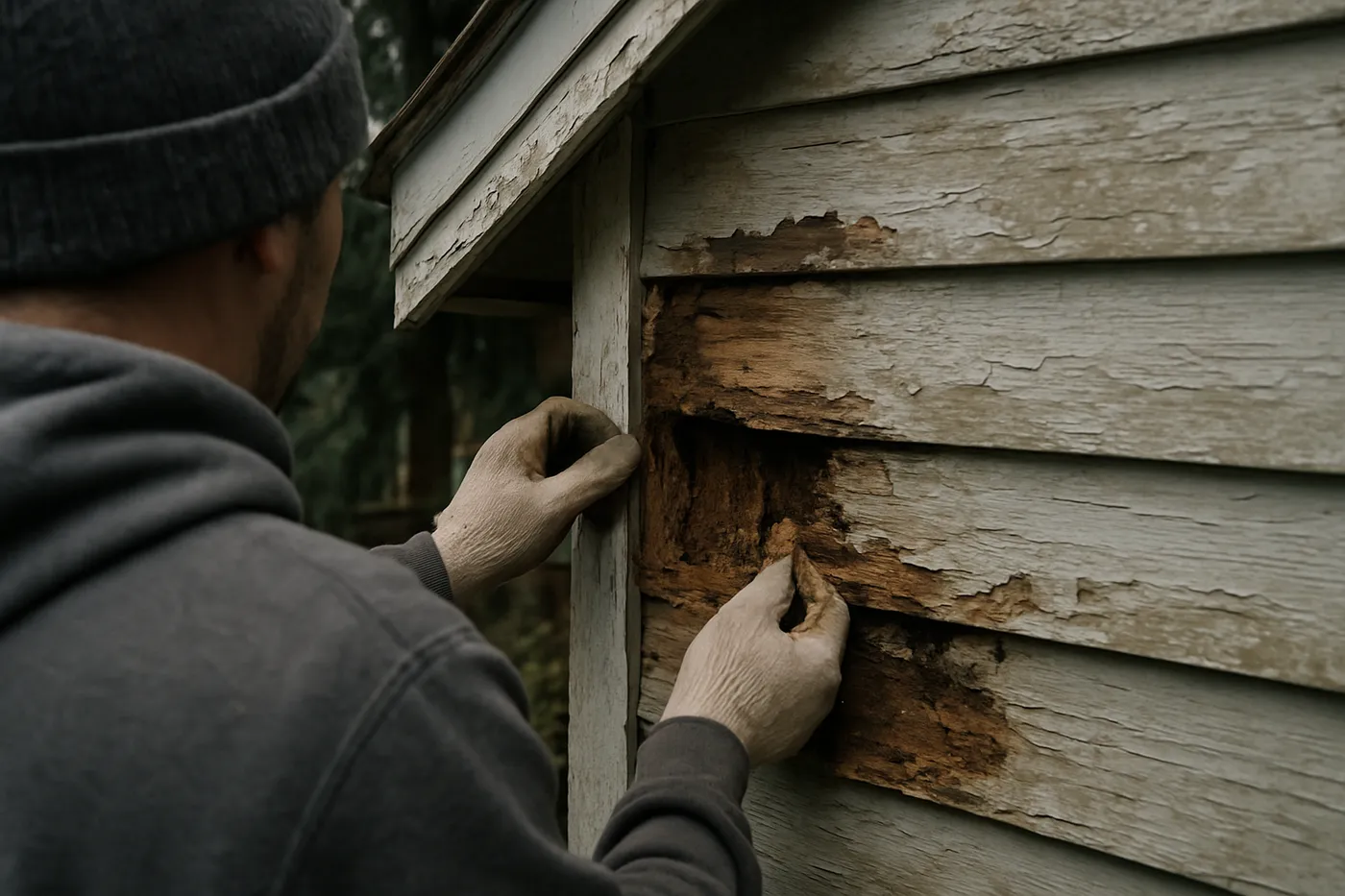
- Soft or spongy wood. Wood that gives under pressure has lost its structure to decay.
- Crumbling or flaking. Rotted wood breaks apart into cubes or flakes rather than holding together.
- Darkened or discolored wood. Gray, brown, or black staining can signal rot before the surface even softens.
- A musty smell. Dry rot is a fungus, and active decay often smells damp and earthy.
- Peeling or bubbling paint. Paint lifting in patches usually means moisture is moving through the wood beneath it.
- Cracked or splitting trim. Wood that cracks across the grain may be drying and decaying.
- Fungal or mushroom growth. Visible fungus is a late-stage sign that decay is well underway.
Any one of these is worth a closer look. Several together mean it is time to act.
The screwdriver test
The most reliable hands-on check is simple. Take a screwdriver and press the tip firmly into any wood you suspect, fascia, trim, a sill, a deck post. Sound wood resists and the tip barely dents it. Rotted wood gives way, and the screwdriver sinks in easily or the wood crumbles around it. That “gives way” feeling is the clearest sign you have decay, not just surface weathering. Probe gently in a few spots rather than gouging, and if the wood sinks anywhere, get it assessed.
Where to check on a PNW home
Rot starts where wood stays damp longest. These are the first places to inspect on a Pacific Northwest home.
| Area | Why it is vulnerable |
|---|---|
| Fascia and soffit | Horizontal boards behind the gutters take the brunt of roof runoff |
| Trim | Joints and seams hold water where surfaces meet |
| Window and door sills | Water sits on the flat ledge and wicks in |
| Base of siding | Splashback and ground moisture attack the lowest boards |
| Deck posts and joists | Ground contact and standing water keep them damp |
| Around gutters and downspouts | Clogs and leaks soak the wood nearby |
See any of these signs? A free written estimate for wood rot repair gets it assessed before it spreads. Call (206) 250-9193.
Dry rot vs. water damage vs. wet rot
These terms get used interchangeably, but they describe different stages of the same underlying problem: moisture. Water damage is the early physical result, staining, swelling, and warping where water has gotten in. Wet rot is decay in wood that stays consistently saturated. Dry rot is a specific fungal decay that, despite the name, needs moisture to start and can then spread into drier wood nearby. The practical point is the same for all three: the moisture source has to be found and fixed, or the damage returns no matter how good the repair.
What to do if you find it
If you spot the signs, take three steps:
- Document it. Note where the soft or discolored wood is and photograph it.
- Stop the moisture source if you can. Clear a clogged gutter, redirect a downspout, fix an obvious leak. Removing the water slows the decay.
- Get a professional assessment before it spreads. Rot does not wait, and the gap between a minor trim repair and a structural job is mostly time.
The Pacific Northwest angle
Greater Seattle’s wet, mild climate is ideal for the fungus that causes dry rot. Clogged gutters, north-facing shade, and aging trim on older North Seattle and Eastside homes make it common. The usual first victims are fascia, soffits, window and door sills, the base of siding, and deck posts, the wood that stays damp longest. Because the climate practically invites rot, regular inspection of those spots is one of the best things a PNW homeowner can do. Once you find it, our guide on how much dry rot repair costs explains what drives the price, and since siding so often hides rot, see also the cost to repair or replace siding.
How Hedlund assesses and repairs
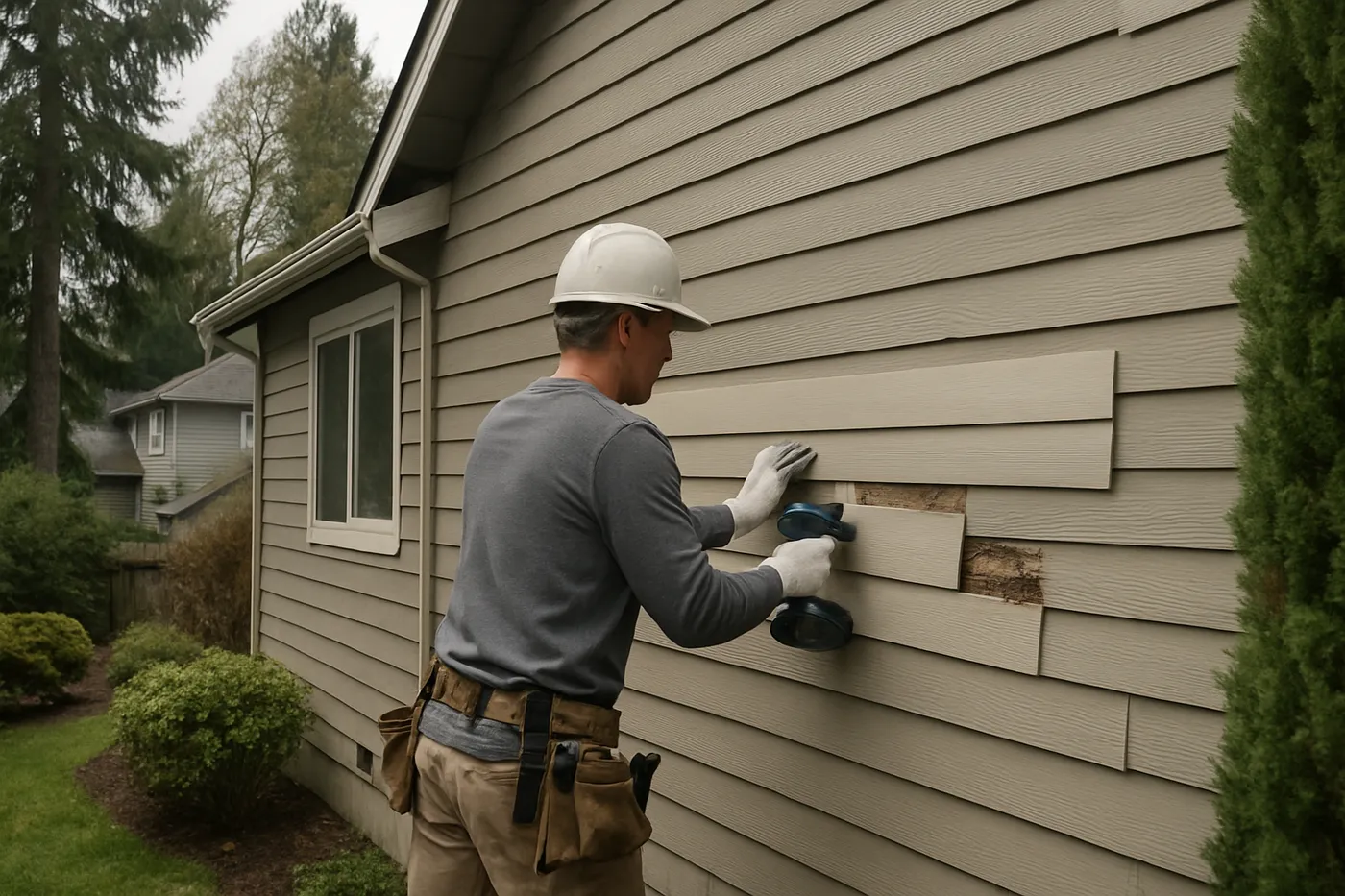
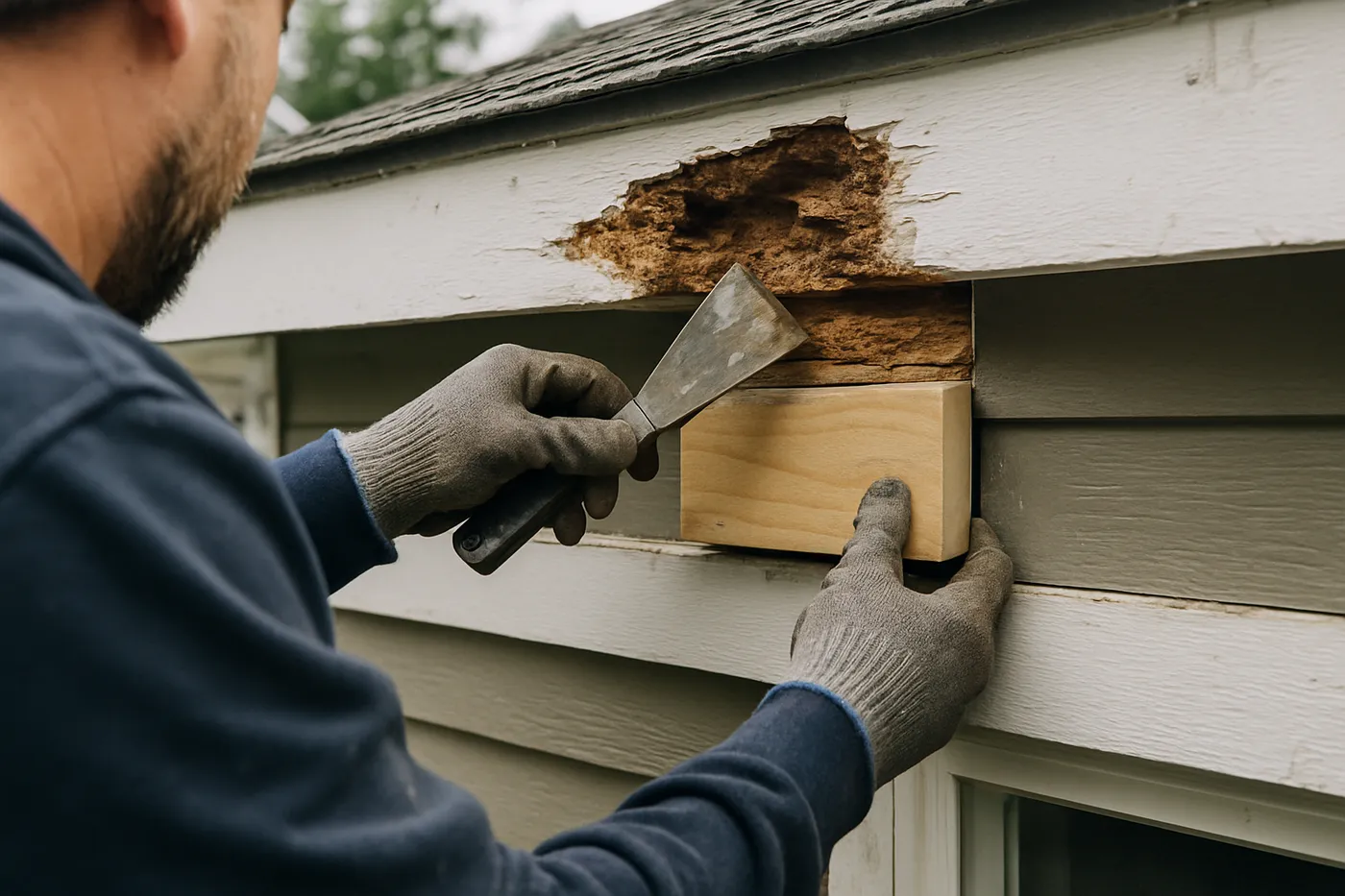
When you call us about suspected rot, we provide a free estimate and inspect the wood in person. We find the moisture source, cut out the rot back to sound wood, replace it with new material, then prime and seal it. Because carpentry and paint are in-house, our exterior painting goes on right away to keep moisture out and protect the repair. Every job is backed by our 10-year workmanship warranty.
“We used Hedlund Painting last fall to repair wood damage on the fascia of our roof and to clean and repaint the soffits and fascia around our home.” Robert G., 5 stars (Google)
Learn more on our carpentry and wood-rot repair service page. We assess and repair rot across Seattle, Edmonds, and the greater Eastside.