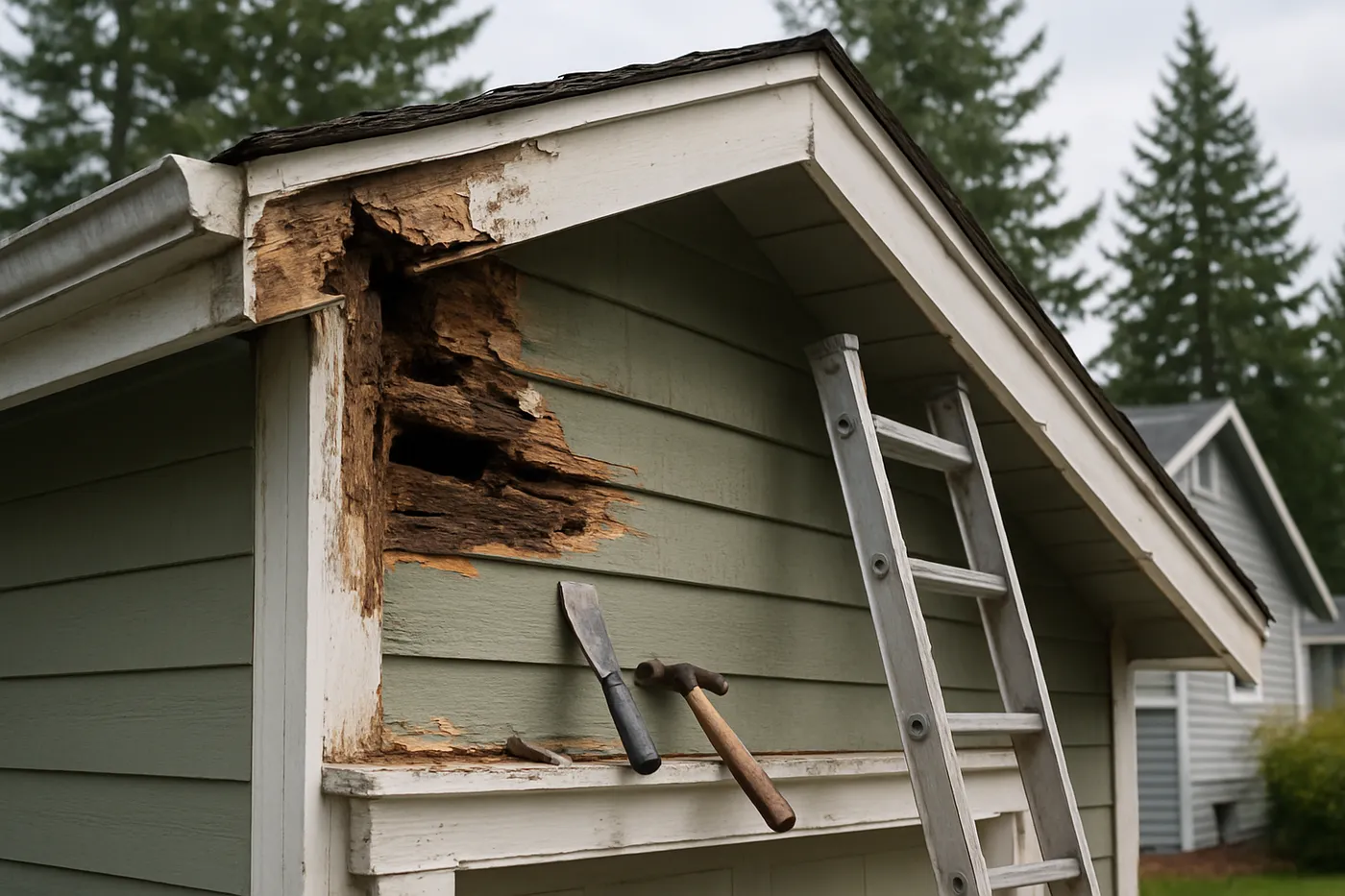

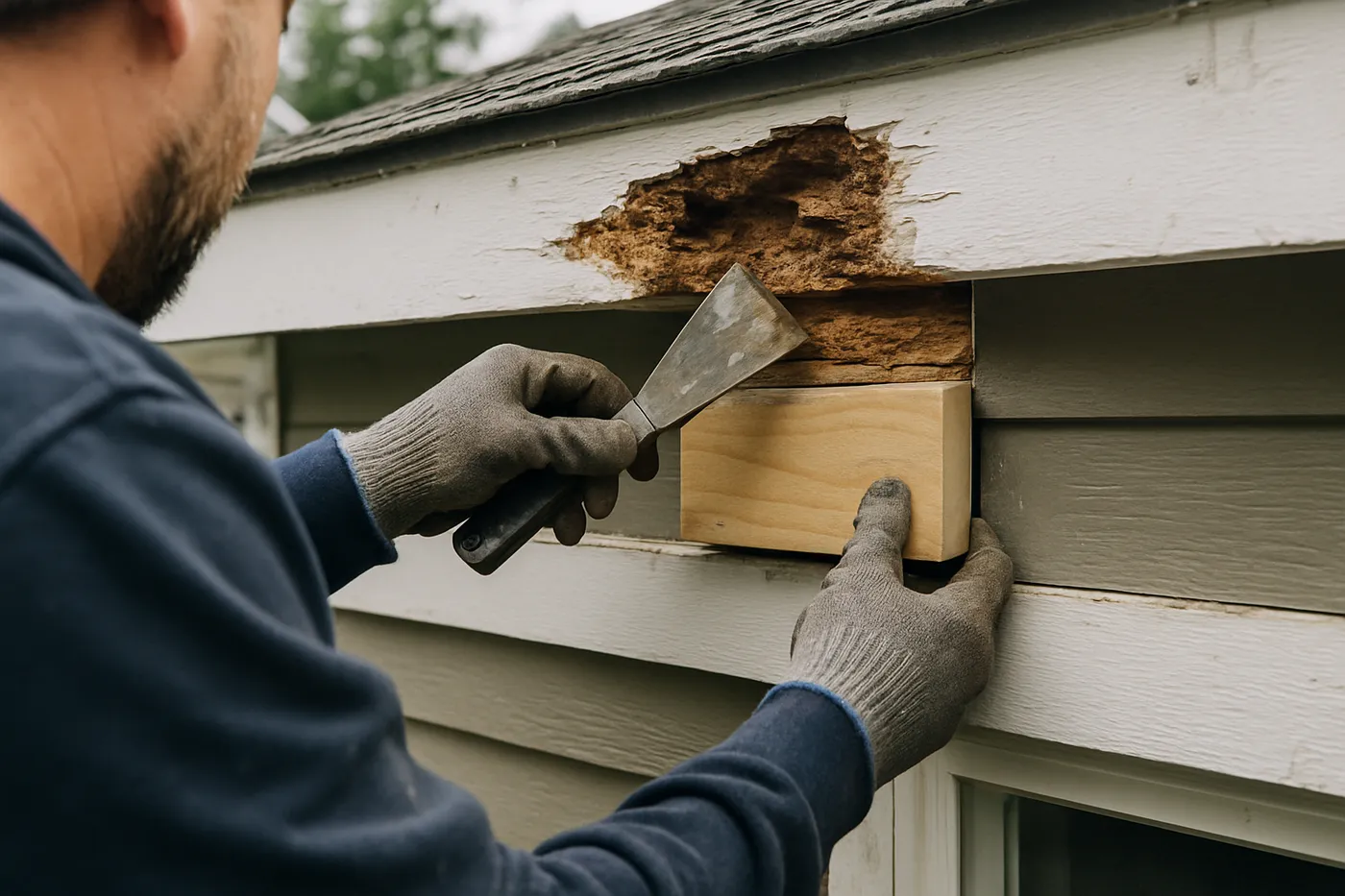
Dry rot repair cost is one of the hardest numbers to pin down before a job, and for good reason: rot hides. The soft spot you can see on a trim board may be the whole problem, or it may be the visible edge of decay that has spread into the wood behind it. The cost scales with where the rot is and how far it has reached, which is why any honest answer starts with a range and ends with an on-site look. After twelve years of wood-rot repair across the Seattle area, here is what drives the price.
What drives dry rot repair cost
These are the factors that move a rot repair from a modest fix to a significant job:
- Location. Surface trim is the cheapest to address. Fascia and siding are more involved. Rot that has reached framing or structural members is the most expensive, because that wood is harder to replace and carries load.
- Extent. A few inches of soft trim is quick. Rot that has spread across a wall, a corner, or multiple boards expands the scope.
- Accessibility and height. Second-story fascia or hard-to-reach areas need staging, which adds labor.
- Structural vs. cosmetic. Cosmetic decay in non-load-bearing trim is straightforward. Structural repair requires more care and more wood.
- The moisture source. Lasting repair means fixing why the wood failed, not just replacing it. That source work is part of the real cost.
- Paint after. New wood is primed and painted to match, which finishes and protects the repair.
None of these are guesswork on our end. They are the real variables we assess in person before putting a number in writing.
Cost by severity
Because the right number depends entirely on what we find, we quote in relative tiers and confirm on site. These severity levels show how scope drives cost, without a fabricated dollar figure that would not fit your home.
| Severity | What it involves | Relative cost |
|---|---|---|
| Minor / surface | A small section of soft trim, cosmetic decay | Lowest |
| Moderate | Fascia, siding, or several boards; some hidden spread | Middle |
| Structural | Rot reaching framing or sheathing, load-bearing wood | Highest |
Caught at the minor stage, dry rot is usually a modest repair. Left to spread to the structural stage, the same problem becomes a much larger job. The difference between those tiers is mostly time, which is why catching it early matters so much.
Want a real number for your rot repair? A free written estimate for rot and wood repair gives you one. Call (206) 250-9193.
Why hidden rot changes the quote
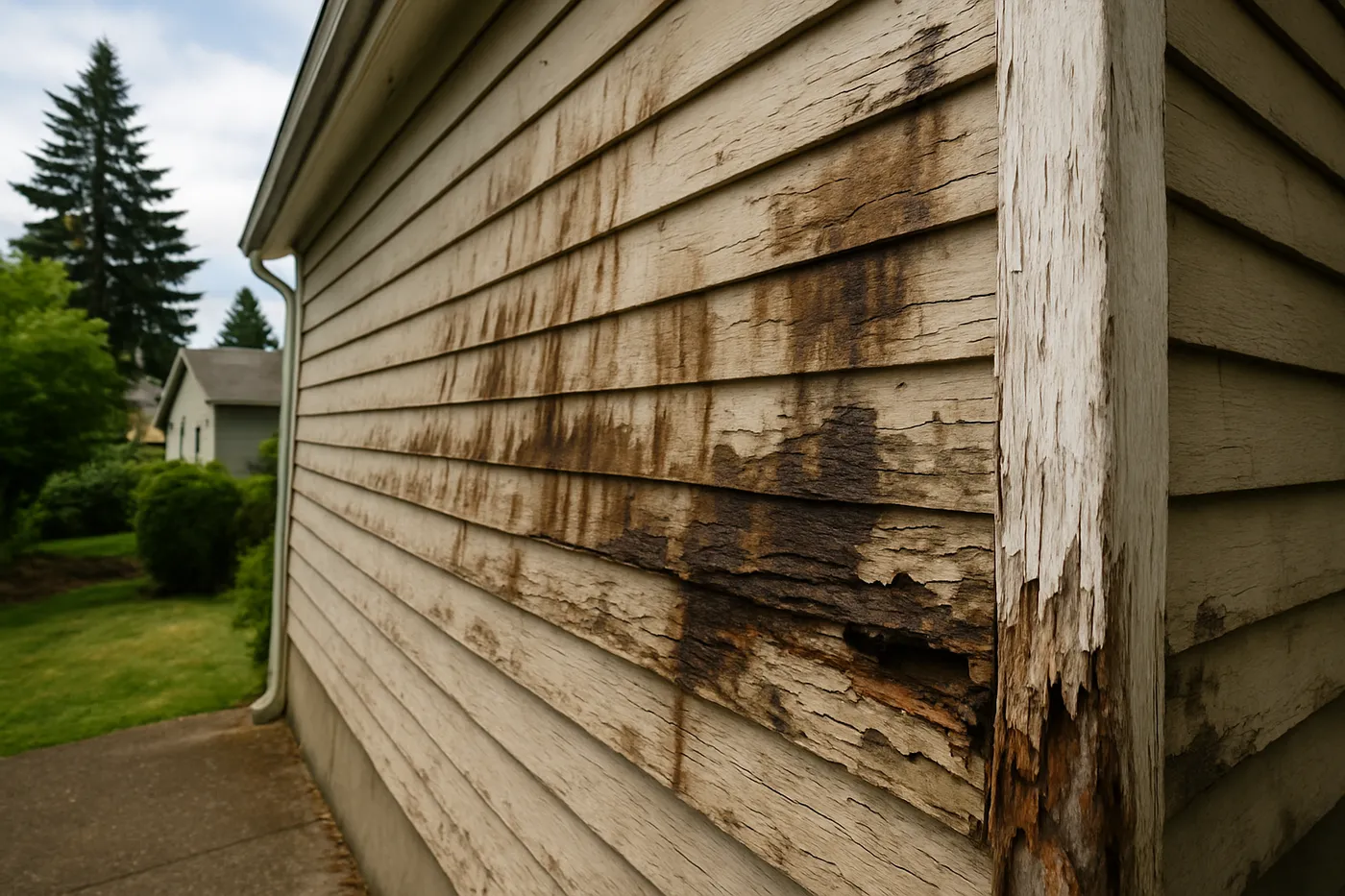
Rot spreads behind paint and siding where you cannot see it. A trim board that looks like it needs a six-inch repair can reveal decay running well past the visible damage once it is opened up. You cannot price what you cannot see, and a contractor who quotes a firm dry-rot number over the phone is either guessing or setting up a surprise change order later. A walkthrough lets us probe the suspect wood, find how far the rot has actually reached, and scope the real fix in writing.
Repair vs. let it spread
Dry rot does not pause. The fungus carries moisture into dry wood as it grows, so a small soft spot keeps widening as long as the moisture source feeds it. A repair handled now, while it is minor trim, is far cheaper than the structural job it becomes if it reaches framing. And because we fix the moisture source as part of the repair, the rot does not simply return next season. Deferring rot repair almost always costs more, not less. The warning signs to catch it early are in our guide on signs of dry rot and water damage on PNW homes.
The Pacific Northwest angle
Dry rot is one of the most common repairs on Greater Seattle homes because of our constant moisture. It shows up first on fascia, trim, deck posts, window sills, and the base of siding, the wood that stays damp longest. Because PNW rot so often hides behind paint and siding, an on-site estimate, not a phone number, is the only honest way to price it. The same rot that attacks trim often hides behind siding too, which is why rot repair and siding repair or replacement frequently come up together.
How Hedlund handles rot
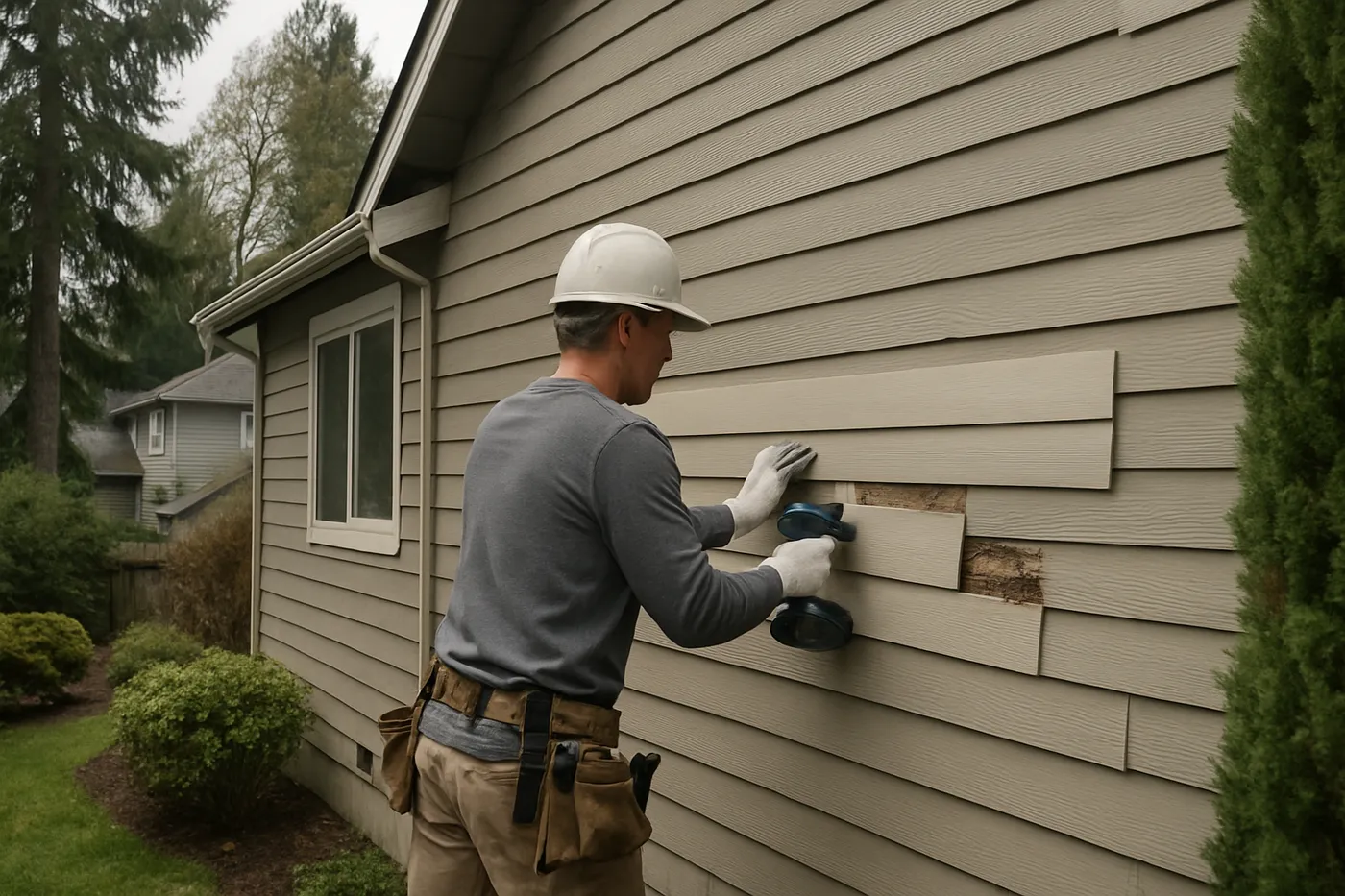
Our repair is built to last, not to cover the problem. We find the moisture source, cut out the rot back to sound wood, replace it with new material fit to match, then prime and seal it so moisture stays out. Because carpentry and paint are in-house, the exterior painting goes on right away to protect the repair. Every job is scoped in writing with no surprise change orders and backed by our 10-year workmanship warranty.
“Hedlund recently completed a wood rot repair project at a community of 28 condos. The communication with Rigo and Vince throughout the course of the project was impeccable!” Meika L., 5 stars (Google)
Learn more on our carpentry and wood-rot repair service page. We repair rot across Seattle, Bellevue, and the greater Eastside.