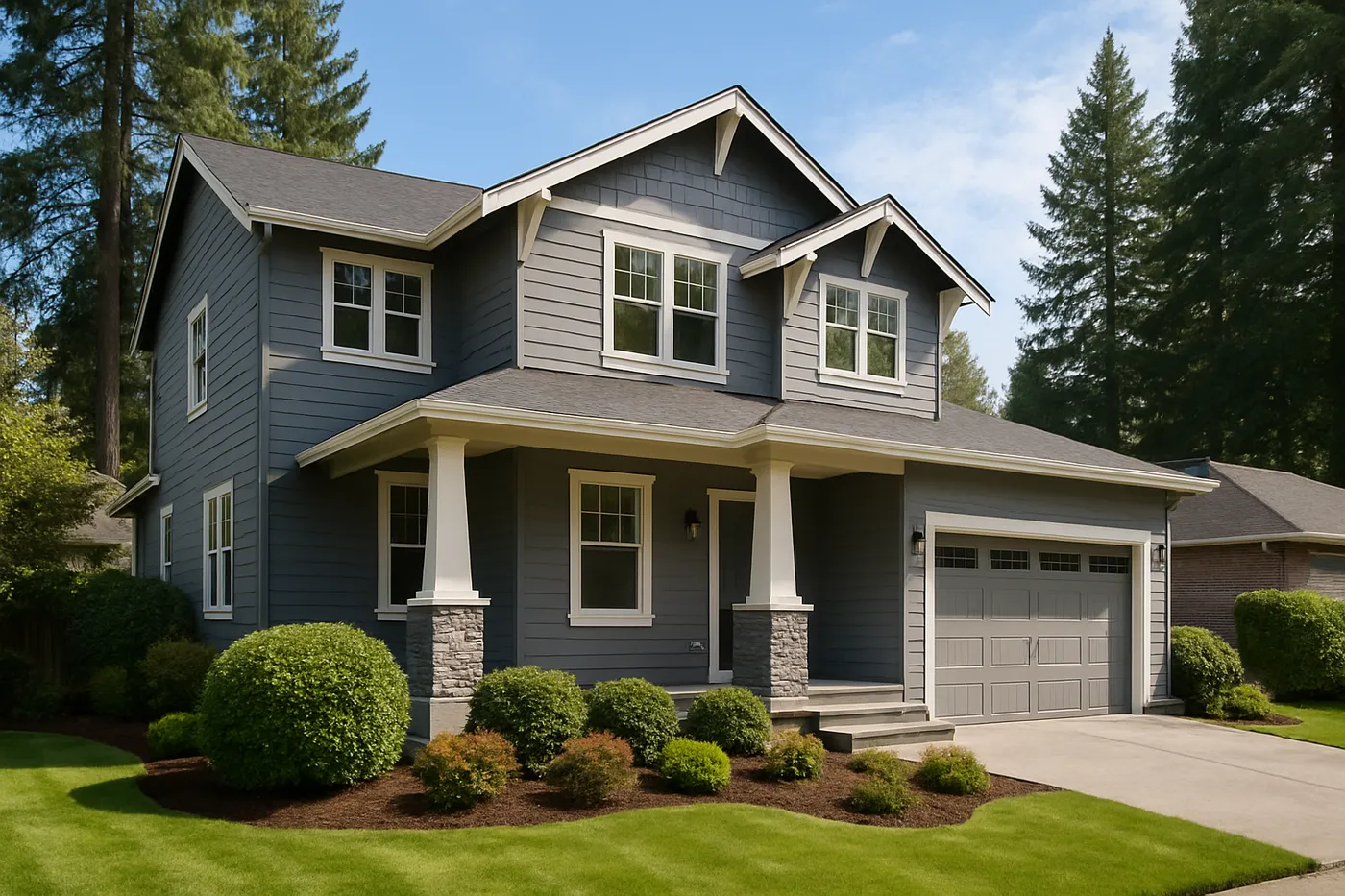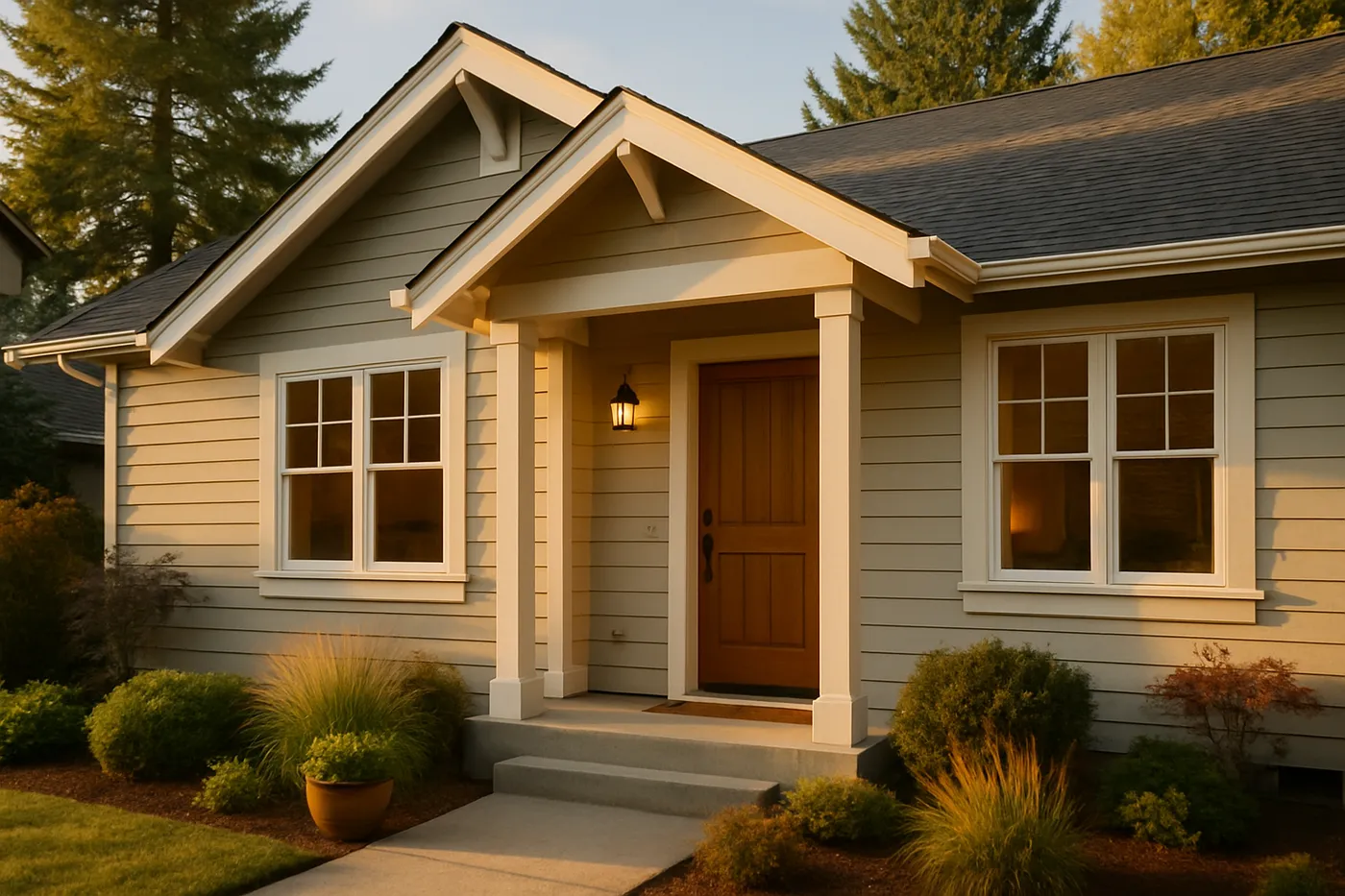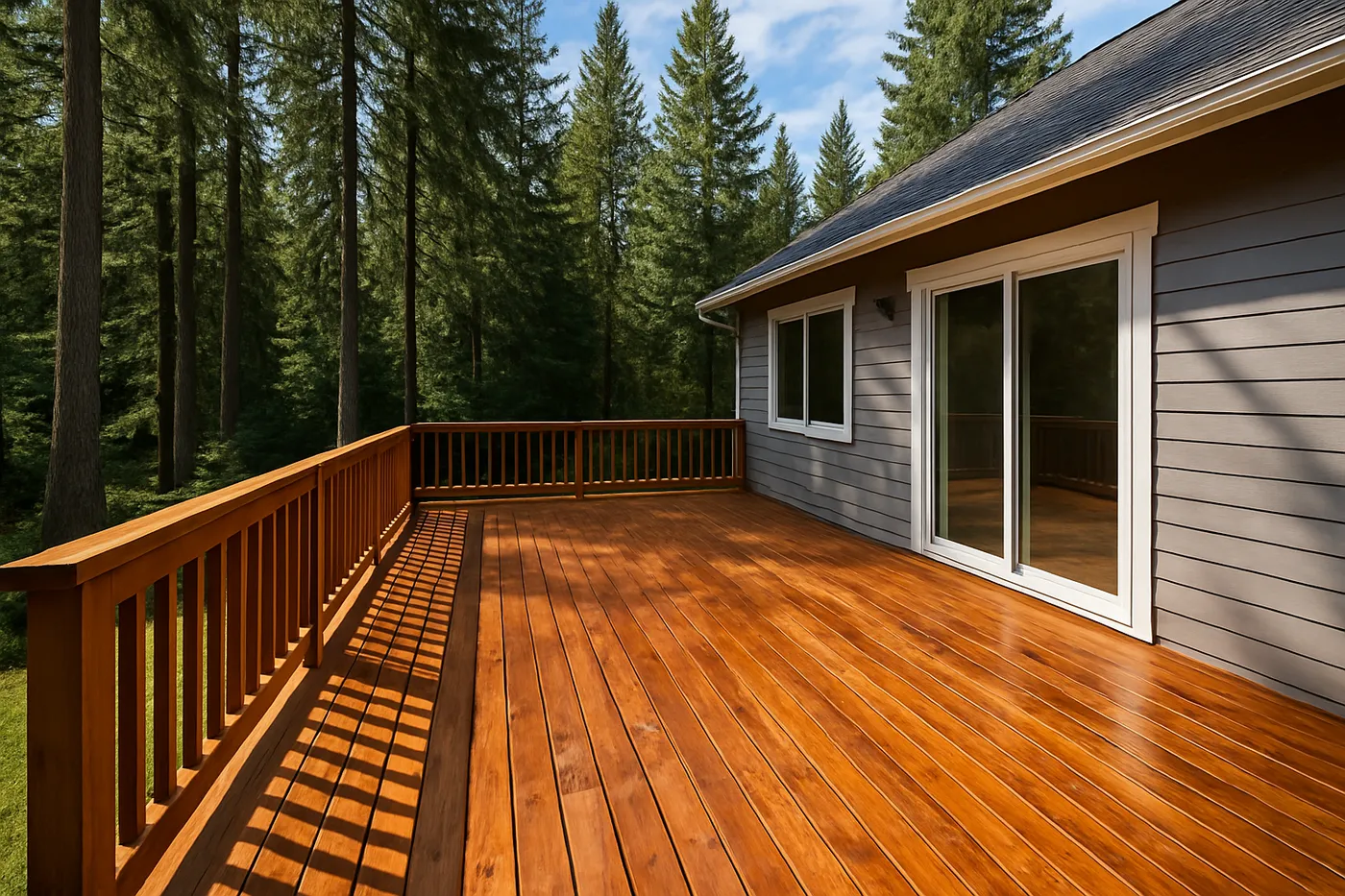

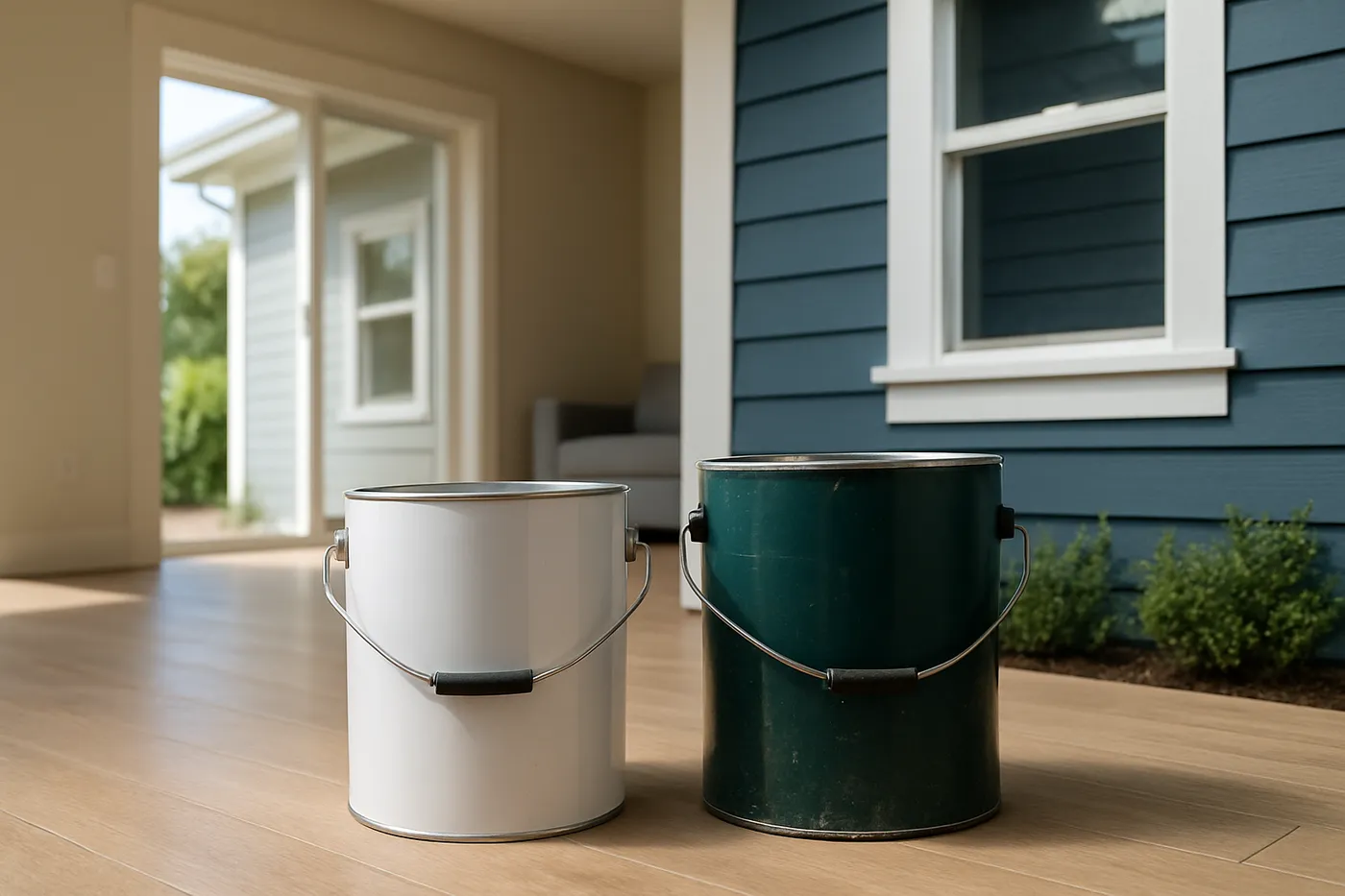
Interior and exterior paint differ in their resins and additives. Exterior paint uses flexible resins and additives that resist UV, moisture, mildew, and temperature swings, while interior paint is formulated for scrubbability, low odor, and low VOCs indoors. They are not interchangeable: interior paint fails quickly outdoors, and exterior paint is not ideal for living spaces.
The difference is in the chemistry. Here is what that means for your home.
How interior paint is formulated
Interior paint is built for the life that happens inside a house. Its priorities are different from anything that has to survive weather:
- Scrubbability and stain resistance. Indoor walls get touched, smudged, and cleaned. Interior paint is formulated to hold up to wiping and scrubbing without burnishing.
- Low VOC and low odor. Because it is applied in enclosed living space, interior paint is made to release fewer volatile compounds and less odor, which matters for indoor air quality.
- Controlled, even sheen. Interior lines offer a precise range of finishes, from flat to semi-gloss, tuned for how rooms are used.
- Stable-environment design. It is engineered for the relatively stable temperatures and humidity indoors, not the extremes outside.
In short, interior paint is optimized for the air you breathe and the surfaces you touch every day.
How exterior paint is formulated
Exterior paint has one job interior paint never faces: surviving the weather. Its chemistry reflects that:
- Flexible resins. Siding and trim expand and contract with heat and cold. Exterior resins flex with that movement instead of cracking.
- UV blockers. Additives resist the sun’s ultraviolet light, which otherwise breaks down the binder and fades color.
- Mildewcides. Built-in mildew resistance fights the growth that thrives on damp, shaded walls.
- Water and weather resistance. It is made to shed rain, resist moisture, and hold up through temperature swings.
- Adhesion to varied siding. It is formulated to bond to wood, fiber cement, stucco, and more.
Everything in exterior paint is there to keep a coating intact through years of weather.
Side-by-side comparison
| Attribute | Interior paint | Exterior paint |
|---|---|---|
| Resins | Tuned for indoor surfaces and washing | Flexible, made to expand and contract |
| Additives | Stain blockers, low-VOC agents | UV blockers, mildewcides |
| Durability target | Scrubbing and everyday contact | Weather, sun, and moisture |
| VOC / odor | Lower, for indoor air | Higher, formulated for outdoors |
| Flexibility | Lower, surfaces are stable | Higher, surfaces move with temperature |
| Mildew / UV resistance | Limited | High |
| Where to use | Walls, ceilings, trim, doors indoors | Siding, trim, eaves, doors outdoors |
**** Not sure which product belongs on which surface? We select per surface as part of every free written estimate, so the right paint goes in the right place.
Why you can’t swap them
This is the most common DIY mistake, and it shows up fast. Use interior paint outdoors and it has no real UV or mildew resistance and rigid resins, so it peels, fades, and mildews within a season. Use exterior paint indoors and you bring higher VOCs and stronger odor into your living space, and it is not optimized for the scrubbing that indoor walls need.
Each paint is most durable in the environment it was built for. Putting either one where it does not belong is not a shortcut, it is a redo waiting to happen.
“We have worked with Hedlund on two separate occasions. Initially, to paint the exterior of our home and they did such a fantastic job that we hired them to paint the interior as well.” Sarah A., 5 stars (Google)
The PNW angle: the chemistry is not academic here
In the Pacific Northwest, the formulation gap is a survival question. Exterior mildewcides and flexible resins are exactly what survive year-round rain and UV, so cutting that corner outdoors shows up as peeling and mildew almost immediately.
Indoors, the local climate still matters. Humid Seattle bathrooms, kitchens, and north-facing rooms hold moisture, so even inside the house the right product, a moisture-tolerant interior paint, makes a difference. The lesson here is that “which paint” is not just interior versus exterior. It is the right product surface by surface, wall by wall.
How Hedlund picks the right product
We match the product to the surface, not the other way around. That means premium lines from Sherwin-Williams, Benjamin Moore, and comparable brands, the correct exterior or interior formulation for each location, and a primer matched to the surface underneath. Combined with no-shortcut prep, that is what makes the right product actually perform. Every job, interior or exterior, carries our 10-year workmanship warranty.
“We have loved working with Hedlund Painting. They have done both exterior and interior work on our house. They are reliable, easy to work with, do a great job.” Amy S., 5 stars (Google)