
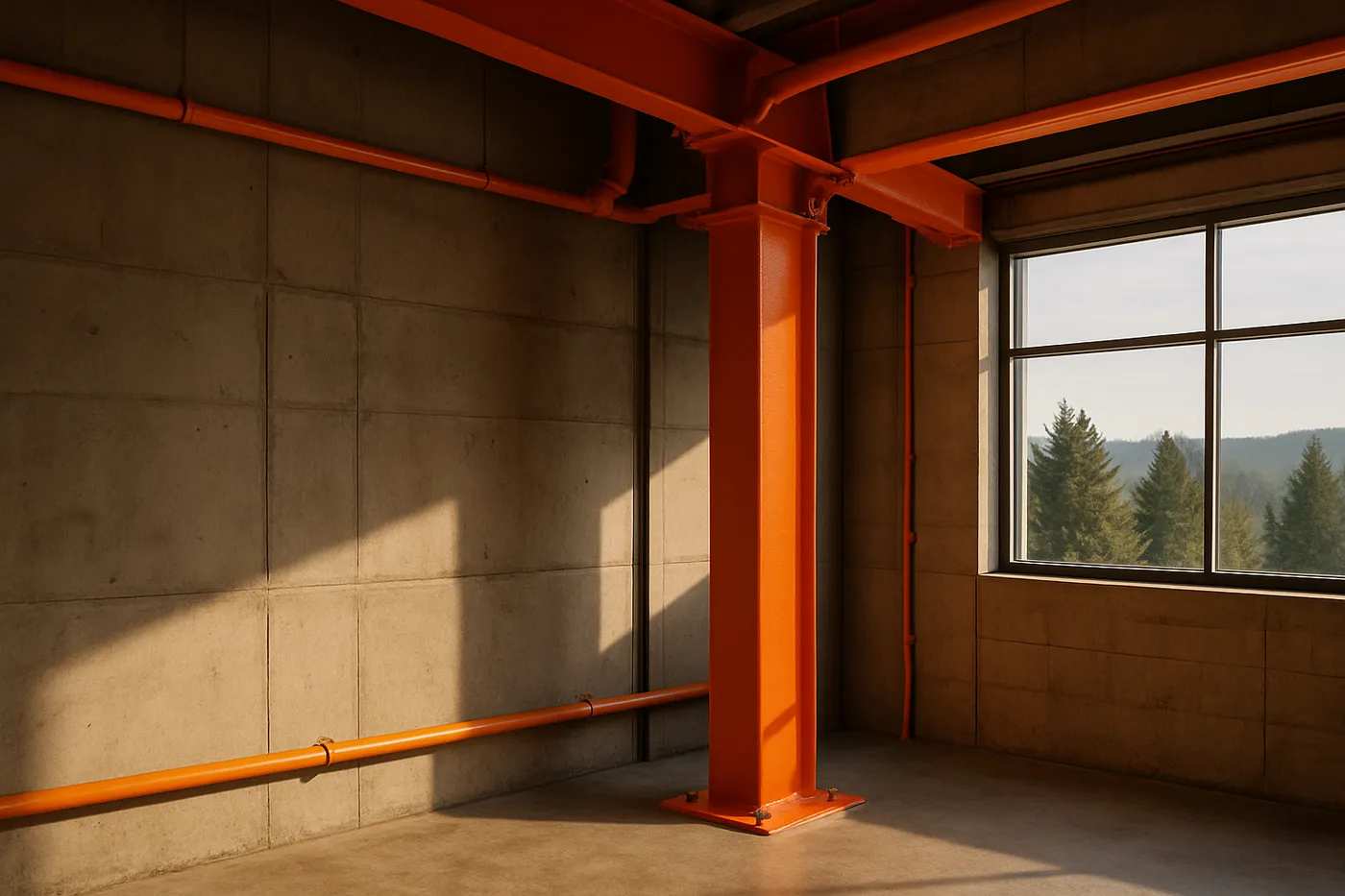
If you manage a facility, “paint it” and “coat it” are not the same decision. Ordinary paint decorates. Industrial coatings are engineered protection, built to keep steel from rusting, concrete from spalling, and equipment from breaking down under chemical, abrasion, or heat exposure. Here is what the main types do and how to know which one a job actually calls for.
What makes a coating “industrial”
The difference is performance, not appearance. A residential wall paint is judged on color and finish. An industrial coating is judged on how long it protects the substrate under real stress:
- Corrosion resistance for steel exposed to moisture, marine air, or chemicals.
- Chemical resistance for floors, tanks, and surfaces that contact solvents, acids, or fuels.
- Abrasion resistance for high-traffic floors, equipment, and loading areas.
- Moisture and waterproofing for exterior envelopes and below-grade concrete.
- Heat and fire resistance for surfaces with code-driven fireproofing requirements.
And one factor matters more than the product itself: surface preparation. The most expensive coating in the world fails fast over a dirty or improperly profiled substrate. Prep is most of the job.
Main types of industrial coatings
| Coating type | What it does | Common uses |
|---|---|---|
| Epoxy | Hard, chemical- and abrasion-resistant film | Concrete floors, tanks, warehouses, equipment |
| Polyurethane | UV-stable, durable topcoat over epoxy or primer | Exterior steel, finish coats, color retention |
| Zinc-rich primer | Sacrificial corrosion protection for steel | Structural steel, new fabrication, rust-prone metal |
| Elastomeric | Flexible, waterproofing membrane | Exterior building envelopes, masonry, stucco |
| Intumescent | Expands under heat to protect steel from fire | Structural steel with fireproofing code requirements |
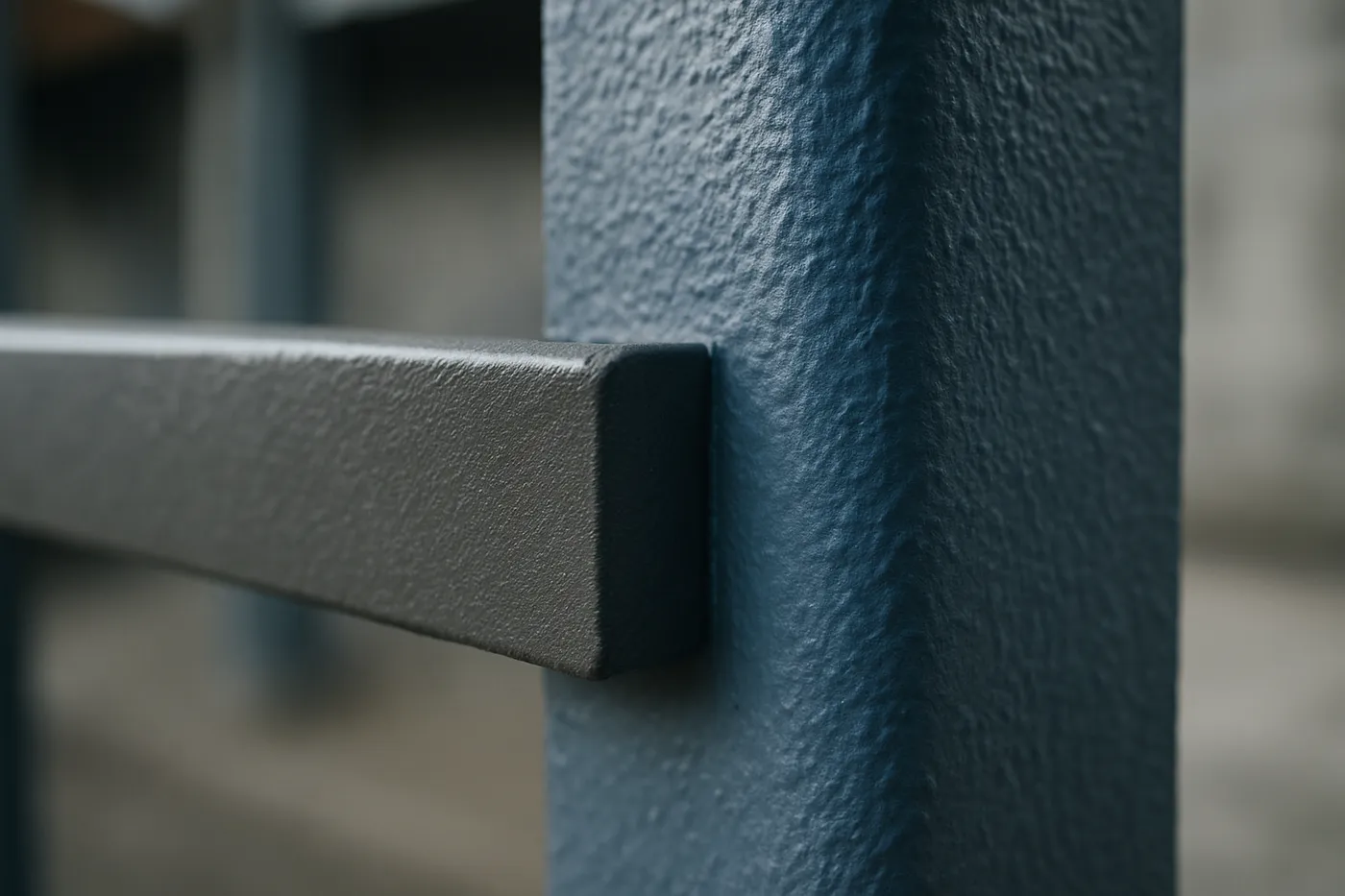
| Metal coatings | Specialty finishes for railings, equipment, fixtures | Metal surfaces needing durability or appearance |
In practice these are often layered into a system: a zinc-rich or epoxy primer for protection, then a polyurethane topcoat for UV stability and color. The system is matched to the substrate and the exposure, not picked off a shelf.
When you need them
You likely need an industrial coating, not standard paint, if you have:
- New or exposed structural steel that needs corrosion protection from day one.
- Existing rust or corrosion that will keep spreading under ordinary paint.
- Concrete floors in a warehouse, shop, or production space that take traffic, forklifts, or chemical spills.
- Chemical or solvent exposure on floors, walls, or equipment.
- A fireproofing code requirement on structural steel.
- An exterior building envelope fighting moisture intrusion.
- Equipment, tanks, or fixtures that need to resist wear and the elements.
Not sure which system your facility needs? We assess the substrate and exposure on site and spec the right coating, then put it in a free written estimate. Call (206) 250-9193 or request a free estimate.
Surface prep matters most
Most coating failures are prep failures, not product failures. A coating can only perform if it bonds to a clean, sound, properly profiled surface. That means:
- Cleaning off oil, dust, rust, and old failing coatings.
- Profiling the substrate so the coating mechanically grips, often by blasting or grinding.
- Priming with the right primer for the substrate, zinc-rich for steel, an epoxy primer for concrete.
Skip or shortcut any of these and even a premium coating peels, blisters, or rusts from underneath. This is where an experienced applicator earns the work.
The Pacific Northwest angle
The Seattle metro is hard on metal and exterior surfaces. Persistent rain and Puget Sound marine air accelerate corrosion on structural steel, railings, and equipment, and freeze-thaw cycles plus constant moisture drive demand for concrete sealing and elastomeric waterproofing on commercial and industrial envelopes. Coatings that might last for years in a dry climate need a higher-spec system here to hold up.
How Hedlund does it
We bring commercial and industrial capability to facilities across the Seattle area. As a licensed contractor (lic. HEDLUPI814DE), we spec the coating system to the substrate and the exposure, prep with discipline because that is where coatings live or die, and apply premium industrial products from brands like Tnemec, Sherwin-Williams, and Dryvit. We do not invent a price over the phone; we assess the job and put a firm number in writing.
What our clients say
“The team at Hedlund did a great job with the interior of my office. Everyone I interacted with was very professional and a master of their craft.” Will G., 5 stars (Google)